Monday, April 16, 2018

THE OVERSTORY by Richard Powers

Reviewed by Barbara Kingsolver


Trees do most of the things you do, just more slowly. They compete for their livelihoods and take care of their families, sometimes making huge sacrifices for their children. They breathe, eat and have sex. They give gifts, communicate, learn, remember and record the important events of their lives. With relatives and non-kin alike they cooperate, forming neighborhood watch committees — to name one example — with rapid response networks to alert others to a threatening intruder. They manage their resources in bank accounts, using past market trends to predict future needs. They mine and farm the land, and sometimes move their families across great distances for better opportunities. Some of this might take centuries, but for a creature with a life span of hundreds or thousands of years, time must surely have a different feel about it.

And for all that, trees are things to us, good for tables, floors and ceiling beams: As much as we might admire them, we’re still happy to walk on their hearts. It may register as a shock, then, that trees have lives so much like our own. All the behaviors described above have been studied and documented by scientists who carefully avoid the word “behavior” and other anthropomorphic language, lest they be accused of having emotional attachments to their subjects.

The novelist suffers no such injunction, but most of them don’t know beans about botany. Richard Powers is the exception, and his monumental novel “The Overstory” accomplishes what few living writers from either camp, art or science, could attempt. Using the tools of story, he pulls readers heart-first into a perspective so much longer-lived and more subtly developed than the human purview that we gain glimpses of a vast, primordial sensibility, while watching our own kind get whittled down to size.

But: Birds gotta fly, fish gotta swim. People will only read stories about people, as this author knows perfectly well. “The Overstory” is a delightfully choreographed, ultimately breathtaking hoodwink. The handful of readers who come to the book without benefit of reviews or jacket copy will believe it’s a collection of unrelated short stories. The opener is a gorgeous family saga with the texture of a Ken Burns documentary, and more plot. The Hoels are Norwegian immigrants whose vocations link them with our continent’s once-predominant tree, the American chestnut, as they all flourish and then are tragically cut back — both Hoels and chestnuts — to a lone scion. Pause for a moment to absorb this, then move on to the next immigrant story, in which Mimi Ma’s father invests too many hopes in a mulberry tree. Then, in the Vietnam War, Douglas Pavlicek is shot from a military plane and survives through a fortuitous intersection of his fate with that of a centuries-old fig tree. In another time, in Silicon Valley, an 11-year-old coding prodigy named Neelay Mehta has a much unluckier tangle with an ancient Spanish oak.

Trees are everywhere but incidental, it seems, until the seventh tale in the series, about an odd little girl who loves trees more than she loves most people and grows up to be a scientist. As Dr. Pat Westerford she spends years alone in forests doing her research, initially mocked by her peers but eventually celebrated for an astounding (and actually real) discovery: A forest’s trees are all communicating, all the time, via a nuanced chemical language transmitted from root to root. As this revelation dawns, the reader is jolted with electric glimpses of connections among characters in the previous stories. And then we remember we’re in the hands of Richard Powers, winner of a genius grant, a storyteller of such grand scope that Margaret Atwood was moved to ask: “If Powers were an American writer of the 19th century, which writer would he be? He’d probably be the Herman Melville of ‘Moby-Dick.’”Photo

His picture really is that big. These characters who have held us rapt for 150 pages turn out to be the shrubby understory, for which we couldn’t yet see the forest. Standing overhead with outstretched limbs are the real protagonists. Trees will bring these small lives together into large acts of war, love, loyalty and betrayal, in a violent struggle against a mortgaged timber company that is liquidating its assets, including one of the last virgin stands of California redwoods. The descriptions of this deeply animate place, including a thunderstorm as experienced from 300 feet up, stand with any prose I’ve ever read. I hesitate to tell more, and spoil the immense effort Powers invests in getting us into that primal forest to bear witness. It’s a delicate act, writing about tree defenders: In an era when art seems ready to embrace subjects as painful as racism and sexual harassment, it still shrinks from environmental brutality. We may agree that deforested continents and melting permafrost betray the gravest assaults we’ve ever committed against anything or anyone, but still tend to behave as if it’s impolite to bring this up.

In the kind of meta-conversation that makes a Powers novel feel so famously intelligent, the narrative is seasoned with canny observations on this exact problem. The tree scientist frets about public indifference to her work: “Forests panic people. Too much going on there. Humans need a sky.” Elsewhere, a patent attorney becomes profoundly disabled and seeks solace in novels, even while he muses on the limitations of the form. “To be human is to confuse a satisfying story with a meaningful one. … The world is failing precisely because no novel can make the contest for the worldseem as compelling as the struggles between a few lost people. … Though I am fake, they say, and nothing I do makes the least difference, still, I cross all distances to sit next to you in your mechanical bed, keep you company and change your mind.”Photo

Given that Richard Powers has swept the literary-prize Olympics, he should be a household name, but isn’t quite. Critics have sometimes blamed a certain bleakness of outlook, or a deficit of warmth in his characters: As Atwood put it, the story going around is that he’s “not cozy enough at the core.” I suspect the complaint isn’t entirely Powers’s problem, but rather a symptom of the art/science divide and some potent cultural stereotypes. At the prospect of a science-y genius taking the podium, a lot of the audience expects to be frozen out, or bored.

“The Overstory” makes a strong case for expecting otherwise. The science in this novel ranges from fun fact to mind-blowing, brought to us by characters — some scientists, mostly not — who are sweet or funny or maddening in all the relatable ways. The major players number more than a dozen, all invested with touching humanity, and they arrive with such convincing, fully formed résumés, it’s hard to resist Googling a couple of them to see if they’re real people. (They aren’t.) This is a gigantic fable of genuine truths held together by a connective tissue of tender exchange between fictional friends, lovers, parents and children. A computer programmer brings his work home to spend hours inventing games with his son: “Now, Neelay-ji. What might this little creature do?” A cute Eastern European backpacker invites herself for a one-nighter in the vet Douglas’s remote cabin, and he warns that she shouldn’t be out there by herself, looking the way she does. “‘How I look?’ She blows a raspberry and whisks her palm. ‘Like an ill monkey who needs washing.’” Best of all are two aging misanthropes, Patricia and Dennis, who will wreck any unsentimental heart with their gentle discovery that just an hour a day together can make a marriage, providing the nutrient that’s been missing all along. Even when viewed from very high up, through the lens of a thing that’s been alive since before Jesus, all these little people with their short, busy lives and blinding passions are very dear indeed.

A tree’s-eye view on a planet can also be plenty unnerving, in life and in art. Powers doesn’t hesitate to give us wide-screen views of the machinery of his plot, so we can’t miss the roles his characters have been assigned as fulcrum and levers bent to a larger purpose. It’s a fair enough device in a novel meant to tell us that humans aren’t the only show on earth: that in fact we’re not much more than a sneeze to a bristlecone pine. In the end, “The Overstory” defies its own prediction about fiction’s limits, making the contest for the world feel every bit as important as the struggles between people. Even if you’ve never given a thought to the pulp and timber industries, by this book’s last page you will probably wish you weren’t reading it on the macerated, acid-bleached flesh of its protagonists. That’s what a story can do.

nyt

Barbara Kingsolver’s 15 books of fiction and nonfiction include her most recent novel, “Flight Behavior,” and “Unsheltered,” forthcoming in October. Before her writing career, she worked as a biologist.

Saturday, March 31, 2018

Environmental Ethics '18

Returning to MTSU, Fall 2018- 
Environmental Ethics 
PHIL 3340
If you're interested in/concerned about the health and future of "the only home we've ever known," consider registering for PHIL 3340, Environmental Ethics - TTh 2:20, JUB 202. More info at http://envirojpo.blogspot.com/, or email phil.oliver@mtsu.edu.

The environment is under siege. Its current administrator is "giving even ostentatious polluters a reprieve." (Margot Talbot, "Dirty Politics"-New Yorker 4.2.18)
Image result for trump environment

Former EPA head William Ruckelshaus, who worked for GOP Presidents Nixon and Reagan, says Scott Pruitt and his staff "don't fundamentally agree with the mission of the agency."

Can the vital mission of protecting our home be revived and sustained? How can we all act, now, to safeguard it against this and future eco-destructive administrations? A hopeful EPA veteran says: “'It might take a while to 'rebuild capacity' after Pruitt. But it [will] be done. The public is expecting us to protect the planet. Pruitt is a temporary interloper. We are the real agency.”


Are we with him?
==
Texts include
==
More info at http://envirojpo.blogspot.com/, or email phil.oliver@mtsu.edu.

Image result for trump environment cartoon

Image result for trump environment cartoon

Image result for trump environment cartoon new yorker

Image result for trump environment cartoon new yorker

Scott Pruitt’s Dirty Politics

How the Environmental Protection Agency became the fossil-fuel industry’s best friend.
By Margaret Talbot
One of the engineers said that it might take a while to “rebuild capacity” after Pruitt. But it would be done. The public, he reminded everyone, “is expecting us to protect the planet.” He said, “Pruitt is a temporary interloper. We are the real agency.”
One afternoon last April, Scott Pruitt, the administrator of the Environmental Protection Agency, travelled to the Harvey Mine, in Sycamore, Pennsylvania, to declare that the agency had a new direction, which he called “Back to Basics.” It was an unusual place for the nation’s chief steward of clean air, land, and water to set out a policy agenda. Consol Energy, the owner of the Harvey facility, which is part of the largest underground coal-mining complex in North America, has been fined repeatedly by the E.P.A. for violations; in 2016, it had to pay three million dollars for having discharged contaminated wastewater into the Ohio River and its tributaries. Past E.P.A. administrators have spoken of creating jobs as a welcome potential by-product of the agency’s work, especially if they are green jobs, but creating or protecting energy jobs is not supposed to be the mission—protecting human health and the environment is. As the speech that Pruitt gave at the mine demonstrated, he seems to have these priorities reversed.

Pruitt, who is forty-nine, looked cheerful, as he generally does at public appearances. (He declined my requests for an interview.) Unlike many people who have joined the chaotic Trump Administration, he seems unconflicted about his new role, his ideological and career goals fitting together as neatly as Lego blocks. The former attorney general of Oklahoma, Pruitt ascended politically by fighting one regulation after another. In his first year at the E.P.A., he has proposed repealing or delaying more than thirty significant environmental rules. In February, when the White House announced its intention to reduce the E.P.A.’s budget by twenty-five per cent—one of the largest cuts for any federal agency—Pruitt made no objections. His schedule is dominated by meetings and speaking engagements with representatives of the industries he regulates. He has met only a handful of times with environmental groups.

At the Harvey mine, Pruitt wore a solid-red tie and, on his lapel, an American-flag pin; he briefly put on a white hard hat inscribed with the phrase “Make America Great Again.” He delivered his remarks in a sterile, fluorescent-lit room, a contrast with the audience, which was filled with miners in coal-dusted uniforms. He spoke in a precise staccato that was softened by the light Southern accent of his native Kentucky. In the speech, which Pruitt gave before touring the mine, he said, “I’m looking forward to puttin’ on those suits you’ve got on, goin’ down, and checkin’ it out and havin’ fun doing so.” He joked that whoever said you can’t have your cake and eat it, too, didn’t know “what you’re supposed to do with cake.” He insisted that you could, in fact, roll back regulations on industries like coal while taking care of the environment. But he did not point out that, as many economists have indicated, the availability of cheap natural gas has done more to eliminate coal jobs than environmental regulations have. (A month earlier, Bloomberg News had reported that Consol planned to sell off, or otherwise terminate, its coal businesses, in order to focus on extracting natural gas.)

It’s an open secret in Washington that Pruitt would like to become Attorney General if President Trump fires Jeff Sessions, and at the E.P.A. he often sounds like he’s trying out for that post, repeating a set of talking points, honed in conservative legal circles, about the dangers of “federal overreach.” In Pennsylvania, Pruitt told the miners, and a contingent of corporate executives, that “the days of our agency declaring war on your industry are over.” He went on, “It’s not right for government to do that.” Many of his comments that day sounded like rallying cries. “You guys are a handsome crew!” he declared. “The cavalry’s on the way!”


In June, Pruitt joined Trump in the White House Rose Garden as Trump announced that the United States was withdrawing from the Paris climate accord. Although there is a consensus among scientists that human activity is causing climate change, Pruitt is skeptical of this view; unlike Trump, who has called global warming a “hoax” created by the Chinese, Pruitt expresses his dissent with deliberate mildness. Last March, he told CNBC, “Measuring with precision human activity on the climate is something very challenging to do.” He went on, “I would not agree that it’s a primary contributor to the global warming that we see. But we don’t know that yet. We need to continue to debate, continue the review and analysis.” The E.P.A., he has said, will commence a “red team–blue team” review of climate-change science that puts “experts in a room and lets them debate.”

At an event hosted by the Federalist Society in November, Pruitt said, “I’ve been asking the question lately, ‘What is trueenvironmentalism?’ . . . From my perspective, it’s environmental stewardship, not prohibition.” He added, “We have been blessed, as a country, with tremendous natural resources.” Previous E.P.A. administrators, he said, had promoted an inflexible philosophy of “Do not touch.”

The agency was established in 1970, by President Richard Nixon. William Ruckelshaus, its first administrator, who also led the E.P.A. under Ronald Reagan, told me, “My principal concern is that Pruitt and the people he’s hired to work with him don’t fundamentally agree with the mission of the agency. They seem more concerned about costs associated with regulations.” Myron Ebell, a climate-change skeptic who headed Trump’s transition team for the agency, praised Pruitt for concentrating on “the E.P.A.’s statutory responsibilities” and for “dropping many discretionary activities that have taken up more and more of the E.P.A.’s budget and staff time in recent years.” Pruitt argues that every E.P.A. action should be specifically grounded in a federal statute such as the Clean Air Act—fifty-four-year-old legislation that was last amended in 1990.

Pruitt and his admirers call this approach “E.P.A. originalism”—a nod to the late Supreme Court Justice Antonin Scalia, and his reading of the Constitution. The idea is that Pruitt is sticking to “traditional” priorities, such as cleaning up Superfund sites and contaminated drinking-water supplies, rather than focussing on newer and broader environmental threats, such as climate change... (NYer, continues)
==
Mail:

Pruitt vs. the E.P.A.

Margaret Talbot’s article about Scott Pruitt paints a scathing picture of his assault on the Environmental Protection Agency (“Dirty Politics,” April 2nd). I was the first, and then the fifth, administrator of the agency. The environment is far healthier today than it was forty-seven years ago, when the E.P.A. was created, precisely because of the science-based standards that the agency implemented. Pruitt is systematically attacking both the E.P.A.’s budget and its scientific framework. If he is successful, the very reason for the E.P.A.’s creation—illness and disease from pollution—will reëmerge, and we will have to start from square one. The country must challenge the Trump Administration’s war on science. Otherwise, as a result of actions taken by Pruitt and this Administration, the uncontrolled pollution that we have greatly reduced in the past five decades will return.

William D. Ruckelshaus

Seattle, Wash.

Pruitt is not, as he claims, an E.P.A. originalist. Nor is he a science-denying Neanderthal. He is merely a servant to wealthy corporate interests. He is not there to protect the country’s clean air. He does not care about the long-term damage that a mountaintop mining operation can do to our drinking-water supplies and to our fishing habitats. He is not looking out for the well-being of future generations. Science is knowledge, and Pruitt’s denial of knowledge makes him unfit for government service. It is also the reason that career scientists are overwhelmingly abandoning the E.P.A. under his leadership. Pruitt did not fight Trump’s proposed twenty-five-per-cent cut to the E.P.A.’s budget. He says that he is sticking to “traditional” priorities, such as cleaning up Superfund sites, but he has been co-opted by the very industries that he is responsible for regulating. This cleanup uses current taxpayer money to remedy past damage that should have been corrected by the offending private industries. Essentially, Pruitt wants to privatize profits from businesses while socializing their expenses. Unfortunately, that attitude will only produce new Superfund sites for future taxpayers to deal with.

Richard Dickinson

Richmond Hill, Ga.

I wept after reading Talbot’s article about Pruitt’s dismemberment of the E.P.A. My life’s work has been environmental protection. In the nineteen-sixties, I helped Interior Secretary Stewart Udall define the scope of a new approach to conservation, which included both cities and wild places. Then, as the White House assistant for conservation and beautification, I helped the Johnson Administration create new national parks, like the North Cascades and Redwood, and bring more trees and parks to neighborhoods in cities like Washington, D.C. In the eighties, I worked with the E.P.A. to develop a policy that required the agency to solicit balanced participation from industries, environmental organizations, and local citizens. For many years since, my work has focussed on how citizens and officials alike can be good neighbors to great rivers. Now, at the age of eighty-one, I have neither the strength nor the years ahead to fight against the mindless damage that is being done to our country—and to our planet—by Pruitt, Ryan Zinke, and their colleagues in the Trump Administration. Many of the hard-won achievements of my life are in tatters. Although I am distraught, I know that thousands of well-educated, committed individuals will pick up the pieces and rebuild. Because they have to.

Sharon F. Francis

Charlestown, N.H.

Monday, March 12, 2018

"Beyond Moral Fundamentalism: Pragmatic Pluralism in Environmental Ethics"

Steven Fesmire, Visiting Professor of Philosophy, Middlebury College; Professor of Philosophy and Environmental Studies, Green Mountain College

Like other complex, multi-dimensional problems of contemporary pluralistic democratic societies, environmental problems demand that we gain a practical footing informed by conflicting claims that may legitimately tug us in incompatible directions. John Dewey’s (1859-1952) pluralistic approach to value conflicts suggests a framework for developing heuristics to help us gain this footing.

Video here...
==
And, a short video of Steven several years ago discussing John Dewey: Universalism/Contextualism

Monday, February 19, 2018

‘I’m Just More Afraid of Climate Change Than I Am of Prison’

How a group of five activists called the Valve Turners decided to fight global warming by doing whatever it takes.


On Oct. 11, 2016, Michael Foster and two companions rose before dawn, left their budget hotel in Grand Forks, N.D., and drove a white rental sedan toward the Canadian border, diligently minding the speed limit. The day was cold and overcast, and Foster, his diminutive frame wrapped in a down jacket, had prepared for a morning outdoors. As the driver, Sam Jessup, followed a succession of laser-straight farm roads through the sugar-beet fields, and a documentary filmmaker, Deia Schlosberg, recorded events from the back seat, Foster sat hunched in the passenger seat, mentally rehearsing his plan.

When Jessup pulled over next to a windbreak of cottonwood trees, Foster felt the seconds stretch and slow. For months, he’d imagined his next actions: He would get out of the car, put on a hard hat and safety vest, retrieve a pair of bolt cutters from the trunk and walk to the fenced enclosure about 100 feet away. He would snip the padlock that secured the gate and approach the blunt length of vertical pipe in the center of the enclosure — the stem of a shut-off valve for the 2,700-mile-long Keystone Pipeline, which carries crude oil from the tar sands of Alberta to refineries on the Texas coast. He would cut the chain on the steel wheel attached to the stem, and turn the wheel clockwise until it stopped.

What Foster didn’t expect was that once he’d broken through the chain-link fence, he would be briefly overwhelmed by the magnitude of what he was about to do. He faced away from the biting wind, and allowed himself to cry. He then put a gloved hand on the steel wheel, which was almost three feet across and mounted vertically as if on the helm of a ship, and began to turn it. For long minutes it spun easily, but then both the wheel and the ground below his feet began to shake. Foster had been told to expect this, but still he hesitated. When he resumed turning, he had to throw his body into the task, at times dangling from the wheel to coax it downward. Finally, he could wrestle it no farther, and the shaking stopped. He felt a profound sense of relief. He replaced the lock on the wheel with a new padlock, sat down and, breathing heavily, began to record himself on his phone. “Hey, I’ve never shot video for grandkids that I don’t have yet,” he told the camera, “but I want any grandkids, or grandnephews and nieces or whatever, anybody in any family tree of mine, to know that once upon a time people burned oil, and they put it in these underground pipes, and they burned enough, fast enough, to almost cook you guys out of existence, and we had to stop it — any way we could think of.”

Ten minutes before Foster entered the enclosure, Jessup and another supporter each called the operations center of the pipeline’s owner, the TransCanada Corporation, and described what Foster was about to do. The company called the sheriff. About half an hour after Foster walked away from the valve station, an officer arrived and arrested Foster, Jessup and Schlosberg.

What neither the sheriff’s department nor TransCanada knew, however, was that while Foster was closing off the Keystone Pipeline, four other cross-border pipelines — in Washington, Montana and Minnesota — were being shut down, too. Together, the pipelines carry nearly 70 percent of the crude oil imported to the United States from Canada.

(continues)

Friday, January 19, 2018

Swallowed by the sea

KUTUBDIA, Bangladesh — Anyone who doubts climate change should come to this lovely low-lying island, lapped by gentle waves and home to about 100,000 people.

But come quickly, while it’s still here.

“My house was over there,” said Zainal Abedin, a farmer, pointing to the waves about 100 feet from the shore. “At low tide, we can still see signs of our house.”

Already much of Kutubdia has been swallowed by rising seas, leaving countless families with nothing. Nurul Haque, a farmer who lost all his land to the ocean, told me that he may have to pull his daughter, Munni Akter, 13, out of eighth grade and marry her off to an older man looking for a second or third wife, because he has few financial options left to support her.

“I don’t really want to marry her off, because it’s not good for girls,” he said glumly. “But I’m considering it.” He insisted that if it weren’t for the rising waters and his resulting impoverishment, he wouldn’t think of finding a husband for her... (continues)

Monday, January 8, 2018

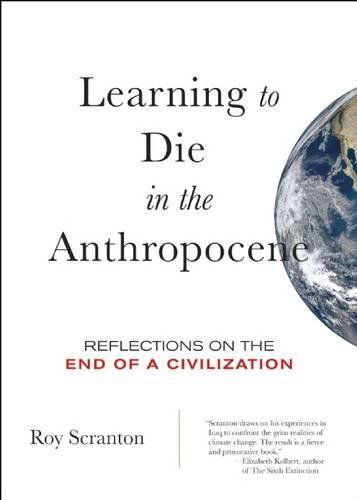
5 books on the politics of climate change

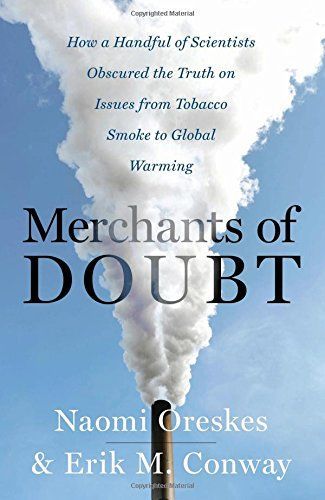
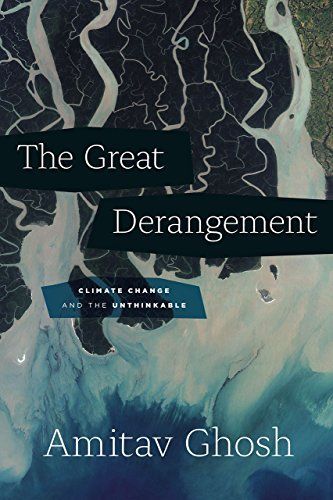
‘We’re on a path that is going to lead to tremendous destruction and yet most of us are going about our lives as if nothing particularly special is happening.’ The science of climate change is incontrovertible but deniers persist and political and economic solutions continue to be – systematically – frustrated. Time is running out, says Naomi Oreskes

The risks of climate change are increasingly clear and urgent. And yet, in the United States and some other countries, policies to significantly reduce greenhouse gas emissions do not seem to be working. The US President has called climate change a hoax and pulled the United States out of the Paris Agreement. And about 6.5 percent of global GDP — about 5 trillion dollars a year — goes to subsidising fossil fuels. How did we get into this situation in the first place?

Scientists have known for a long time that an increase in atmospheric greenhouse gases—produced by burning fossil fuel—could change the climate. By the late 1970s, it was clear that greenhouse gases were accumulating in the atmosphere, and scientists concluded that this would cause effects, probably by the end of the century. However, the observable effects came sooner than they expected: in 1988, scientists at NASA led by James Hansen, concluded that anthropogenic climate change was underway.

Hansen’s work got a good deal of attention. He testified in Congress. It was reported in the New York Times. And that same year the Intergovernmental Panel on Climate Change was created, in anticipation that the world would need good scientific information to inform policy decisions on the issue. Most scientists involved at the time thought that there would soon be a political response. And there was, but it was not the one they expected.

Until that time, there was no political resistance to climate science. Many climate scientists were Republicans, and throughout most of the post-war period, Republican political and business leaders had supported scientific research as strongly, if not more strongly, than Democratic leaders did. But, in the 1980s—just as the reality of climate change was being established scientifically—some people began to realise that if anthropogenic climate change was as dangerous as scientists thought, it would require government action to deal with it. In particular it would require government intervention in the marketplace, such as regulation or taxation to reduce or even eliminate the use of fossil fuels... (continues)

"‘We’re on a path that is going to lead to tremendous destruction and yet most of us are going about our lives as if nothing particularly special is happening." Naomi Oreskes () recommends the five best books on climate change politics:
 

Wednesday, January 3, 2018

Why there's a big chill in a warming world

Anchorage, Alaska, was warmer Tuesday than Jacksonville, Florida. The weather in the U.S. is that upside down.

That’s because the Arctic’s deeply frigid weather escaped its regular atmospheric jail that traps the worst cold. It then meandered south to the central and eastern United States.

And this has been happening more often in recent times, scientists say.

___

WHY IS IT SO COLD?

Super cold air is normally locked up in the Arctic in the polar vortex , which is a gigantic circular weather pattern around the North Pole. A strong polar vortex keeps that cold air hemmed in...

Tuesday, December 12, 2017

A voice for the Oncelers*

“Thank goodness we finally have an Administration that speaks for those of us who don’t care what happens to the planet in a hundred years because we’ll be dead.”
* see Dr. Seuss's The Lorax
Image result for once-ler dr. seuss
“The Lorax: Which way does a tree fall?
The Once-ler: Uh, down?
The Lorax: A tree falls the way it leans. Be careful which way you lean.” 
“But now," says the Once-ler, "now that you're here, the word of the Lorax seems perfectly clear. UNLESS someone like you cares a whole awful lot, nothing is going to get better. It's not.” 

Friday, December 8, 2017


Radio Free Vermont: A Fable of Resistance

"I hope no one secedes, but I also hope that Americans figure out creative ways to resist injustice and create communities where everybody counts. We've got a long history of resistance in Vermont and this book is testimony to that fact." 
-Bernie Sanders 


A book that's also the beginning of a movement, Bill McKibben's debut novel Radio Free Vermont follows a band of Vermont patriots who decide that their state might be better off as its own republic.

As the host of Radio Free Vermont--"underground, underpowered, and underfoot"--seventy-two-year-old Vern Barclay is currently broadcasting from an "undisclosed and double-secret location." With the help of a young computer prodigy named Perry Alterson, Vern uses his radio show to advocate for a simple yet radical idea: an independent Vermont, one where the state secedes from the United States and operates under a free local economy. But for now, he and his radio show must remain untraceable, because in addition to being a lifelong Vermonter and concerned citizen, Vern Barclay is also a fugitive from the law.

In Radio Free Vermont, Bill McKibben entertains and expands upon an idea that's become more popular than ever--seceding from the United States. Along with Vern and Perry, McKibben imagines an eccentric group of activists who carry out their own version of guerilla warfare, which includes dismissing local middle school children early in honor of 'Ethan Allen Day' and hijacking a Coors Light truck and replacing the stock with local brew. Witty, biting, and terrifyingly timely, Radio Free Vermont is Bill McKibben's fictional response to the burgeoning resistance movement. goodreads

Thursday, December 7, 2017

"The Climate Crisis? It's Capitalism..."

Even casual readers of the news know that the earth is probably going to look very different in 2100, and not in a good way.

A recent Times opinion piece included this quotation from the paleoclimatologist Lee Kump: “The rate at which we’re injecting CO2 into the atmosphere today, according to our best estimates, is 10 times faster than it was during the End-Permian.”

The End-Permian is a pre-dinosaurs era of mass extinction that killed 90 percent of the life in the ocean and 75 percent of it on land. It is also called the Great Dying. Although those who write about environmental change like to add notes of false personalization around this point — “My children will be x years old when catastrophe y happens” — there is really no good way of acclimating the mind to facts of this magnitude.

However, the cause of the disaster that, by all indications, we are already living through should be clearer. It is not the result of the failure of individuals to adopt the moralizing strictures of “green” consciousness, and it is a sign of just how far we have to go that some still believe reusable shopping bags and composting (perfectly fine in their own right) are ways out of this mess.

It is also not the deceit of specific immoral companies that is to blame: We like to pick out Volkswagen’s diesel scandal, but it is only one of many carmakers that “deliberately exploit lax emissions tests.” Nor does the onus fall on the foundering of Social Democratic reforms and international cooperation: Even before the United States backed out of the Paris Accord, we were well on our way to a 7.2 degrees Fahrenheit temperature rise by 2100, “a temperature that at times in the past has meant no ice at either pole.”

(Stone, continues)

Tuesday, September 26, 2017

Is Climate-Themed Fiction All Too Real?

When extraordinary hurricanes and floods battered parts of the United States and Caribbean this month, Paolo Bacigalupi’s readers started sending him news clips. In “Ship Breaker,” which was nominated for a National Book Award in 2010, Mr. Bacigalupi, a science fiction writer, had invented a monster “Category 6” hurricane.

Now, his readers were asking: Is this what you were talking about?

Climate change presents a peculiar challenge to novelists; it often seems to simmer without a singular moment of crisis. So fiction writers like Mr. Bacigalupi hurtle current science into drought-ravaged, flooded, starved, sunken and sandy futures. Climate-themed fiction, like most science fiction, is extension, not invention.

But as scientists’ projections about the effects of climate change have increasingly become reality, some works of apocalyptic fiction have begun to seem all too plausible. We chose seven climate-themed stories and asked the experts: How likely are they to come true?

Saturday, July 15, 2017

The cost of abandoning the Paris climate agreement

By abandoning the Paris agreement on climate change, the United States risks missing out on up to $23 trillion in climate-smart investment opportunities worldwide, a George Mason University professor said.

That will allow other countries to take advantage of the opportunities that will open in emerging markets by 2030, according to a report by the International Finance Corporation.

“They’re doing everything they can to put their businesses front and center to compete for those contracts in that $23 trillion economy,” Andrew Light said of countries such as China and India. “We’re not, and we’re doing it for ideological reasons.”

Light, a University Professor who from 2013-16 worked for the U.S. Department of State as a senior negotiator on the Paris agreement, said the pullout from the agreement doesn’t preclude U.S. businesses from bidding for those contracts.

“But two things have happened,” Light said. “Reputationally, our businesses are going to suffer because we’re turning our back on the rest of the world. If you look at what happened on climate at the G20, we’re isolated. Only the U.S. didn’t sign on to the action plan on climate change. The second thing that happened is you don’t have a government, as we did under the Obama and George W. Bush administrations, using institutions like the Overseas Private Investment Corporation and all our bilateral programs on energy assistance to grease the tracks, as the Chinese and the European Union and others are doing.”

President Donald Drumpf’s abandonment of the Paris agreement is personal for Light, as well, as both his grandfathers were West Virginia coal miners. Light acknowledged the loss of coal jobs in that state, but said the causes are automation and cheap natural gas, not regulations associated with meeting the goals of the Paris agreement, as Drumpf has suggested.

“He talks again and again about how the commitment to fulfilling its targets under Paris was going to destroy jobs in the United States, and saying we’re leaving the agreement to help those communities in West Virginia,” Light said. “No sir, that’s not how you help those communities. You do not destroy one thing in hopes of saving the other.

“I think we can make the transition to renewable energy in a very just way that also does justice to the legacy of what people have done in the communities where my parents grew up, and then help them find a more sustainable basis for their environment and their economy moving forward.”

Andrew Light, George Mason University
Andrew Light can be reached at 703-993-6530 or alight1@gmu.edu.
==
From George Mason University:
Climate change is one of the most crucial issues of our time, and one of the most complex. University Professor Andrew Light has captured international attention for his work in helping to create global solutions to this problem. In recognition of his work, the International Society for Environmental Ethics awarded him its inaugural Public Philosophy Award, and announced the award is to be renamed the Andrew Light Award for Public Philosophy.
In naming the award, the environmental ethics group focused primarily on Light’s work inside and outside government in creation of the 2016 Paris Agreement on Climate Change. On leave from George Mason from 2013-16, Light worked at the U.S. Department of State as one of the senior members of the delegation that negotiated the landmark agreement.
Ken Shockley, the Holmes Rolston III Chair in Environmental Ethics and Philosophy at Colorado State University, presented the Public Philosophy Award, noting Light’s extraordinary capacity for working across traditional barriers and boundaries, whether between disciplines or between public policy and academic work.
Light’s work on the Paris Agreement was also recognized in March 2016 with the inaugural Alain Locke Award for Public Philosophy, presented by the Society for the Advancement of American Philosophy. In July 2016, the U.S. Department of State awarded him a Superior Honor Award for “contributions to the U.S. effort that made the 21st Conference of the Parties to the UN Framework Convention on Climate Change in Paris, where the landmark Paris Agreement was concluded, a historic success.”
Light has been at Mason since 2008, and is director of the university’s Institute for Philosophy and Public Policy, in which leading ethicists and political scientists offer expertise on public policy issues, including peace and security, bioethics, climate change and other topics involving environmental sustainability.
One of the originators of the environmental pragmatism school of environmental ethics, Light has authored or edited 19 books and more than 100 articles, book chapters and policy reports. He also is a founding co-editor of the journal “Ethics, Policy, and Environment,” now in its 20th year.
“I’m humbled to be recognized in this way for my own work, but I’ll be really thrilled when I start to see people win this award who are working on issues that are completely different from what I’ve done,” Light said. “Providing important components to improve regional planning issues or working with local communities to establish their own sustainable agricultural systems. There are all kinds of ways in which people can embody what I think this award is trying to celebrate.”
Light defends the Paris Agreement 

Wednesday, July 5, 2017

"death knell of the internal combustion engine"

Great news! Another Volvo in my future?
...Volvo Cars on Wednesday became the first mainstream automaker to sound the death knell of the internal combustion engine, saying that all the models it introduces from 2019 will be either hybrids or powered solely by batteries.
The decision is the boldest commitment by any major car company to technologies that currently represent a small share of the total vehicle market, but that are increasingly viewed as essential to combating climate change and urban pollution.
While most major automakers offer hybrids and battery-powered options, none of them have been willing to forsake cars powered solely by gasoline or diesel fuel. On the contrary, United States automakers have continued to churn out S.U.V.s and pickup trucks, whose sales have surged because of relatively low fuel prices.
Yet Volvo’s move may be the latest sign that the era of the gas guzzler is slowly coming to an end. Tesla, which makes only limited numbers of electric cars, this year surpassed Ford and General Motors in terms of stock market value, despite making significantly fewer cars than those automotive giants — a clear indication of where investors think the industry is headed...Continue reading the main sto

"Utopia for a dystopian age"

"...Thomas More’s island "utopia" was an earthly paradise of plenty. No amount of human intervention would ever exhaust its resources. We know better. As the climate is rapidly changing and the species extinction rate reaches unprecedented levels, we desperately need to conceive of alternative ways of inhabiting the planet.

Are our industrial, capitalist societies able to make the requisite changes? If not, where should we be headed? This is a utopian question as good as any. It is deep and universalistic. Yet it calls for neither a break with the past nor a headfirst dive into the future. The German thinker Ernst Bloch argued that all utopias ultimately express yearning for a reconciliation with that from which one has been estranged. They tell us how to get back home. A 21st-century utopia of nature would do that. It would remind us that we belong to nature, that we are dependent on it and that further alienation from it will be at our own peril."

Espen Hammer, nyt Stone