Tuesday, January 24, 2023

Selfie solipsism

"… There is no simple way to banish the ennui of our age, but maybe it would help if we stopped looking at our own faces and turned instead to documenting the vanishing natural world in all its manifestations. Perhaps that change would change us in more essential ways, too. Would we finally learn to love the magnificent planet we were born to inhabit? Would we fight to save it?"
Margaret Renkl 
https://www.nytimes.com/2023/01/23/opinion/social-media-photography-selfies.html?smid=nytcore-ios-share&referringSource=articleShare
You're Pointing Your Camera the Wrong Way

Saturday, January 7, 2023

The cost of comfort

"We live our comfortable lives in the shadow of a disaster of our own making. That disaster is being brought about by the very things that allow us to live our comfortable lives."
— David Attenborough

Thursday, January 5, 2023

"Sky glow"

Over 80% of the world's population & 99% of Americans & Europeans live under "sky glow," where light pollution affects wildlife, human health & our ability to observe celestial objects.
As we lose the chance to look up & peer back in time at once vivid stars, we risk forgetting our place as a single species in the magnificent symphony of life.
https://mastodon.social/@Sheril/109635586365160698

Saturday, December 31, 2022

Greta Thunberg ends year with one of the greatest tweets in history | Rebecca Solnit | The Guardian

…There's a direct association between machismo and the refusal to recognize and respond appropriately to the climate catastrophe. It's a result of versions of masculinity in which selfishness and indifference – individualism taken to its extremes – are defining characteristics, and therefore caring and acting for the collective good is their antithesis.

"Men resist green behavior as unmanly" is the headline for a 2017 story on the phenomenon. Machismo and climate denial, as well as alliance with the fossil fuel industry, is a package deal for the right, from the "rolling coal" trucks whose plumes of dark smoke are meant as a sneer at climate causes to Republicans in the US who have long opposed nearly all climate action (and are major recipients of oil money)...

https://www.theguardian.com/commentisfree/2022/dec/31/greta-thunberg-andrew-tate-tweet

Sunday, December 18, 2022

A possible future?

"...despite the chaos and disorder engulfing the biosphere, there were a lot of interesting things to try to latch that barn door closed. Carbon-neutral and even carbon-negative technologies were all over the place waiting to be declared economical relative to the world-blasting carbon-burning technologies that had up to that point been determined by the market to be “less expensive.” Energy, transport, agriculture, construction: each of these heretofore carbon-positive activities proved to have clean replacements ready for deployment, and more were developed at a startling speed. Many of the improvements were based in materials science, although there was such consilience between the sciences and every other human discipline or field of endeavor that really it could be said that all the sciences, humanities, and arts contributed to the changes initiated in these years. All of them were arrayed against the usual resistance of entrenched power and privilege and the economic system encoding these same, but now with the food panic reminding everyone that mass death was a distinct possibility, some progress was possible, for a few years anyway, while the memories of hunger were fresh. So energy systems were quickly installed: solar, of course, that ultimate source of earthly power, the efficiencies of translation of sunlight into electricity gaining every year; and wind power, sure, for the wind blows over the surface of this planet in fairly predictable ways. More predictable still are the tides and the ocean’s major currents, and with improvements in materials giving humanity at last machines that could withstand the perpetual bashing and corrosion of the salty sea, electricity-generating turbines and tide floats could be set offshore or even out in the vast deep to translate the movement of water into electricity. All these methods weren’t as explosively easy as burning fossil carbon, but they sufficed; and they provided a lot of employment, needed to install and maintain such big and various infrastructures. The idea that human labor was going to be rendered redundant began to be questioned: whose idea had that been anyway? No one was willing to step forward and own that one, it seemed. Just one of those lame old ideas of the silly old past, like phlogiston or ether. It hadn’t been respectable economists who had suggested it, of course not. More like phrenologists or theosophists, of course. Transport was similar, as it relied on energy to move things around. The great diesel-burning container ships were broken up and reconfigured as containerclippers, smaller, slower, and there again, more labor-intensive. Oh my there was a real need for human labor again, how amazing! Although it was true that quite a few parts of operating a sailing ship could be automated. Same with freight airships, which had solar panels on their upper surfaces and were often entirely robotic. But the ships sailing the oceans of the world, made of graphenated composites very strong and light and also made of captured carbon dioxide, neatly enough, were usually occupied by people who seemed to enjoy the cruises, and the ships often served as floating schools, academies, factories, parties, or prison sentences. Sails were augmented by kite sails sent up far up into the atmosphere to catch stronger winds. This led to navigational hazards, accidents, adventures, indeed a whole new oceanic culture to replace the lost beach cultures, lost at least until the beaches were reestablished at the new higher coastlines; that too was a labor-intensive project. New but old sea transport grew into the idea of the townships, again replacing the lost coastlines to a small extent; in the air, the carbon-neutral airships turned in some cases into skyvillages, and a large population slung their hooks and lived on clippers of the clouds. Civilization itself began to exhibit a kind of eastward preponderance of movement, following the jet streams; where the trade winds blew there was some countervailing action westward, but the drift of things was generally easterly. Many a cultural analyst wondered what this might mean, postulating some reversal in historical destiny given the earlier supposed western trend, et cetera, et cetera, and they were not deterred by those who observed it meant nothing except that the Earth rotated in the direction it did. When it came to land use, effects were multiple. Carbon-burning cars having become a thing of the past, little electric cars took advantage of the world’s very extensive road systems, but these roads were now also occupied by train tracks and biking humans, and many were also taken out entirely, to create the habitat corridors reckoned necessary for the survival of the many, many endangered species coexisting on the planet with humans, other species now recognized as important to humanity’s own survival. Since people were tending to congregate in cities anyway, this process was encouraged, and an almost E. O. Wilsonian percentage of land was gradually almost emptied of humans and turned over to animals, birds, reptiles, fish, amphibians, and wild plants. Agriculture joined this effort and sky ag was invented, in which skyvillages came down and planted and harvested crops while scarcely even touching down. Cattle, sheep, goats, buffalo, and other range animals became quite free range indeed, and turning them into food was a tricky business. In fact most meat for human consumption was now grown in vats, but done right, animal husbandry proved to be carbon negative too, so that didn’t go away. Deacidifying the oceans? That wasn’t really possible, although there were attempts to frack the new basalt on the mid-Atlantic rift to capture carbonates, also attempts to in effect lime the oceans, also to build giant electrolysis baths and new algal life communities, and so on. Still the oceans were sick, as between a third and a half of the carbon burned in the carbon-burning years had ended up in the ocean and acidified it, making it difficult for many carbon-based creatures at the bottom of the food chain. And when the ocean is sick, humanity is sick. So this was another aspect of their era, and something to keep land agriculture itself at the front of the docket, because aquaculture (which had been one third of humanity’s food) was now a very active and complicated business, not just a matter of hauling fish out of the sea. Construction? This used to release a lot of carbon, both in the creation of cement and in the operation of building machinery. Lots of explosive power needed for these jobs, and so to continue them biofuels were important; biofuel carbon was dragged out of the air, collected, burned back into the air, then dragged down again. It was a cycle that needed to stay neutral. Cement itself was mostly replaced by the various graphenated composites, in the so-called Anderson Trifecta, very elegant: carbon was sucked out of the air and turned into graphene, which was fixed into composites by 3-D printing and used in building materials, thus sequestering it and keeping it from returning to the atmosphere. So now even building infrastructure could be carbon negative (meaning more carbon removed from the atmosphere than added, for those of you wondering). How cool was that? Maybe so cool it would return the world to 280 parts per million of CO2 in the atmosphere, maybe even start a little ice age; people shivered with anticipation at the thought, especially glaciologists. But so expensive. Economists could not help but be dubious. Because prices were always right, because the market was always right, right? So these newfangled inventions, so highly touted by those neo-Malthusians still worried by the discredited Club of Rome limits-to-growth issues—could we really afford these things? Wouldn’t everything be better sorted out by the market? Could we afford to survive? Well, this wasn’t really the way to frame the question, the economists said. It was more a matter of trusting that economics and the human spirit had solved all problems around the beginning of the modern era, or in the years of the neoliberal turn. Wasn’t it obvious? Just come to Davos and look at their equations, it all made sense! And the laws and the guns backing adherence to those laws all agreed. So hey, just continue down the chute and trust the experts on how things work! So guess what: there was not consensus. Are you surprised? These interesting new technologies, adding up to what could be a carbon-negative civilization, were only one aspect of a much larger debate on how civilization should cope with the crises inherited from previous generations of expert stupidity. And the Four Horses were loose on the land, so this was not the sanest of world cultures ever to occupy the planet, no, not quite the sanest. Indeed it could be argued that as the stakes got higher, people got crazier. The tyranny of sunk costs, followed by an escalation of commitment; very common, common enough that it was economists who had named these actions, as they are names for economic behaviors. So yeah, double down and hope for the best! Or try to change course. And as both efforts tried to seize the rudder of the great ship of state, fights broke out on the quarterdeck! Oh dear, oh my. Read on, reader, if you dare! Because history is the soap opera that hurts, the kabuki with real knives."

New York 2140" by Kim Stanley Robinson: https://a.co/cTDRuLu

Saturday, December 17, 2022

Almost official: the Anthropocene

For Planet Earth, This Might Be the Start of a New Age A panel of experts has spent more than a decade deliberating on how, and whether, to mark a momentous new epoch in geologic time: our own.

The official timeline of Earth’s history — from the oldest rocks to the‌ dinosaurs to the rise of primates, from the Paleozoic to the Jurassic and all points before and since — could soon include the age of nuclear weapons, human-caused climate change and the proliferation of plastics, garbage and concrete across the planet.


In short, the present.


Ten thousand years after our species began forming primitive agrarian societies, a panel of scientists on Saturday took a big step toward declaring a new interval of geologic time: the Anthropocene, the age of humans.


Our current geologic epoch, the Holocene, began 11,700 years ago with the end of the last big ice age. The panel’s roughly three dozen scholars appear close to recommending that, actually, we have spent the past few decades in a brand-new time unit, one characterized by human-induced, planetary-scale changes that are unfinished but very much underway.


“If you were around in 1920, your attitude would have been, ‘Nature’s too big for humans to influence,’” said Colin N. Waters, a geologist and chair of the Anthropocene Working Group, the panel that has been deliberating on the issue since 2009. The past century has upended that thinking, Dr. Waters said. “It’s been a shock event, a bit like an asteroid hitting the planet.”

... https://www.nytimes.com/2022/12/17/climate/anthropocene-age-geology.html?smid=em-share

Friday, December 16, 2022

Quiz: What’s the Best Way to Shrink Your Carbon Footprint?

Take this quiz to see how you stack up.

...Looking at the survey results, it appears that many Americans conflate the primary benefit of recycling — less pollution and waste — with the potential to meaningfully address a very different problem: climate change. Researchers have observed this phenomenon in the past, finding that Americans tend to mix up environmental problems like pollution, the hole in the ozone layer and the greenhouse effect.

The moral halo around recycling is largely a result of a decades-long disinformation campaign by plastic manufacturers. Since the 1980s, the fossil fuel industry has spent millions of dollars on advertisements telling people to recycle, despite the fact that a large majority of plastic products can’t be salvaged and end up in landfills. In April, the California attorney general announced an investigation into the fossil fuel and petrochemical industries’ “aggressive campaign” to promote recycling and “deceive the public.”


The success of the disinformation campaign around recycling can largely be chalked up to a phenomenon that psychologists call the “illusory truth” effect. It happens when people mistakenly think a claim is more likely to be true just because it has been repeated. And the virtues of recycling have been repeated many times. For example, a 2017 study of Canadian textbooks found that recycling was the most commonly recommended way to mitigate climate change. Only 4 percent of the textbooks’ recommendations focused on high-impact behaviors such as avoiding air travel.


So where does that leave us? Although estimating the carbon footprint of specific actions is not an exact science, we can raise awareness about actions that most researchers agree are necessary to slow climate change.


Specifically, we need to fight influential misperceptions. Recycling is one example; so is misinformation around electric vehicles. Many Americans believe that electric cars are more expensive to maintain than gas-fueled cars. In fact, electric cars are often cheaper to own over their lifetimes. And tax credits in the recently signed Inflation Reduction Act should significantly reduce the cost of buying an electric vehicle. These facts are worth bringing up around the dinner table because preemptively refuting misinformation is one of the most effective ways to counter its spread.


While governments and businesses have the most power to reverse climate change, perhaps the best thing we can do as individuals is to hold them accountable, dispel influential myths and shift our collective attention to the actions that matter most. Although the jury is still out on the effectiveness of throwing soup at famous artworks, we know that switching to clean energy, flying less and adopting a plant-based diet are some of the most effective ways to help save our planet...


https://www.nytimes.com/interactive/2022/12/15/opinion/how-reduce-carbon-footprint-climate-change.html?smid=em-share

Wednesday, December 14, 2022

Planetary perspective


Not there yet. 

Why is it that to function in society with strength and efficiency, we need to ignore the incomprehensible miracles that surround us constantly? Why is it that to function in the world, we must take on an oblivious self-confidence by placing ourselves in a tiny world, a small and limited subset of reality? Why is it that we abandon awe and limit ourselves to the prison that is right in front of our noses, guided primarily by our animal instincts while ignoring our full perception of the world? We have the capability to project our conscious thought backward or forward billions of years yet act as if all that matters is the past and/or immediate future. ”
― Ron Garan, Floating in Darkness - A Journey of Evolution

Living in the Future's Past


"This film completely reframes the narrative of the typical 'environmental documentary', instead focusing on the behavior, trends, and impact of humanity from a psychological and ethical perspective. It is truly groundbreaking to capture such a diverse array of thought leaders and scientists in one film - offering disparate yet complementary perspectives on why we find ourselves in this current state of uncertainty and how we can all engage - do our part for positive change. From the incredible visuals, score, and narrative journey... Filmmaker Susan Kucera does a brilliant job for nimbly transcending the doc-status-quo, opting instead for a more intellectually challenging and inspiring course for this remarkable film!" - written by "aaron-13968" on IMDb.com

They Fought the Lawn. And the Lawn Lost.

After their homeowner association ordered them to replace their wildlife-friendly plants with turf grass, a Maryland couple sued. They ended up changing state law.

COLUMBIA, Md. — Janet and Jeff Crouch do not know which flower or plant may have pushed their longtime next door neighbor over the edge, prompting him to pen complaint after complaint about the state of their yard.

Perhaps it was the scarlet bee balm that drew hummingbirds in darting, whirring droves. Or the swamp milkweed that Monarch butterflies feasted upon before laying their eggs. Or maybe it was the native sunflowers that fed bumblebees and goldfinchesWhatever it was, their neighbor’s mounting resentment burst to the fore in the fall of 2017, in the form of a letter from a lawyer for their homeowner association that ordered the Crouches to rip out their native plant beds, and replace them with grass.

The couple were stunned. They’d lived on their quiet cul-de-sac harmoniously with their neighbors for years, and chose native plants to help insects, birds and wildlife thrive. Now the association was telling them that their plantings not only violated the bylaws, but were eyesores that hurt property values. “Your yard is not the place for such a habitat,” the letter read...

“This idea that humans and nature cannot coexist is destroying the entire planet, which in turn is destroying humans,” Dr. Tallamy said. “The only way forward is to coexist.”

...“Maryland was a big deal,” Dr. Tallamy, the ecologist, said. “Now people know if they fight back, they can win.” nyt

Thursday, December 8, 2022

Thanks

Final presentations are concluded, final reports should now all be posted. If you've neglected to post, or have been unable to do so, email it directly to me - phil.oliver@mtsu.edu.

Have a good break. Hope to see you in a future class. If you're graduating, good luck. Keep in touch!


The Case For Nuclear (Final Report Audio Summary)

 Here is a recording of my final report on nuclear. Thank you all for the great semester. 

Sunday, December 4, 2022

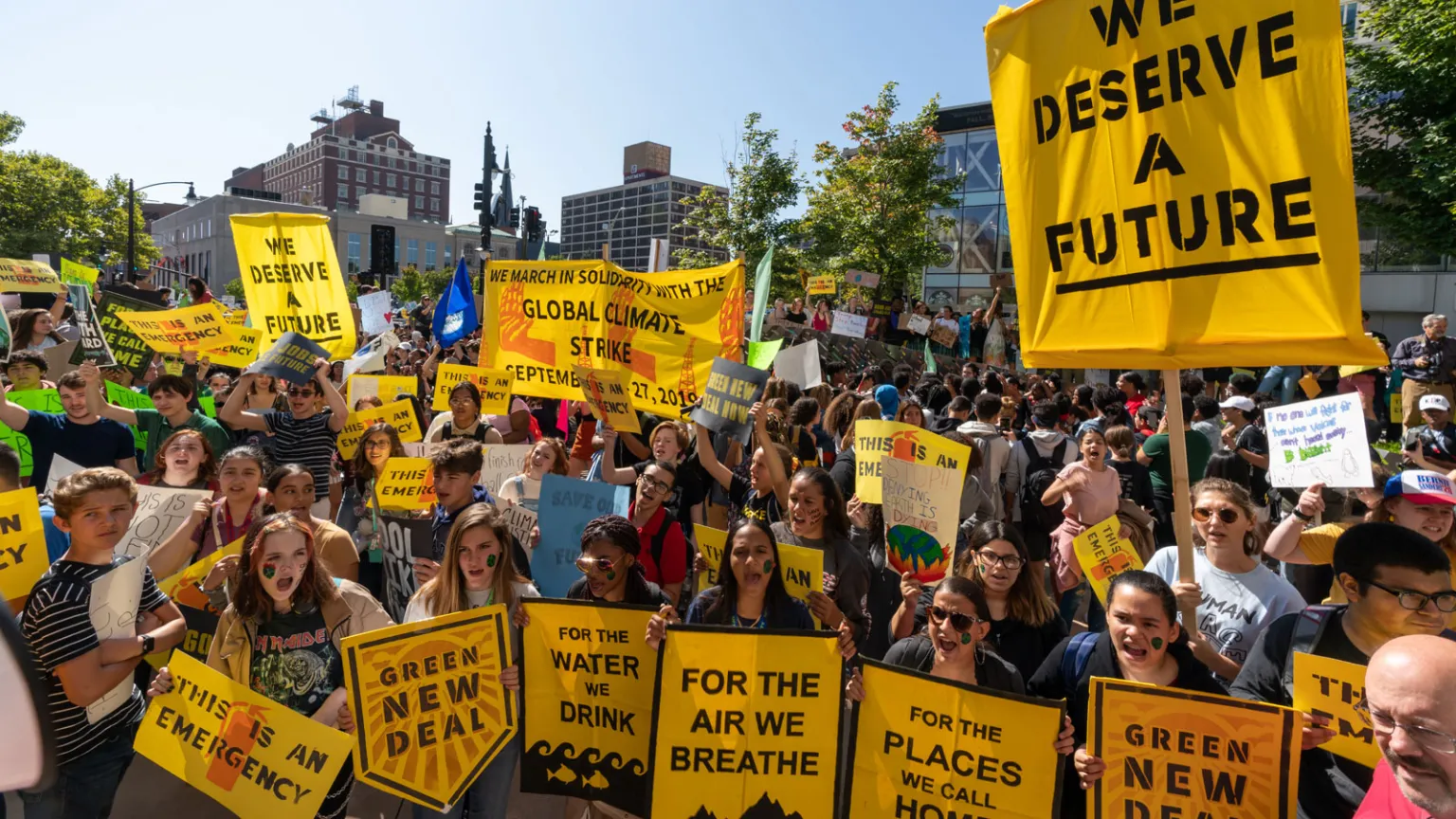
Sunrise Movement

 Final Exam write up - The Sunrise Movement 


The Sunrise Movement is an American political action organization that advocates political action on climate change. The movement was first launched in 2017 and the end goal was to elect proponents of renewable energy in the 2018 midterm elections. Ever since the 2018 mid-term election, The Sunrise Movement has been moving towards changing the climate policy to center the environmental program known as the Green New Deal. 


A new report released this month noted that a quarter of the world's population already lives in areas experiencing extremely high heat stress. By 2050, almost every American city will experience significant warming, leading to wildfires, heat waves, and other forms of extreme weather”. Obviously, this calls for quick action, but some politicians do not believe in climate change, so I feel as though the fight for green legislation will be like an uphill battle. This is where the Sunrise Movement steps in, hoping for change. Sunshine is a movement of young people organizing to stop climate change and create millions of jobs in the process. I think if we are going to get our country to 100% renewable energy, we need to update our buildings or install solar panels. That would help create jobs for people who want/need one and would help us transition the country from fossil fuels to clean energy. 


The Sunrise Movement had its first sit-in, with Justice Democrats and Alexandria Ocascio-Cortez (an American politician), along with Speaker of the House Nancy Pelosi. This brought the movement its first significant press coverage and brought about a similar event in February of 2019, bringing a group of young people to confront senator Dianne Feinstein in her office. Since the sit-in, the movement has been attracting media attention. 


I feel as though the younger generation may be dealing with depression and suicide that is related to the climate crisis. Maybe humans should not even exist in this world if we are causing so much harm in a short amount of time. People of one generation should not have to suffer from the actions that we are doing today. There has to be a way where we can help prevent more damage from being done or somehow meet in the middle.


I think that the rising generation will adequately engage in the climate crisis or at least I hope that they will. I think that the Sunrise movement is calling for solutions that address the climate crisis and social justice, in saying that I think that what we have can lead us to a better solution when it comes to our climate crisis. There is still so much work to be done, but this dream of the future can hopefully come true if we keep fighting.


My take on the Sunrise Movement

     If the future lies in the hands of our youth, can we determine whether or not we are in good hands?


Disclaimer:

    When discussing policy changes and systematic political changes, I do not feel extremely well versed on what true government policy reform and implementation looks like behind the scenes. So I consider my points around that to be taken with a grain of salt. 


The Good (You get an "A" for Activism) 

    It is my opinion that an educated youth is an empowered youth. While the digital information age can certainly bring upon unhealthy article, page, or headline diets, the fact of the matter is that the (maybe fringe) minority of accurate and important information is more accessible now than it ever has been to our nations youth. Though I have not been around long enough to know how many 15 and under environmental activist have been as prominent as someone like Greta, my intuitions tell me that the growing accessibility to information about the present and future state of the planet is bringing upon a rapidly growing movement of young people with passion for making their world a better place. 
    The obvious bright side to this is that, if the trend continues in the right direction, the way in which future policy makers, those who will ultimately have the fate of the worlds future in their hands, will prioritize how resources are distributed and how systematic interventions regarding climate change are made, will also trend in the direction of preventing further damage to planet and trying to repair what damage has already been done. By the looks of the Sunrise website, it's certainly inspiring to see how much the organization has already accomplished and aspires to moving forward. Considering how things have gone thus far in regards to regulating the environmental impact that the functionality of our society has created, it seems that the passion held by the Sunrise Movement will be necessary for any real changes to be made moving forward. At some point, those who will be calling shots are the same one's who are currently in braces and on Accutane, and we mustn't take lightly that the current state of our youth may be an apt predictor of what our future holds. 

The Dicey (Pushing might be needed, but so might handshakes) 

    "Fight F*cking Fascism" reads one of the ambitions of the movement on their website. "We are up against the GOP, a grand old party of violence." 

Since about 2020, the left's methodology for the changes it claims to aspire for has felt a bit unsatisfactory. While I'm not expert in politics, the recipe for change still seems relatively simple to me. 
The issue: we can't get enough people on the right to agree with us, so the changes we want never come into fruition. The response thus far: we need to call the orange man "orange" on live tv, surely that will make people change their minds, right?
If on paper this reads idiotic, perhaps that's because it may be so. 

I certainly don't blame the Sunrise Movement for considering everyone with a MAGA hat to be a threat to society, In fact, I fully see where they are coming from. That said, if one is truly passionate about making a change, then I propose there will need to be a period of adjustment. A moment of looking in the mirror and understanding that holding up a sign saying "red guy bad" whilst marching in the streets may actually be sabotaging any chances of fixing that which you claim to care deeply about. 
By no means am I proposing that the concept of activism is inherently fallible, however, I think that much the left's execution of this activism has been egregiously mismanaged. 
The simple truth is that getting the most amount of people on board with what we claim to care about is the only option for implementing true change. 
I do hope that the Sunrise Movement can do better than we have thus far moving forward. 

Overall Thoughts

    While I will remain to critique the techniques that I deem ineffective, I ultimately believe that Sunrise Movement is a form of our only hope for a brighter future. Change is typically only generated by way of passion or failure to function. Since some will try to keep things the way they are until they get their ticket to the MARS 37, the passion of our youth is what we'll have to count on to get us to a better place. Currently, I'd like to say I believe in them. 

The Case For Nuclear


Intro

    While we are all aware that one of the biggest existential threats to society in the long term is climate change, many of us are looking for the best options for offsetting some of the damage already done and proactively preventing what could be done in the future. If in fact one of our goals as a society of environmental pragmatists is to move towards the most efficient source of clean energy then I would argue, we're missing a big opportunity by neglecting the implementation of nuclear energy. While nuclear already accounts for about 20 percent of energy ranging across 28 states in the US, I would say that we should be pushing for much more. 


    Safety

    Obviously the biggest setback in the progression of the nuclear movement is the concern for the safety of nuclear power plants. When "nuclear energy" gets brought up, many people's minds go directly to Chernobyl. This is understandably so considering how, even though it is one of only 2 major incidents (Fukushima) involving nuclear power plants, it was a major catastrophe which caused numerous casualties as well as effected the lives of all those who resided in areas surrounding the plant. This should not be taken lightly, though energy sources like coal, oil, and even hydropower cause more deaths from accidents and air pollution than nuclear. Also, as the engineering behind plants have progressed over the years, plant production has gone up and incident rate has decreased. While solar and wind will likely be the least incident prone in the long run, nuclear is not far behind. While detailed analysis and large scale testing of plants did not really take place until the late 1970's, they have since shown that the worst possible accidents from todays conventional western power plants would not likely cause any drastic public harm. 


Efficiency

    Given that nuclear may still be considered by many to be too dangerous to integrate on a large scale, and other sources of clean energy already exist, why would we take our chances?
To be clear, I'm proposing that we need to integrate more nuclear plants *in addition to* the other key clean sources such as solar and wind. 

As far as pure energy efficiency goes, nuclear has the highest capacity factor of any other energy source by far (for many). This means that "nuclear power plants are producing maximum power more than 92% of the time during the year" as opposed to coal, which sits at about 40% and wind at about 35%. An excerpt from a nuclear article on energy.gov explains the significance of this:

"Why Does This Matter?

A typical nuclear reactor produces 1 gigawatt (GW) of electricity. That doesn’t mean you can simply replace it with a 1 gigawatt coal or renewable plant.

Based on the capacity factors above, you would need almost two coal or three to four renewable plants (each of 1 GW size) to generate the same amount of electricity onto the grid."


Also, while the initial cost of production for nuclear plants is indeed higher than other sources, the year over year energy return in the long term does not even compare. Nuclear by far produces the most energy per invested dollar after only about 5 years. The maintenance required to keep a nuclear plant in production is also far less than that over other sources. This keeps costs low overtime. 


Conclusion

    Although there are still understandable concerns for the further implementation of nuclear plants in the U.S. the fact of the matter is that it is a safe, cost and energy efficient, and underestimated source of clean energy. 

The Texas Group Waging a National Crusade Against Climate Action

…With influence campaigns, legal action and model legislation, the group is promoting fossil fuels and trying to stall the American economy's transition toward renewable energy. It is upfront about its opposition to Vineyard Wind and other renewable energy projects, making no apologies for its advocacy work…

https://www.nytimes.com/2022/12/04/climate/texas-public-policy-foundation-climate-change.html?smid=nytcore-ios-share&referringSource=articleShare
The Texas Group Waging a National Crusade Against Climate Action

Saving Radnor

https://www.instagram.com/p/ClvzXgPDSAP/?igshid=NWQ4MGE5ZTk=

Saturday, December 3, 2022

The People Cheering for Humanity’s End

A disparate group of thinkers says we should welcome our demise. Atlantic

As a humanist, I think the anti-humanists have a self-esteem problem. If we humans don't fix what we've broken, who will?

The Environmental Movement and White Supremacy

One of the most fundamental problems of Environmental Ethics is the question of whom the environment belongs to. How we choose to answer it carries a great deal of baggage. It reflects our society as a whole, articulating in very concrete terms who and what we value. Its answer grows out of history, guided by the thoughts and social developments that gave rise to it being asked in the first place. In this regard it’s an aspirational question, who ought this world in its totality serve, and who should be allowed to make use of its resources for their wealth, recreation, and well-being.

Almost invariably, the answer given has simply been, “Me!” with me taken to mean the group in power at the time. In our history the me has meant the wealthy, the white, and the male. The environmental movement grew out of this answer and its work has often reflected it.

An early victory for the parks movement came with the completion of the Bronx River Parkway, a turn of the century effort to clean the nearby river and beautify the area surrounding New York City at the time (the city has since incorporated the parkway). But of course in the eyes of its planners cleaning and beautifying required more than just the removal of material pollution, it required the removal of ‘human pollution’. The development was planned to evict as many African American and Italian families as possible in an effort preserve the environment explicitly for the use of what at the time was explicitly called the “master race” that is people of white northern European descent.

Later parks would follow similar development. National parks, often called America’s best idea, would be built on land acquired through the expulsion and genocide of Native Americans. Yellowstone, perhaps the most famous park in the world, is made up of land of tremendous cultural significance to over 27 different indigenous nations. This pattern of displacement and theft has continued into the present day. At the 2003 world parks congress the indigenous delegations closing statement read in part, “First we were dispossessed in the name of kings and emperors, later in the name of State development and now in the name of conservation.” These issues will only be exacerbated as the economic importance of ecotourism increases for local economies and large corporations opening ski resorts and hunting preserves expand and “conserve” indigenous people’s land.

Of course none of this is to say that environmentalism or national parks or preserves or any other form of wild preservation is inherently wrong. It is simply to say that by understanding and denouncing the flawed history of our movement we are able to ameliorate the mistakes of the past, and in recent years through the efforts of tireless poc environmentalists great strides have been made towards that end. Efforts like the land back movement have sought to create indigenous stewardship and, in someplace, sovereignty over the land, allowing them to protect and honor their land and cultural heritage according to their own history.


Outdoor clubs in BIPOC communities have sought to address disparities in environmental recreation. To the present day, largely because of the history discussed above non-white people make up less than 20% of national park visitors. By welcoming marginalized groups into the full enjoyment of the outdoors that is the right of all human beings a greater movement is being built that can adequately face the deep pockets of the anti-environmental lobby.


Likewise, across the world today indigenous people are at the forefront of developing economies that supply them with wealth and livelihood through the preservation of ecosystems through ecotourism centered around local communities rather than multinational corporations. Through these practices Costa Rica has seen significant economic growth over the past two decades while attaining carbon neutrality. An achievement that would have seemed inconceivable only a quarter of a century ago.

Through these efforts and countless others we can have some hope that out of the thorny web of barbaric history a seed of a better world is emerging. White supremacy is pervasive and systemic and despite our best efforts it likely will not be destroyed in a generation, but its eradication is possible. Every small victory towards an equitable movement and future is one over the fetters of this history and a step towards a future worthy of the human species as a whole.

Throughout this course we have discussed expanded notions of the environment to include the issues of human society as a whole. Environmental issues intersect with the struggles of all the oppressed people of the world. Those who bear the greatest brunt of the climate catastrophe we’re facing will largely not be white. They’ll be black or brown or indigenous, living in places we far too often disregard in our conversation of hydrogen fuel cells and carbon marketplaces. By addressing the fundamental question of environmentalism we can create a movement and thereby a world that goes far beyond those practical considerations. We can create a world where the earth’s stewardship is our chief concern and through its preservation we can support the flourishing of our people. All environmentalists fight for a sustainable world but we must ask ourselves what does this future sustainable world look like, and in my opinion, if it is simply a return to the world we have known for the past 700 years ensnared by white supremacy sans pollution then we shall have failed.


Germans Have Seen the Future, and It’s a Heat Pump

REMSCHEID, Germany — After decades of heating their homes with relatively cheap Russian natural gas, Germans are facing exorbitant prices for energy. The search is on for an alternative source of warmth that is climate-friendly and free from natural gas.

Enter, the heat pump.

Using a technology that dates to the 1970s, these boxy machines have suddenly been embraced across Germany — so much so that heat pumps are often sold out, and the wait for a qualified installer can last months.

The German government is among the fans.

"This is the technology of the future," Robert Habeck, the minister for the economy, told reporters last month while announcing a government plan to promote heat pumps… nyt