Saturday, October 5, 2024


Plastic on the brain
A recent study by the National Institutes of Health found a staggering amount of microplastics in the livers, kidneys, and brains of recently deceased cadavers.
The brains, however, were the biggest shock: They had 10 to 20 times more microplastics than the other organs studied. Twenty-four of the brain samples measured were found to be about 0.5% plastic by weight.
https://www.threads.net/@scifri/post/DAq33rkPaNj/?xmt=AQGzfNFiLZzktbHWl7AQfS1OugkdK_RDeSF8M-g9z3ksvg
The brains, however, were the biggest shock: They had 10 to 20 times more microplastics than the other organs studied. Twenty-four of the brain samples measured were found to be about 0.5% plastic by weight.
https://www.threads.net/@scifri/post/DAq33rkPaNj/?xmt=AQGzfNFiLZzktbHWl7AQfS1OugkdK_RDeSF8M-g9z3ksvg
“climate haven”
"I wasn't prepared to be a climate refugee. Not after relocating my family from drought and wildfire-prone California to the "climate haven" of Asheville, N.C. But less than two months after we moved into our delightfully wooded, mild-weather community, we were forced to leave." | Opinion
https://www.threads.net/@scientific_american/post/DAtHq6PvqIW/?xmt=AQGzrwxusubeGw_ZPIsC5k_gO-Csxtiq96v6Rw3UtGiFGw
https://www.threads.net/@scientific_american/post/DAtHq6PvqIW/?xmt=AQGzrwxusubeGw_ZPIsC5k_gO-Csxtiq96v6Rw3UtGiFGw
Friday, October 4, 2024
Renewables x3
HAPPY FRIDAY: The massive expansion of renewable power in recent years opens the door to tripling renewables.
Love this short, optimistic and encouraging video by the IEA!
https://www.threads.net/@janrosenow/post/DAszoRQvFG4/?xmt=AQGz9QEGW37-UDcxghAz6btCzzt538tF445uud3BriJXbA
Love this short, optimistic and encouraging video by the IEA!
https://www.threads.net/@janrosenow/post/DAszoRQvFG4/?xmt=AQGz9QEGW37-UDcxghAz6btCzzt538tF445uud3BriJXbA
Thursday, October 3, 2024
The Many Lives of James Lovelock
The Gaia guy-
"A zingy read, keeping an energetic pace without feeling superficial. Those interested in environment, the history of science and the human drama behind scientific discoveries will all enjoy the ride."
https://www.nature.com/articles/d41586-024-03148-0
"A zingy read, keeping an energetic pace without feeling superficial. Those interested in environment, the history of science and the human drama behind scientific discoveries will all enjoy the ride."
https://www.nature.com/articles/d41586-024-03148-0
Wednesday, October 2, 2024
JD Vance’s cowardly climate denial
Sometimes, being a climate reporter feels like being in a twisted version of Groundhog Day. Every time you think the world has finally moved beyond debating whether climate change is real or fake, you wake up to find that the day has reset—and a white guy with oil money seeking powerpushed the button.
Last night, JD Vance pushed the button while thousands of Americans were suffering from one of the deadliest hurricanes in U.S. history. At the vice presidential debate on Tuesday, Donald Trump's running mate cast doubt on the "idea" that heat-trapping pollution heats the atmosphere, calling it "weird science" that he would only accept "for the sake of argument."
…
==
When moderator Margaret Brennan noted during last night’s vice presidential debate that Republican nominee J.D. Vance had, once again, lied about the legal status of migrants in Springfield, Ohio, Vance retorted: “The rules were that you guys weren’t going to fact-check!” As scholar of propaganda Pekka Kallioniemi noted, this was “[t]he epitome of post-truth politics.”
Vance lied throughout the debate and has lied throughout this campaign, and in that, he is following the MAGA Republicans and Trump, who has become entirely untethered from reality. Aaron Rupar, who watches Trump’s rallies, and Noah Berlatsky wrote in Public Notice that Trump’s growing mental incapacity was obvious yesterday, as in two rallies he made a “wide-ranging journey through conspiracy theories, hatred, and nonsense.” He “seems ever more adrift in his own fog of hate and ego,” Rupar and Berlatsky wrote, “He mixes up world leaders, confuses countries, garbles pronouns, loses track of his nonsense talking points.”
... hcr
MTSU undergrad philosophy club
The MTSU Undergraduate Philosophy Society is having its first official meeting this Friday, Oct. 4th at 2:30pm-4pm in the Student Union building, rm 221. Dr. Principe will speak on 'What Is Existentialism?

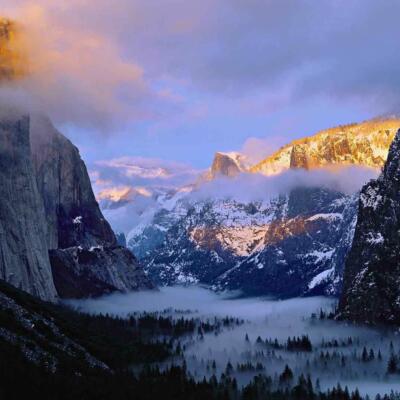
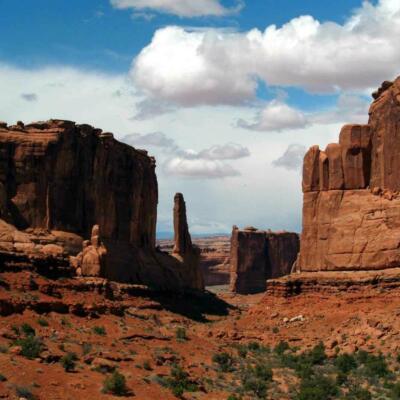
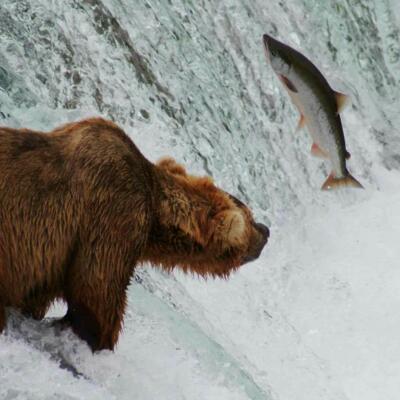
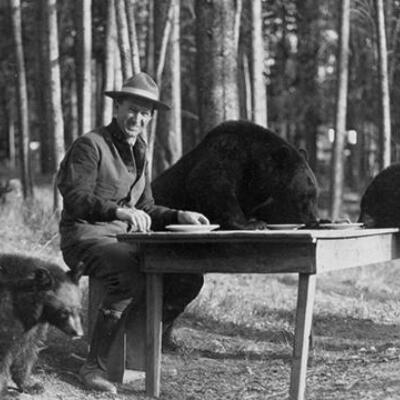
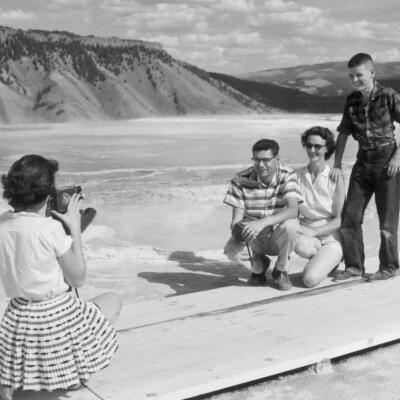
Watch The National Parks: America's Best Idea | Ken Burns | PBS
Preview:
The National Parks: America's Best Idea is the story of an idea as uniquely American as the Declaration of Independence and just as radical: that the most special places in the nation should be preserved, not for royalty or the rich, but for everyone. As such, it follows in the tradition of Burns's exploration of other American inventions, such as baseball and jazz.
The narrative traces the birth of the national park idea in the mid-1800s and follows its evolution for nearly 150 years. Using archival photographs, first-person accounts of historical characters, personal memories and analysis from more than 40 interviews, and what Burns believes is the most stunning cinematography in Florentine Films' history, the series chronicles the steady addition of new parks through the stories of the people who helped create them and save them from destruction. It is simultaneously a biography of compelling characters and a biography of the American landscape... (continues)
Episodes...

Tuesday, October 1, 2024
Questions OCT 3
Midterm report presentation Audrey Lewis
PH
- COMMENT? "Nature is not an 'it' out there. It is us... There may not be any 'individuals' in nature..." 63
- Nature does what, when harm ceases?
- What is the correct order of George Monbiot's threats? What drives the false predator myth? 64-5
- What is a keystone species? What are the three types? What kind are we? 67
- RE: ecosystem engineers (67)... What do you think of Stephen Tvedten's response to the "dam complaint"?
- Should wildlife tourism be discouraged? 71
- Do you recall any discussion about Trump's border wall disrupting animal habitats and migratory routes? Do you think most politicians understand or care about these issues if they don't hear about them from their constituencies? 73
- Is Knapp Castle's rewilding experiment replicable in the U.S.? 76
- Your questions...
GT
- Why does fossil fuel use continue to rise in middle- and low-income countries? 224-5
- Who should governments protect in the transition to sustainable energy sources? 227
- Wherever there is a ___, there is a potential solar energy source. 228
- On what does the climate impact of wood use depend? 231
- Biodiverse forests should be considered what kind of technology? 232
- Around the world there are growing calls for what, with respect to solar geoengineering? 234
- What are some natural climate solutions that can offset fossil fuel pollution? Can we rely mostly on them? 236
- What's more costly than the high cost of drawdown? 239
McK
- The Great Paver's philosophy is ___. 378
- In the Glen Canyon wilderness, said Eliot Porter, you could remove yourself from what (and live in what)? 391
- What sentence anchored the Wilderness Act of 1964? 392-3
- What did LBJ say the Highway Beautification Act of 1965 would achieve?
- Kenneth Boulding said conservation is irrational unless you identify with what? 402*
- Lynn White Jr. said our ecological crisis would worsen until we reject what? 412
*In his intro to the Kenneth Boulding excerpt, McKibben mentions Herman Daly...
Herman Daly, 84, Who Challenged the Economic Gospel of Growth, Dies
Perhaps the best-known ecological economist, he faulted his mainstream peers for failing to account for the environmental harm growth can bring... (continues)

Monday, September 30, 2024
Britain Shuts Down Last Coal Plant, ‘Turning Its Back on Coal Forever’
The Ratcliffe-on-Soar plant was the last surviving coal-burning power station in a country that birthed the Industrial Revolution and fed it with coal.
Britain, the nation that launched a global addiction to coal 150 years ago, is shutting down its last coal-burning power station on Monday.
That makes Britain first among the world's major, industrialized economies to wean itself off coal — all the more symbolic because it was also the first to burn tremendous amounts of it to fuel the Industrial Revolution, inspiring the rest of the world to follow suit.
"The birthplace of coal power is turning its back on coal forever," said Matt Webb, an associate director at the London-based research and advocacy group, E3G.
On Monday, in the middle of England, the end of Britain's coal era will be marked by the closure of the 2,000-megawatt Ratcliffe-on-Soar facility. Uniper, the power company that operated the plant, said the 750-acre site would be converted to a "low-carbon energy hub."
...
https://www.nytimes.com/2024/09/30/climate/britain-last-coal-power-plant.html?smid=em-share
Britain, the nation that launched a global addiction to coal 150 years ago, is shutting down its last coal-burning power station on Monday.
That makes Britain first among the world's major, industrialized economies to wean itself off coal — all the more symbolic because it was also the first to burn tremendous amounts of it to fuel the Industrial Revolution, inspiring the rest of the world to follow suit.
"The birthplace of coal power is turning its back on coal forever," said Matt Webb, an associate director at the London-based research and advocacy group, E3G.
On Monday, in the middle of England, the end of Britain's coal era will be marked by the closure of the 2,000-megawatt Ratcliffe-on-Soar facility. Uniper, the power company that operated the plant, said the 750-acre site would be converted to a "low-carbon energy hub."
...
https://www.nytimes.com/2024/09/30/climate/britain-last-coal-power-plant.html?smid=em-share
Questions OCT 1
PH -61 Forests. GT 4.1--4.5 (thru Persistence of Fossil Fuels). McK thru Rachel Carson. Midterm report presentations Chelsie Gordon, Aidan Haines...
Midterm report presentations Chelsie Gordon, Aidan Haines
PH
- COMMENT?: "...especially in the Deep South..." 37
- COMMENT? "'Using' land is what people have been doing for centuries... people are connected to place..." 41
- Do you think the public understands the importance of protecting tropical forest ecosystems? 42-3
- Have you planted any trees lately, or supported tree-planting campaigns? Do you intend to? 44
- Do you use/consume palm oil, deliberately or not? Will you try harder not to, after reading about Peatlands? 48
- Though "agroforestry systems are making a comeback" (53) we still see reports of bad choices regarding forestlands (like cutting down trees for solar farms). Are these random flukes, or might there be a more sinister explanation?
- Does the discussion of indigenous fire management/wisdom reinforce Wendell's message about the power and necessity of localism and long-term commitment to communities? 54-5
- Are you going to look for ways to get more bamboo into your life (as flooring, furniture etc.)? 57
- Have you read The Overstory?** (If not, I highly recommend it.) What are your thoughts on "the profound ties between trees and people"? What would it mean to really see the world "from the standpoint of trees"? 60-1
GT
- What gives Greta no pleasure? What does she say we should ask politicians? 201
- Do you like Greta's bathtub analogy? Do you agree that all political ideologies have failed sustainability? 202
- What's the second phase of denialism? Who's the we who fear rocking the boat? What does mitigation mean? 205-8
- What gap did the WaPo reveal in Glasgow, with what implications for the next 50 years? 212-3
- What gap does Greta call "almost a joke"? In what wrong direction are we moving? 216-7
- What's crystal clear to Greta? Agree? 218
- Why's it so hard to stop burning fossil fuel, according to McKibben? 219-21
- What would we do if we were smart and kind? 222
McK
- What might you see, if you could fast-forward the history of our early ancestors over a million years? 346
- What did Justice Douglas argue, in Sierra Club v. Morton? What famous environmental writer did he invoke to support legal "standing" for the natural world? 348, 358
- What does sentimentality do to nature, accoding to Jane Jacobs? 363
- How much DDT were farmers using after WWII, with what result? 365
- What are some other species (besides birds) that Carson said had been harmed by pesticides like parathion? 375
- ...post your comments please
**

The Overstory is a sweeping, impassioned work of activism and resistance that is also a stunning evocation of - and paean to - the natural world. From the roots to the crown and back to the seeds, Richard Powers’s twelfth novel unfolds in concentric rings of interlocking fables that range from antebellum New York to the late twentieth-century Timber Wars of the Pacific Northwest and beyond. There is a world alongside ours—vast, slow, interconnected, resourceful, magnificently inventive, and almost invisible to us. This is the story of a handful of people who learn how to see that world and who are drawn up into its unfolding catastrophe. g'r
“The best arguments in the world won't change a person's mind. The only thing that can do that is a good story.”
“What you make from a tree should be at least as miraculous as what you cut down.”
“This is not our world with trees in it. It's a world of trees, where humans have just arrived.”
“People aren’t the apex species they think they are. Other creatures-bigger, smaller, slower, faster, older, younger, more powerful-call the shots, make the air, and eat sunlight. Without them, nothing.”
“But people have no idea what time is. They think it’s a line, spinning out from three seconds behind them, then vanishing just as fast into the three seconds of fog just ahead. They can’t see that time is one spreading ring wrapped around another, outward and outward until the thinnest skin of Now depends for its being on the enormous mass of everything that has already died.”
“You and the tree in your backyard come from a common ancestor. A billion and a half years ago, the two of you parted ways. But even now, after an immense journey in separate directions, that tree and you still share a quarter of your genes. . . .”
(And then read Bewilderment... and now Playground...)
Richard Powers is the Pulitzer-prize and National Book Award-winning author of twelve novels, including Orfeo, The Echo Maker, and The Time of Our Singing. The Overstory, Powers most recent novel, is a sweeping, impassioned tale of activism and resistance that is also a stunning evocation of – and paean to – the natural world. The Overstory unfolds in concentric rings of interlocking fables that explore the essential conflict on our planet: the one taking place between humans and nonhumans.
Bill McKibben is an author, environmentalist, activist, and the co-founder of 350.org, an international climate campaign that works in 188 countries around the world. His 1989 groundbreaking book, The End of Nature – issued in dozens of languages and long regarded as a classic – was the first book to alert us to global warming. He’s gone on to write a dozen more books, most recently Falter: Has the Human Game Begun to Play Itself Out? The Schumann Distinguished Scholar in Environmental Studies at Middlebury College and a fellow of the American Academy of Arts and Sciences, he is the recipient of the Right Livelihood Prize, the Gandhi Prize and the Thomas Merton Prize, and holds honorary degrees from 18 colleges and universities.
https://youtu.be/1CVdc_1HaMU
No safe place
Asheville is over 2,000 feet above sea level, and ~300 miles away from the nearest coastline. No place is safe from climate change.
We all suffer the consequences. We must all take action. We are all in this together.
https://www.threads.net/@luckytran/post/DAgoruCgirK/?xmt=AQGz5klLMbevFSEgBCAsiU5xL6helFGrpwGG7vnD6u5EyA
We all suffer the consequences. We must all take action. We are all in this together.
https://www.threads.net/@luckytran/post/DAgoruCgirK/?xmt=AQGz5klLMbevFSEgBCAsiU5xL6helFGrpwGG7vnD6u5EyA
==
Water
If you want to understand the horror still unfolding in Appalachia, and actually if you want to understand the 21st century, you need to remember one thing: warm air holds more water vapor than cold.
As Hurricane Helene swept in across a superheated Gulf of Mexico, its winds rapidly intensified—that part is really easy to understand, since hurricanes draw their power from the heat in the water. And as Jeff Masters points out:
Helene’s landfall gives the U.S. a record eight Cat 4 or Cat 5 Atlantic hurricane landfalls in the past eight years (2017-2024), seven of them being continental U.S. landfalls. That’s as many Cat 4 and 5 landfalls as occurred in the prior 57 years.
But Helene also picked up ungodly amounts of water—about 7% more water vapor in saturated air for every 1°C of ocean warming. In this case, that meant the mountaintops along the Blue Ridge above Asheville were—according to Doppler radar measurement—hit with nearly 4 feet of rain. That meant that Asheville—listed recently by the national media as a “climate haven” and bulging with those looking for a climate-safe home—is now largely cut off from the world. The interstates in and out of the town were severed for a while over the weekend; the beautiful downtown is drowned in mud. It’s obviously much worse in the outlying towns up in the surrounding hills. People forget how high these mountains are—Mt. Mitchell, near Asheville, is the highest point east of the Mississippi (and, worth noting, the forests on its summit slopes have been badly damaged by acid rain)... Bill McKibben
An Open Letter to Jimmy Carter, on His 100th Birthday
… Your presidency was doomed by wars and unrest in the Middle East that led to oil and gas shortages here and to a hostage crisis in Iran that broke your heart and ours. But you recognized the looming threat of climate change even then, understanding that reliance on foreign oil was not the real danger we faced. I can't help but wonder where the world would be now if Americans had embraced the environmental policies you initiated nearly 50 years ago.
Much of what you worked to do for the environment during your presidency was nothing less than visionary. Using executive powers, you protected a vast swath of the Alaskan wilderness, in the process doubling the size of the national parks system. You directed federal funds toward the development of renewable energy and installed solar panels on the White House. You began an enormous federal effort to bring the country to energy independence and tried to lead us by calling on our own better angels to make it through the crisis in the meantime.
"I'm asking you, for your good and for your nation's security, to take no unnecessary trips, to use car pools or public transportation whenever you can, to park your car one extra day per week, to obey the speed limit and to set your thermostats to save fuel," you said. "Every act of energy conservation like this is more than just common sense. I tell you it is an act of patriotism."
…
Margaret Renkl
https://www.nytimes.com/2024/09/30/opinion/jimmy-carter-100th-birthday.html?smid=nytcore-ios-share&referringSource=articleShare
Saturday, September 28, 2024
A Next Generation Approach to Heating and Cooling Buildings
A fifth-generation network at the Bankside Yards project in London offers new possibilities for the pace of decarbonization in the United Kingdom and elsewhere.
...Bankside Yards is using a "fifth-generation" combined heating and cooling network that can balance energy within each building and then between buildings by collecting unwanted heat, say from a refrigerator in a restaurant or a piece of office equipment that needs to be cooled, and carrying that heat to somewhere that needs hot water or domestic heating.
https://www.nytimes.com/2024/09/25/climate/fifth-generation-heat-pumps.html?smid=em-share
Electric-powered heat pumps on building rooftops and in each apartment or commercial space then adjust the temperature of the water by withdrawing or injecting heat into the pipes to provide the heating, cooling and hot water needed in each place...
https://www.nytimes.com/2024/09/25/climate/fifth-generation-heat-pumps.html?smid=em-share
What if Everyone Did Something to Slow Climate Change?
Researchers are looking at the impact that individuals' actions can have on reducing carbon emissions — and the best ways to get people to adopt them.
...At the same time, there is concern that promoting personal solutions to address global climate change lets corporations and governments off the hook and even plays into their hands. For example, a carbon footprint calculator was created by the oil and gas company BP in 2004 as part of an advertising campaign to help people measure their impact on the environment. Critics said it was simply a way to shift the responsibility from big companies to everyday consumers.
...Genevieve Guenther, the author of "The Language of Climate Politics," emphasized that not all people are equally responsible for climate change. According to a report by the nongovernmental organization Oxfam International, the top 1 percent in income worldwide account for more carbon emissions than the poorest 66 percent. In the United States, a study by PLOS Climate found, 10 percent of the richest Americans account for about 40 percent of greenhouse gas emissions.
Political actions, such as voting and pressuring elected officials, can help, Ms. Guenther said in a video interview.
"Our true responsibility is to use our choices as political agents in the world to try to shift power, take power away from the people who are blocking the transition away from fossil fuels and give it to people who will lead into a livable future," she said.
https://www.nytimes.com/2024/09/25/climate/carbon-reduction-strategies.html?smid=em-share
...At the same time, there is concern that promoting personal solutions to address global climate change lets corporations and governments off the hook and even plays into their hands. For example, a carbon footprint calculator was created by the oil and gas company BP in 2004 as part of an advertising campaign to help people measure their impact on the environment. Critics said it was simply a way to shift the responsibility from big companies to everyday consumers.
...Genevieve Guenther, the author of "The Language of Climate Politics," emphasized that not all people are equally responsible for climate change. According to a report by the nongovernmental organization Oxfam International, the top 1 percent in income worldwide account for more carbon emissions than the poorest 66 percent. In the United States, a study by PLOS Climate found, 10 percent of the richest Americans account for about 40 percent of greenhouse gas emissions.
Political actions, such as voting and pressuring elected officials, can help, Ms. Guenther said in a video interview.
"Our true responsibility is to use our choices as political agents in the world to try to shift power, take power away from the people who are blocking the transition away from fossil fuels and give it to people who will lead into a livable future," she said.
https://www.nytimes.com/2024/09/25/climate/carbon-reduction-strategies.html?smid=em-share
Good question
The publication of Rachel Carson's "Silent Spring" on this day in 1962 put the world on alert to the dangers of overuse and misuse of chemical pesticides, proving a key motivator in the nationwide ban of DDT, a popular but hazardous insecticide.
Decades later, what is the impact of Carson's work?
https://to.pbs.org/3xTLPmW
Decades later, what is the impact of Carson's work?
https://to.pbs.org/3xTLPmW
Rachel Carson’s inconvenient truth
On this day in 1962, Rachel Carson published "Silent Spring" at great personal risk and against tremendous backlash, as she was dying, catalyzing the modern environmental movement with her bravery of speaking inconvenient truth to power.
https://www.themarginalian.org/2017/01/27/rachel-carson-silent-spring-dorothy-freeman/
https://www.themarginalian.org/2017/01/27/rachel-carson-silent-spring-dorothy-freeman/
Friday, September 27, 2024
Down under
Into the blue beyond – William Beebe's breathtaking century-old account of becoming the first human being to see the deep ocean
https://www.themarginalian.org/2023/08/19/william-beebe-half-mile-down/
https://www.themarginalian.org/2023/08/19/william-beebe-half-mile-down/
Wednesday, September 25, 2024
Silicon Valley Renegades Pollute the Sky to Save the Planet
Some restless entrepreneurs are releasing pollutants in the sky to try to cool the planet.
For 50 years, climate scientists have suggested that releasing aerosols into the stratosphere could act as a buffer and reduce the heat from the sun. Volcanic eruptions have temporarily cooled the planet this way in the past, but no one has attempted to intentionally replicate the effect at scale.
As the perils of climate change become more extreme, interest in the idea, known as stratospheric solar geoengineering, is growing. Scientists at Harvard, Cornell, Colorado State and Princeton are studying it and the University of Chicago recently launched an ambitious research program.
But all geoengineering is not created equal. While universities are pouring millions of dollars into research, others, avowing concern about global warming and seeing a business opportunity, are barreling ahead without any scientific study. Mr. Iseman got the idea for Make Sunsets from a sci-fi novel...
https://www.nytimes.com/2024/09/25/climate/rogue-solar-geoengineering.html?unlocked_article_code=1.NU4.gS-R.jLOAFnNoz6ca&smid=em-share
As the perils of climate change become more extreme, interest in the idea, known as stratospheric solar geoengineering, is growing. Scientists at Harvard, Cornell, Colorado State and Princeton are studying it and the University of Chicago recently launched an ambitious research program.
But all geoengineering is not created equal. While universities are pouring millions of dollars into research, others, avowing concern about global warming and seeing a business opportunity, are barreling ahead without any scientific study. Mr. Iseman got the idea for Make Sunsets from a sci-fi novel...
https://www.nytimes.com/2024/09/25/climate/rogue-solar-geoengineering.html?unlocked_article_code=1.NU4.gS-R.jLOAFnNoz6ca&smid=em-share
First He Spoke for the Trees; Now He Speaks for the Sea
The wonders of the ocean and the terrors of A.I. meet in Richard Powers's new novel, which considers the future of an environmentally challenged Polynesian island.
...The ecological novel has become a staple of contemporary fiction, and rightly so. When people aren't really listening to the drumbeat of scientists, it's essential that our best authors take up their sticks as well. Heck, bang a cymbal.
Richard Powers was writing about nuclear radiation and chemical carcinogens when the Young Turks of today were still in their disposable diapers. He's been piled in prizes, most recently the Pulitzer for "The Overstory," a complicated narrative of communicating trees. And yet he himself is sort of a grand old oak of American letters: a towering, sturdy figure often overlooked for flashier species.
Powers's new book, "Playground," is an enchanting entry point to his work that swings open easily with just a few creaks.
The title is, as the best are, multifarious. Nominally, it refers to the Reddit-slash-Facebookish internet platform founded by Todd Keane, a white billionaire who has been diagnosed, at 57, with Lewy body dementia. He is reflecting on the erosion of his intense school friendship with Rafi Young, a principled Black bibliomaniac turned NGO worker.
It also points to the central staging area of childhood, where personalities calcify and futures are forged (once opponents in chess and Go, Todd and Rafi are now battling for higher stakes). And more mind-bendingly, the vast expanse of the earth's oceans, "a rainbow garden painted by Bonnard" where remoras hitch rides on manta rays, octopii chase each other in hide and seek, cuttlefish perform like light shows on the Las Vegas Strip and when conditions are exactly right there are massive, generative orgies: "coral sex parties."
The news about the warming, rising ocean has been so very grim, many people just don't want to hear it. Like a visit to the big blue whale exhibit at the American Museum of Natural History, "Playground" reminds, with a spirit of fun and wonder, why the sea — an alien planet within a planet — is so very worth sustained attention. You start to understand the zeal that drove the doomed Titan explorers down to the shipwreck that continues to pulse with animal and bacterial life... nyt
==
...The ecological novel has become a staple of contemporary fiction, and rightly so. When people aren't really listening to the drumbeat of scientists, it's essential that our best authors take up their sticks as well. Heck, bang a cymbal.
Richard Powers was writing about nuclear radiation and chemical carcinogens when the Young Turks of today were still in their disposable diapers. He's been piled in prizes, most recently the Pulitzer for "The Overstory," a complicated narrative of communicating trees. And yet he himself is sort of a grand old oak of American letters: a towering, sturdy figure often overlooked for flashier species.
Powers's new book, "Playground," is an enchanting entry point to his work that swings open easily with just a few creaks.
The title is, as the best are, multifarious. Nominally, it refers to the Reddit-slash-Facebookish internet platform founded by Todd Keane, a white billionaire who has been diagnosed, at 57, with Lewy body dementia. He is reflecting on the erosion of his intense school friendship with Rafi Young, a principled Black bibliomaniac turned NGO worker.
It also points to the central staging area of childhood, where personalities calcify and futures are forged (once opponents in chess and Go, Todd and Rafi are now battling for higher stakes). And more mind-bendingly, the vast expanse of the earth's oceans, "a rainbow garden painted by Bonnard" where remoras hitch rides on manta rays, octopii chase each other in hide and seek, cuttlefish perform like light shows on the Las Vegas Strip and when conditions are exactly right there are massive, generative orgies: "coral sex parties."
The news about the warming, rising ocean has been so very grim, many people just don't want to hear it. Like a visit to the big blue whale exhibit at the American Museum of Natural History, "Playground" reminds, with a spirit of fun and wonder, why the sea — an alien planet within a planet — is so very worth sustained attention. You start to understand the zeal that drove the doomed Titan explorers down to the shipwreck that continues to pulse with animal and bacterial life... nyt
==
UPDATE
Play's the thingFinished Playground, but I don’t think it’s finished with me. The themes of play, story, evolution, death and life, and this wondrous but under-appreciated oceanic planet where they all play out will resonate. We’d like it to be an infinite game, continuing for the sake of the play itself. But we may be in the process of writing our final chapters.
Powers's final chapter, in this book, gets the game:
But the look the humans share says: What does it look like? Call it what it is. Every dance is a game, and every game its own best explanation. Everything alive, even we newcomers. . . . What are all creatures—even me—doing at all times but playing in the world, playing before their tinkering Lord?
Our tinkering Lord is natural selection, with or without a pre-meditative tinkerer. Play on, Hamlet. And Richard. Can't wait for the sequel.
(And because the mlb regular season ends today, let's play into the post-season. Then, start counting the days to Spring Training.)
Subscribe to:
Posts (Atom)