Thursday, September 17, 2020

Another Dustbowl

 The idea of such high quantities of land in the country being dedicated to monoculture should provide some shock factor not only because the sheer amount of land used for corn in the United States is more so than the total land mass of Japan but also because of the negative effects created by monoculture. Jahren mentions that “corn plants require lavish amounts of fertilizer, (29)” and this is important to understand because planting a crop as demanding as corn year after year depletes the soil of much- needed nutrients, which will take years to replenish, whether naturally or by human hand. In the case of monoculture, replenishing by human hand in the form of fertilizer is the only option for a farmer to see any sort of consistent yieldThis fertilizer, if applied at the wrong time in the plant’s growth, in the wrong amount, or after a rainfall, can be carried away by wind or percolate into our groundwater supply. Couple that with the fact that 1000 acre farms cannot realistically operate without the aid of heavy farm equipment that compact the soil underneath and create more runoff fertilizer, and we have massive amounts of unused fertilizer from a crop we already produce in excess. Once that corn is harvested, the soil is left with little of the structure or nutrients it had before and is heavily compacted. So the heavy plow is run over the fields to break up the compaction created partially by its own huge tires, but then the fine soil particles that separated from the rest of the soil are sent into the air, joining their fertilizer partners. This cycle of planting the same nutrient- greedy crop and supplementing with chemical fertilizer that will find its way into our water streams and air is what led to The Dust Bowl, and without the implementation of conservation farming methods, could create another one.  


This week: two comments and this essay

Semester total: 10 points

Is Jumping Ship a Viable Solution?


Earlier this week, I heard the news that researchers found possible signs of life in Venus’ atmosphere. Whether or not there really are aliens on Venus is still unknown, but I am very excited to see what this finding will lead to. 

All of the talk about aliens this week reminded me of a conversation I had with my Grandpa when I was a kid. He was telling me about his hope that within my lifetime, scientists would find a way to build an earth-like atmosphere on Mars. My Grandpa, deeply concerned about the climate crisis, figured that this may be one way to save humanity should the earth become inhabitable in the future.

Several years later, I still hear people discussing this idea. As of right now, NASA says our technology isn’t nearly as advanced as it would need to be to pull it off. So, if it is going to happen someday, it may not be in my lifetime, after all. Of course, it may never even be possible beyond our imaginations.


But as each day passes by, we are losing our window of time to get ahead of this crisis. It is quite likely that we are already too late, although I would like to believe that we still have a shot at saving our planet. But at what point do we need to start looking for a new home, if we are unable to take care of our current one? When do we jump ship to save ourselves? 


I hope that our messaging never has to shift from preservation to abandonment. To me, it feels a lot like giving up, but it may be necessary as a last resort. What do you think? Is it a solution worth devoting our time and resources to, just in case?


---

Weekly Summary:

Sep 17: Wrote This Blog!

Sep 15: Comment on "Questions Sep 14-16"

Sep 15: Comment on "Questions Sep 14-16"

Grand Total: 20 points


how much garbage we grow


            Food waste in America is a terrible problem, that needs to be addressed soon.  In stopping food waste not only will we stop losing 40% of our food supply, but we will cut down on methane emissions which also causes global warming.  I also think that we should not be so willing to throw out food based solely on its expiration date; this date is an approximate made by the store so that they know which products need to pushed to the front of the shelves.  As for solutions, the Department of Agriculture there are a few programs that they are pursuing in order to cut down on our food waste.  Of course, one could say that the Department of Agriculture started some of these problems themselves with agricultural subsidies that shaped farmers choices on what they grew.  One of these harms is the runoff of fertilizer into the local water sources which the cities then have to treat in order to make it safe for its residents to drink this also includes the harm done to fishing and tourism business as well from fertilizer run off, not to mention the health problems that occur as well.  Of course, the EPA is trying to reduce food waste by holding summits and discussions it with leaders in both the private and public sectors.  This will also help families that struggle to put healthy food on the table as well by providing food that commercial suppliers don’t want to organizations that help feed low income families.  According to some estimates 1 in every 8 Americans struggle to put food on their table, which shouldn’t even be a problem with how much we through out everyday.

I have commented on Patrick and Ed's post this week, and I should have 13 points by now Dr. Oliver

"Animal Slaughter" The Greatest Conservative Heavy Metal Band of the Century

 Now living in the state of Montana, seeing livestock being pushed into huge trucks on the side of the road is a commonality. The biggest money maker in this state is no doubt livestock and people in this red state wear that as a chip on their shoulder.  Wearing their wannabe cowboy outfits and literally looking down at people that do not own a farm from their ridiculous supped up trucks is another visual commonality of air pollution I see on a daily basis. However, in the town I live the air pollution is so bad  and saturated thanks to the old timely factories and abundance of people with big truck syndrome that it is almost comparable to the air quality in Nashville. 

    It is sad to think that the livestock that I see pilled into a new uncomfortable way of life in the back of these trucks have no knowledge of the mutilation they have ahead of them. This sickens me and I wish my family raised me to be more aware of this in the early years of my life so that it would be easier for me to make a more conscientious dietary plan for my life. I wish I had the capacity to cut out meat in my diet to help bring more awareness and to reduce my carbon footprint as well as to improve my overall well being. 

    It saddens me to have moved to a new state that I know is so set in the past and does not have the mental capacity to stop listen and truly hear a voice of reasonable change. Living in this traditional community I will continue to live in a  conscientious learning in regards to living a more sustainable life. I will also stay positive towards change in my community and will even attempt to convey change to people as I grow and create relationships in my new red community around me.

GMOs and Conceptions of Social Justice

 Regarding the DQ: If GMOs  "pose no unique hazards to human health," and the chief objection to them is the companies that exclusively control them, why can't we move against those companies with antitrust  action to break their monopolistic hold?

Forgive the incoming nerdiness, but the policy here is interesting (I had to spend an entire year studying this field for my high school debate league and have followed the topic ever since).  

One of the main policy tools used by companies such as Monsanto is the intellectual property rights protection laws--i.e. patents.   Frederick Kaufman notes that the U.S. patent law has allowed to create a monopoly over GMO crops. This treatment of food is fundamentally problematic. Kaufman writes:

A copyrighted movie or book remains the same movie or book, but when food becomes a legal construct or an intellectual property right, it stops being food. Of course, you can eat patented popcorn the same way you can consume its unpatented cousin. But unlike an iPhone or a flatscreen TV, everyone needs food, and we need it every day. The world’s largest purveyors of industrial agriculture would like to convince the rest of us that the global food market is as free as the market for any other widget—even though no one can opt out of purchasing breakfast, lunch, or dinner for any extended period of time, or in any meaningful way. Since everyone must participate in the food market to the tune of 2,700 or so calories a day, food property rights allow those who hold food patents a guaranteed portion of profits from a guaranteed purchase, which is fundamentally unfair. (1) 

Kaufman has some reason to be concerned.  Food Democracy notes that between 1997 and 2014, Monsanto filed 145 suites regarding patent violations, and won every single one (2).  However, patent law comes from a long tradition of government sanctioned sciences.  Article I, Section 8, gives Congress the enumerated power to promote "sciences and useful arts."  By guaranteeing that developers and innovators will reap the benefits of their investment, the government protects and incentives investment.  Studies have empirically shown that countries with strong patent protection lead to diverse and advanced development (3).  However, Kaufman argues that property rights should be less strict when it comes to the bare necessities for life. 

And here is where we find the crux of the issue: property rights.  It can be easy to dissolve the issue down to a simplistic "abolish property rights" or "eat the rich" narrative, but the empirical data shows that patents do have some benefit.    What we have here is conflict between conflicting interpretations of social justice.  The classical market-economy interpretation favors a negative liberty framing of the issue; that is, a just society does not provide obstacles to human action.  Thus, any attempt to wrest corporate control of GMOs away would require the state to infringe upon the negative liberty of the company.  Kaufman, on the other hand, is advocating for a just society that favors a positive liberty.  Where as proponents of negative value non-interference, proponents of positive liberty advocate for individual empowerment and self-realization.   Thus, an individual is free once they are autonomous to make decisions that further their own interest and values.  Yet this second framework is relatively unpopular, and the support for negative liberty has been baked into the system for centuries.  

Allow me to illustrate the how this mentality creates systemic favortism. In the neighborhood of 2016/17, three major mergers between the GMO/pharmaceutical companies Monsanto and Bayer, Dow and  DuPonte, and Syngenta and ChemChina mergers were initiated.  Alleah Douglas, published a fascinating report in the Global Law Review in 2018, discussing the international antitrust laws relevant to the mergers (4).  In her article, she notes that the Monsanto-Beyer merger would consolidate the American market to where 80% of U.S. corn-seed sales and 70% of the global pesticide market under just three companies.  In particular, Douglas notes that the Monsanto-Beyer mergers is a clear violation of the following American antitrust laws:

The Sherman Antitrust Act of 1890 

The Clayton Act of 1914

The Federal Trade Commission Act

The Hart-Scott-Rodino Antitrust Improvement Act of 1976

So if the merger clearly violates the laws on the books?  How did it get approved?  The Washington Post published an article in 2018 that reported the Department of Justice allowed the merger after the companies sold $9 billion worth of assets.  Additionally, the article states: "U.S. antitrust officials investigated the Bayer-Monsanto deal for more than a year, ultimately concluding that it could result in increased costs for the country’s agricultural sector" (5).  Despite these reservations, Maken Delrahim, the assistant attorney general, argued that requiring the company to sell assets is would resolve the anti-competitive merger rather--more so than regular oversight by antitrust regulators.  However, Bayer's net worth post-merger is estimated to be over 126 billion euros (roughly $150 billion) (6).  So the DoJ reasoned that requiring Beyer to sell 6% of their assets would preserve a vibrant economy.

In conclusion, when asking why the GMO companies are immune from antitrust action, we have to understand that their position was obtained from a underlying interpretation of social justice.  The status quo's bias for negative liberty favors noninterference over self-realization.  


(1) https://slate.com/human-interest/2012/12/plant-patent-law-why-overhauling-it-will-do-more-to-help-the-food-movement-than-prop-37-ever-could.html

(2) https://www.fooddemocracynow.org/blog/2014/sep/6/monsanto_has_sued_farmers_16_years_never_lost_case

(3) https://www.jstor.org/stable/4132712

(4) https://engagedscholarship.csuohio.edu/cgi/viewcontent.cgi?article=1065&context=gblr

(5) https://www.washingtonpost.com/business/economy/justice-department-approves-bayer-monsanto-merger-in-landmark-settlement/2018/05/29/25d56ec8-6358-11e8-a69c-b944de66d9e7_story.html

(6) https://www.statista.com/statistics/306594/total-assets-of-bayer-ag-since-1995/#:~:text=Bayer%20Group's%20total%20assets%201995%2D2019&text=Bayer%20Group%20is%20a%20chemical,of%20over%20126%20billion%20euros.

Weekly Total: 5

-Commented on Patrick's Post about gluttony
-Commented on Tyler's Post about solar panels twice
-Commented on the Sept. 14-16 DQ page
-Wrote essay

Semester Total: 15 (I think...)

Climate future is now

Jon Mooallem! (@jmooallem) tweeted at 10:23 AM on Thu, Sep 17, 2020:
Last night the air improved to merely "unhealthy" and I caught myself driving with the windows down, blasting Young Americans, feeling unburdened and free. Thought maybe I could write about adaptation, how it's not always good. Remembered I already did. https://t.co/L5PkfphKwI
(https://twitter.com/jmooallem/status/1306614809035591681?s=02)

Sisyphus on the lawn mower

 For you, Ed. You could get the audiobook and listen while mowing... if you can hear an audiobook over the roar of the machine. jpo

LISTEN. I was complaining yesterday, first in a tweet inspired by @MargaretRenkl's appreciation of a new book about turning boring lawns into multiform meadows, and later in class, about the lawn mowers next door upsetting my calm and disrupting my attempt to record a video. And then, they showed up in our yard. Good opportunity to practice what I've been preaching about stoicism, patience, ataraxia and all that.

I was still complaining, in Environmental Ethics, and musing about why it is that we've bought in to the whole lawn aesthetic. Why don't we all let a hundred flowers bloom, figuratively speaking? Why don't we let our grounds become the gardens they could be, let them grow and multiply and variegate, let our flora flourish, let our non-conformist freedom flags fly? 

Then I recalled reading Michael Pollan's first book Second Nature: A Gardener's Education, back in the early '90s before he became our leading authority on the ethics of food, farm policy, and the challenges and opportunities that accrue to omnivores like most (still?) of us. And, I recalled how much I used to hate riding the lawn on that "infernal machine" that left my nerves jangled and my mind in disarray. Pollan understood.

“Mowing the lawn, I felt like I was battling the earth rather than working it; each week it sent forth a green army and each week I beat it back with my infernal machine. Unlike every other plant in my garden, the grasses were anonymous, massified, deprived of any change or development whatsoever, not to mention any semblance of self-determination. I ruled a totalitarian landscape.
Hot monotonous hours behind the mower gave rise to existential speculations. I spent part of one afternoon trying to decide who, in the absurdist drama of lawn mowing, was Sisyphus. Me? The case could certainly be made. Or was it the grass, pushing up through the soil every week, one layer of cells at a time, only to be cut down and then, perversely, encouraged (with lime, fertilizer, etc.) to start the whole doomed process over again? Another day it occurred to me that time as we know it doesn't exist in the lawn, since grass never dies or is allowed to flower and set seed. Lawns are nature purged of sex or death. No wonder Americans like them so much.”

Sisyphus on a Zero-Turn John Deere, the "whole doomed process." 

Ed said he loves it. I don't. This one tests the limits of my pragmatic-pluralistic sensibilities, but okay. To each their own. Just think, though, how much more interesting our landscapes would be if we gave up the collective unspoken conspiracy against lawn diversity. Bio-diversity. We've got to get ourselves back to the meadow.


Wednesday, September 16, 2020

Malthus v. George

 Thomas Malthus gave rise to discussion over population. As we know, the planet’s population has been on the rapid increase since industrialism. In the past half century alone, the global population has doubled. Malthusianism is the concept that the human population may grow exponentially, but our food growth is linear. Of course this leads to the train of thought that we must prepare for and try to avoid overpopulation. Now to negate these ideas, Henry George suggested that things such as poverty and starvation are not a flaw with population size, but rather the flaw of man in not providing for itself. Nature is not what is failing us- we are. 

I’m sure it will come as no shock to the class that I am on the side of George on this issue. The more people we have on the planet, the more hands we have to provide labor. With today’s current population, there are over 800 million people going hungry. Malthus may very well blame this fact on the concept of overpopulation. This could be valid, if large portions of our population haven’t gone hungry throughout all of history. But obviously humanity is not new to hunger. The reason for poverty and things of this nature is not that there are too many of us, it’s that the resources we have are not allocated to everyone. Tons and tons of food is wasted in the US each year. This food could very easily feed a homeless man. Or all the homeless men and women. By blaming it on individuals’ decisions on reproducing, we are taking the same path of reasoning as eugenicists and those who think it is within their right to control the entire world’s population.


Weekly Summary

Sept. 9- Essay

Sept 9- Comment on California wildfire post 

Sept 9- Comment on questions 


Total points this semester- 17 I believe?

 "About one million animals are slaughtered for food every hour in the US"


Gluttony is one of the seven deadly sins, however many people in the states seem to forget this. Considering how important religion is to so many people in this country you’d think they’d put aside their own gluttony in order to save the  lives of animals. We need to go back to the days of raising and slaughtering your own animals because the disconnect between people and their food is ridiculous. We slaughter more than the entire population of the world in chickens every year and most of us have never even seen one in person. It is so easy to eat food when you don't know where it comes from or how it was made. I find myself more and more disgusted by meat on a daily basis, the more I learn about the treatment of animals and the conditions of these meat plants the less I want to consume meat. Another problem I have noticed is a lot of people also don’t prepare their own food. I know plenty of people who eat meat and love it but won’t prepare it or touch it when it comes down to dinner. It just seems a bit cowardly to me to not even give this animal that we’ve killed the respect of preparing it yourself. Of course it is not realistic to expect every human being to raise their own meat but there definitely needs to be more education on how and where food comes from. 

I believe there are ethical ways to consume meat and to go about farming it. Meat should be more of a treat or a luxury considering how much work has to go into producing it. These farm animals should at least be able to live a good full life before we consume them. A Lot of calories and resources are wasted trying to keep up with the demand for meat globally and I feel it's selfish to continue to take the stance of eating meat just for the fun of it. 

There are so many negative consequences to eating and farming meat that they outweigh just about any argument in favor of it. Along with animal cruelty comes climate issues caused by their emissions, less fresh water and food for people, stronger microorganisms due to antibiotics, increased chances of colorectal cancer and heart disease, i could go on but the point is that our infatuation with meat is bad for everyone, even ourselves. Making the switch to a more plant based diet is necessary for the survival of future generations and I hope through better education and government intervention we can start getting people to eat more healthy and sustainably, because there are ways to eat meat and fish sustainably if only we’d take the time and money to invest in these solutions.


Free

Meadows!

Tuesday, September 15, 2020

Divestment is working

Week Four Essay - The Antitrust Tool in Our Box

Many of the problems we see in The Story of More and in Falter can be listed under the category of ‘problems with the concentration of economic power’. Too few corporations control the food supply and distribution system. Too few corporations control the technology sector. With economic power comes political power; with political power comes the power to preserve the economic power. It is a threat to our democratic system.

Our economic system is not a pure capitalist system, but a mixed economic system. A mixed economic system is a system that combines aspects of both capitalism and socialism. A mixed economic system protects private property and allows a level of economic freedom in the use of capital, but also allows for governments to interfere in economic activities in order to achieve social aims. Through our government, we provide the rules under which the capitalists must play the game. All games have rules and referees or umpires to ensure compliance with the rules of the game.

The rules of the capitalism game relating to concentration of economic power are antitrust legislation and policies. They began in 1890 with the passing of the Sherman Antitrust Act. The legal fiction of a trust was used to combine businesses. These were the days of the robber barons, Henry Ford, Andrew Carnegie, Cornelius Vanderbilt, and John D. Rockefeller. And these were the days of the “trust buster” president, (progressive) Republican Teddy Roosevelt, who stood up to their power in the interest of the American people.

Antitrust laws are not unambiguous (that’s lawyer speak; lawyers love double negatives). Their interpretation and enforcement depends on the economic policies of the administration enforcing them, the referees and umpires. Throughout its history, American antitrust policy has been subject to multiple interpretations whose goals have included preserving local businesses, protecting consumers and small producers against the superior market power of large corporations, and safeguarding the competitive process. But in the late 1970s, antitrust jurisprudence and enforcement adopted a framework which eliminated the qualitative and pluralist dimensions of antitrust enforcement, and focused almost exclusively on economic efficiency. This has led to increased corporate concentration, including increased inequality, decreased entrepreneurship, and the concentration of economic growth into a small number of geographical areas. What we can now see is that concentration of economic power has danger even when resulting efficiencies don’t lead to price increases. A proper consumer welfare antitrust policy would encompass quality and innovation in its concerns. Also, focusing only on consumer welfare is inadequate because it pays no attention to the threat corporate power poses to democratic institutions.

Antitrust legislation provides the tools to deal with Monsanto, and Facebook, and Google. All we need is progressive leadership like Teddy Roosevelt to stand up to economic power and act for the people.

Weekly Participation Summary

09/14 This post

09/14  Comment on DQ: Do you agree that personal choices matter …?

09/16 Comment on The Climate Connection to California’s Wildfires

Week Four Point Total – 5

Four Week Cumulative Point Total – 20


WEIRD

 We're WEIRD, we westerners, says a new book by Harvard anthropologist Joseph Henrich (THE WEIRDEST PEOPLE IN THE WORLD: How the West Became Psychologically Peculiar and Particularly Prosperous). It's the subject of a glowing Times review by Daniel Dennett

That's an acronym, and not necessarily an aspersion. It means we're western, educated, industrialized, rich, and democratic. Being weirdly western predicts that a great many of us 

are individualistic, think analytically, believe in free will, take personal responsibility, feel guilt when we misbehave and think nepotism is to be vigorously discouraged, if not outlawed. Right? They (the non-WEIRD majority) identify more strongly with family, tribe, clan and ethnic group, think more “holistically,” take responsibility for what their group does (and publicly punish those who besmirch the group’s honor), feel shame — not guilt — when they misbehave and think nepotism is a natural duty.

These traits are hallmarks, generally, of what we call western civilization. We were talking about that in Environmental Ethics yesterday... (continues)

Monday, September 14, 2020

Sick

 The Sickness in Our Food Supply

“Only when the tide goes out,” Warren Buffett observed, “do you discover who’s been swimming naked.” For our society, the Covid-19 pandemic represents an ebb tide of historic proportions, one that is laying bare vulnerabilities and inequities that in normal times have gone undiscovered. Nowhere is this more evident than in the American food system...

The pandemic is, willy-nilly, making the case for deindustrializing and decentralizing the American food system, breaking up the meat oligopoly, ensuring that food workers have sick pay and access to health care, and pursuing policies that would sacrifice some degree of efficiency in favor of much greater resilience. Somewhat less obviously, the pandemic is making the case not only for a different food system but for a radically different diet as well...

It’s long been understood that an industrial food system built upon a foundation of commodity crops like corn and soybeans leads to a diet dominated by meat and highly processed food. Most of what we grow in this country is not food exactly, but rather feed for animals and the building blocks from which fast food, snacks, soda, and all the other wonders of food processing, such as high-fructose corn syrup, are manufactured. While some sectors of agriculture are struggling during the pandemic, we can expect the corn and soybean crop to escape more or less unscathed. That’s because it takes remarkably little labor—typically a single farmer on a tractor, working alone—to plant and harvest thousands of acres of these crops. So processed foods should be the last kind to disappear from supermarket shelves.

Unfortunately, a diet dominated by such foods (as well as lots of meat and little in the way of vegetables or fruit—the so-called Western diet) predisposes us to obesity and chronic diseases such as hypertension and type-2 diabetes...

post-pandemic politics would also need to confront the glaring deficiencies of a food system that has grown so concentrated that it is exquisitely vulnerable to the risks and disruptions now facing us. In addition to protecting the men and women we depend on to feed us, it would also seek to reorganize our agricultural policies to promote health rather than mere production, by paying attention to the quality as well as the quantity of the calories it produces. For even when our food system is functioning “normally,” reliably supplying the supermarket shelves and drive-thrus with cheap and abundant calories, it is killing us—slowly in normal times, swiftly in times like these. The food system we have is not the result of the free market. (There hasn’t been a free market in food since at least the Great Depression.) No, our food system is the product of agricultural and antitrust policies—political choices—that, as has suddenly become plain, stand in urgent need of reform.

The Climate Connection to California’s Wildfires

What do California’s wildfires have to do with climate change? The connections are very strong, scientists who have studied the issue say.

While California’s climate has always made the state prone to fires, the link between human-caused climate change and bigger fires is inextricable, said Park Williams, a bioclimatologist at Columbia University’s Lamont-Doherty Earth Observatory. “This climate-change connection is straightforward: Warmer temperatures dry out fuels. In areas with abundant and very dry fuels, all you need is a spark,” he said.

Here is a selection of our coverage of the connection between climate change and California’s wildfires... (continues)
==
How Climate Migration Will Reshape America...

Tweet by Alan Watts on Twitter


Phil.Oliver@mtsu.edu
👣Solvitur ambulando
💭Sapere aude

Tweet by Los Angeles Times on Twitter


Phil.Oliver@mtsu.edu
👣Solvitur ambulando
💭Sapere aude

Sunday, September 13, 2020

Democracy in America (MALA 6050)

Coming to MTSU, Spring 2021 (Tuesdays 6-9 pm on Zoom)

MALA 6050 -
Democracy in America

WATCH. This 3-credit Master of Liberal Arts remote course will begin with a nod to the eponymous 19th century classic by Alexis de Tocqueville, then glance at John Dewey's Democracy and Education (1916), and proceed to examine the condition and prospects for American democracy as assessed by contemporary observers Nancy MacLean, Anne Applebaum, and Robert Talisse. We'll conclude by venturing our own evaluations, understanding the always-tentative nature of political prognostication that must be even more uncertain in unsettled times like our pandemic present. But we'll risk it.

Much, of course, depends on the outcome and integrity of the November presidential election and its aftermath. Our course will address that as well.

Genuine democracy in the world has been a rare and precious achievement, historically. Is our democracy now really "in chains" (MacLean), in "twilight" (Applebaum), are we "overdoing" it to the point of possible extinction (Talisse)? A nation that values its freedom must face these questions. That's our mission in this course. (continues)

Tweet from Bill McKibben (@billmckibben)

Bill McKibben (@billmckibben) tweeted at 7:51 AM on Sun, Sep 13, 2020:
I think it's fair to say the message is starting to sink in. One wishes it hadn't taken this much time and this much trauma https://t.co/WS5zSm7jJ6
(https://twitter.com/billmckibben/status/1305126838788911104?s=02)

Saturday, September 12, 2020

Questions Sep 14-16

W 16 -p.62 
  • Why aren't the multiply-higher yields of monocultural agriculture worth the cost in terms of dependence on fetilizer, pesticides etc.? 32
  • If GMOs  "pose no unique hazards to human health," and the chief objection to them is the companies that exclusively control them, why can't we move against those companies with antitrust  action to break their monopolitic hold? 36
  • What do you see as the main problem with Roundup and Roundup Ready plants? 37
  • "Our farm fields are now more drenched in pesticides than at any point in history." What do you imagine the long-term consequence"s of that might be?
  • If Roundup is a "probable human carcinogen," why doesn't our government just prohibit its use? 38
  • Do you buy organic? If it's no more nutritious than its conventional counterparts -- did you know that? -- why? 39
  • If organic agriculture is better for "ecological harmony," shouldn't taxpayers be subsidizing it to hold consumer costs down? 39
  • Does it repulse you, if you are a carnivore or omnivore, to think of yourself as "a tomb for other animals"? 42 Why or why not? 
  • "About one million animals are slaughtered for food every hour in the US" p.43
  • COMMENT: "Slaughter... is at least sad if not downright ignoble..." 44
  • Is Temple Grandin a humanitarian hero, or a carni-cide enabler? 
  • Do you like SPAM?
  • Is the 3:1 ratio of feces to meat worth it? 49
  • Could you, would you cut your meat and poultry intake by half, knowing that it could increase the world's food grain supply by 15%? 50
  • Do you have any consistently-meatless days? Are you vegan, or vegetarian? Why or why not?
  • How do we fix the problem of "failure to share"?
  • "Every year we waste 90% of the grain we feed to animals..." 
  • "We are choosing ourselves over our own grandchildren..." How many of us are likely to alter our behavior, in light of this observation?

==
M 14 - The Story of More: How We Got to Climate Change and Where to go from Here 

Here's Hope Jahren last month with novelist (and environmentalist) Barbara Kingsolver at Harvard Bookstore. I highly recommend this.


  • Scientists who can communicate to a broad public in accessible language, let alone gorgeously and humorously, are pretty rare. Do you think academic programs devoted to addressing this can make a difference in the public understanding of science? And can that make a difference, if not in this specific historical moment then in the long run?
  • At about the 40-minute mark, Hope expresses her belief that waiting for large-scale policy changes to fix a broken world is hopeless. Barbara adds that much of the climate discourse lately is driven by fear, and that the antidote to fear is to do something direct and personal about the problem. Specifically, they agree, examining and reforming our own individual practices with regard to the inefficient consumption of resources can lead the way to large-scale policy changes. We've talked about this. Do you agree that personal choices matter, and at the very least can lessen our sense of fear and despair over the future of the environment and life on Earth?
  • Had you ever heard of the exchange between Edison, Ford, and Firestone? (3) Surprised? Any other reaction?
  • How do you imagine our world would be different today, if people (and Shell) had listened to M.King Hubbert in 1959? 4
  • Which of the pivotal events of 1969 do you most wish you could go back and change, to bring about the greatest positive environmental impact? Preventing the incorporation of Wal-mart, maybe?
  • Have Carl Sagan and Al Gore and others made a more constructive and consequential contribution to environmental awareness than Jahren seems to think? 6
  • Any thoughts on Aristotle (10) or Mill (11)?
  • Did you see last week's NYTimes Magazine special issue on food insecurity in America? Any reactions?
  • Would eliminating or significantly reducing gender inequality curb global population growth? 13
  • Was Henry George more right than Malthus? 13
  • Do we take infant health too much for granted? 16
  • What do you have planned for your sixties? 17
  • Are you shocked at the annual suicide rate? 18 How can this best be addressed in environmental terms?
  • On balance, is it a good thing for the environment and for people generally that we've become more urban? Especially in light of the fact that "more people in more cities requires more more..."? 23
==
The future has arrived. These explosive fires are our climate change wakeup call
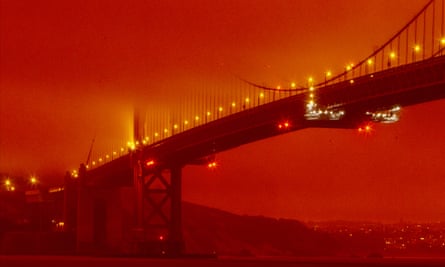
Californians woke up to red, sunless skies and layers of ash coating everything as a result of wildfires across the state.
Scientists have been warning of the growing threat of climate change, and now those projections are a reality

Like millions of people in the western United States this week, I woke up to deep red, sunless skies, layers of ash coating the streets, gardens, and cars, and the smell of burning forests, lives, homes, and dreams. Not to be too hyperbolic, but on top of the political chaos, the economic collapse, and the worst pandemic in modern times, it seemed more than a little apocalyptic.

Too much of the western United States is on fire, and many areas not suffering directly from fire are enveloped in choking, acrid smoke.

While fires in the west are not unusual or unexpected, these fires are different: they’re earlier, bigger, and hotter than usual. They are expanding explosively, overwhelming towns and firefighting resources. And there’s no getting away from them. As of Thursday evening, five of the ten largest wildfires in California’s history are burning. Seven of the 10 largest fires have occurred in the last four years. This isn’t normal.

What’s different now? Human-caused climate change... (continues)

Friday, September 11, 2020

Trees

Bill McKibben (@billmckibben) tweeted at 1:46 PM on Fri, Sep 11, 2020:
An endless amount of sad news today, especially about forests. So here's a picture of a tree starting to turn color in Vermont.
It's all I got... https://t.co/Xh1dr1xnGB
(https://twitter.com/billmckibben/status/1304491540157476865?s=02)

Thursday, September 10, 2020

Environmental Ethics: Questions Sep 9

Is nature God's creation, or is God nature's? 93.


This is a very argumentative question. Some people might say that Nature is a way in which God revels himself to humanity. God is Nature. Not in  “nature” referring to tree and rocks, but “Nature” referring to the entire system, the universe, in which we live. You could look at Nature as being the invention and God as being the inventor in a way. But this theory also comes from a religious point of view. If you asked an Atheist this question his response would be totally different versus someone of christian faith. It all depends on what perspective your  coming from.