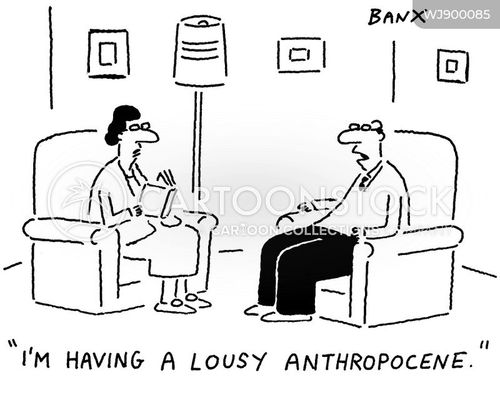
Tuesday, September 10, 2024

2024's unusually persistent warmth

This year is increasingly diverging from past El Nino years.

...Many of us hoped that if 2024 returned to a more predictable post-El-Nino regime it would provide evidence that what happened in the second half of 2023 was a blip – some short lived internal variability that drove a spike in global temperatures but did not persist.

However, with temperatures remaining elevated into September 2024, its looking increasingly less likely that last year’s elevated temperatures were a mostly transient phenomenon. Rather, some combination of forcings or changes in feedbacks may be driving higher global temperatures going forward. The Climate Brink

Monday, September 9, 2024

Questions SEP 10

EE 7-8 (Politikos, Prometheus). GT 2.8--2.14 (thru Fresh Water). WW 85-102 (Disasters, Drain). McK thru John Muir. Select Midterm report presentation topics/dates

EE

1. Some worry that recognizing the Anthropocene might serve as the political equivalent of what statement and dismissal?

2. Failing to recognize the Anthropocene, according to Erik Swyngedouw and others, is to deny what?

3. What Titanic analogy is offered by James Scourse?

4. How has human agency with regard to the environment changed, according to Chakrabarty?

5. The human way of living on earth is shaped far more by what?

6. What are the comparative emissions rates of average Chinese and Americans, and of the wealthy/urban and rural/poor ?

7. According to Jason Moore and others, what caused Earth's transformation by producing massive social inequalities?

8. What is the Chthulucene?

9. What's the benefit of recognizing the Anthropocene, according to the editors of Nature?

10. What is the noosphere?

11. Why might Icarus be a better metaphor for the Anthropocene than Prometheus?

12. What are some things that "raise the prospect of a better planetary future"?

13. What does the Anthropocene call on us to do, and how is that symbolized by the Long Now clock project?


LISTEN: ch7, "Politikos"... ch8, "Prometheus"

GT 
  1. What do recent reports say about Greenland and West Antarctica? 72
  2. What unnatural drought development is beginning to emerge? 75
  3. What are some alarming problems caused by ocean warming? 79-80
  4. What is AMOC, and how long does it take to recover from disruption? 81, 83
  5. What new component of seawater has been found nearly everywhere that has been sampled? 86
WW
  1. Where can you already find dreamtime? 86
  2. What results from paving over vulnerable coastlines? 89
  3. How much land does Louisiana lose to the sea each hour? 92
  4. Why do we frequently choose to obsess over personal consumption? 99
McK
  1. How did John Muir anticipate current ideas about anthropocentrism and interconnectedness? 84
  2. Without what would the universe be incomplete, in Muir's judgement? 88
  3. What did Muir find in California forests and trees? 93
  4. What was for Muir the relation between solitude and loneliness? 99
  5. What did Muir say about those who wanted to dam and develop the Hetch Hetchy Valley? 112

More Discussion Questions

  • Like native/indigenous traditions, the eco-pragmatist approach urges our adoption of long-term thinking about our relation to Earth and other species. Do you think the Long Now clock project holds promise for implanting such an ethos in this and future generations? How can we most effectively engender an active sense of "the long now"?
  • "Who are we to name a new interval of geologic time after ourselves?"
  • Which is worse, anthropocentric hubris or denialism?
  • Would scientific recognition of the Anthropocene change public perceptions and actions?
  • What's wrong with "enlightened species" narratives? 132
  • Homo sapiens as a whole is not causing rapid global climate change, wealthy individuals and nations are. Does that make non-wealthy Americans equally complicit?
  • Is this the Capitalocene, the Anthropocene, both, or neither?
  • Do you agree with the authors of The Shock of the Anthropocene that anti-environmental elites have always been engaged in a cover-up of their activities? 136
  • Is it better to solve fossil fuel emissions by removing carbon, invest in alternative energy sources like solar or nuclear, or both? 138
  • Is global governance the key...? [& see the other questions posed on 139]
  • Is individuality just an illusion? 140
  • COMMENT: "Make kin, not babies."
  • Do humans have any right to change Earth? 141
  • COMMENT: "Humanity forms nature." 142
  • COMMENT: "The Anthropocene demands action." 143
  • [Note the brief list of Anthropocene books on 142... they're not works of fiction, but if 
  • anyone would care to use one of them for your report(s) consider it an option.]
  • What do you think it means to need "many different Anthropocene narratives"? 145
  • On balance, do you think it's a good thing that humans have become "a force of nature"?
  • Is there a better concept or term than "stewardship," that still conveys the fundamental point of humans' responsibility for their actions that impinge upon or impair the Earth's capacity to sustain itself as a healthy and habitable planet for our form of life and others?
  • Is western religion earth-centric? ##
  • Do Zen Buddhism and St. Francis offer suitable remedies to human exploitation and degradation of nature?
  • $$ What do you think of E.O. Wilson's appeal to fundamentalists? Is religion in America now hopelessly politicized?
  • Are you confident that alternate energy generation of renewable energy will scale up quickly enough to make a difference? Or that appropriate fuel efficiency standards on automobiles will be imposed in the years just ahad? Do you expect to drive an e-vehicle soon?
  • Do you think Deep Ecologists,ecofeminists, Greens et al will unite effectively in pursuit of environmental and social justice>
    • 10## See Carl Sagan, The Varieties of Scientific Experience: A Personal View of the Search for God (based on his 1985 Gifford Lectures in Scotland, echoing William James's Gifford Lectures of the early 20th century which became The Varieties of Religious Experience. Sagan: “we have a theology that is Earth-centered and involves a tiny piece of space, and when we step back, when we attain a broader cosmic perspective, some of it seems very small in scale. And in fact a general problem with much of Western theology in my view is that the God portrayed is too small. It is a god of a tiny world and not a god of a galaxy, much less of a universe.”

    ** I recommend The Sacred Depths of Nature by Ursula Goodenough... and, a propos nature and the sacred, I also recommend Cousin Mary's poem:
    “You do not have to be good. You do not have to walk on your kneesfor a hundred miles through the desert, repenting.You only have to let the soft animal of your bodylove what it loves. Tell me about despair, yours, and I will tell you mine.Meanwhile the world goes on.Meanwhile the sun and the clear pebbles of the rainare moving across the landscapes,over the prairies and the deep trees,the mountains and the rivers.Meanwhile the wild geese, high in the clean blue air,are heading home again.Whoever you are, no matter how lonely,the world offers itself to your imagination,calls to you like the wild geese, harsh and exciting—over and over announcing your placein the family of things. -Mary Oliver
    ==
    62539 $$  The Creation: An Appeal to Save Life on Earth
    by Edward O. Wilson

    We have not met, yet I feel I know you well enough to call you friend. First of all, we grew up in the same faith. Although I no longer belong to that faith, I am confident that if we met and spoke privately of our deepest beliefs, it would be in a spirit of mutual respect and goodwill. I write to you now for your counsel and help. Let us see if we can, and you are willing, to meet on the near side of metaphysics in order to deal with the real world we share. I suggest that we set aside our differences in order to save the Creation. The defense of living Nature is a universal value. It doesn't rise from nor does it promote any religious or ideological dogma. Rather, it serves without discrimination the interests of all humanity.

    Pastor, we need your help. The Creation—living Nature—is in deep trouble.

    • “Human nature is deeper and broader than the artificial contrivance of any existing culture.”
    • “We need freedom to roam across land owned by no one but protected by all, whose unchanging horizon is the same that bounded the world of our millennial ancestors.”
    • “There is no solution available, I assure you, to save Earth's biodiversity other than the preservation of natural environments in reserves large enough to maintain wild populations sustainably. Only Nature can serve as the planetary ark.”
    • “Science has become the most democratic of all human endeavors. It is neither religion nor ideology. It makes no claims beyond what can be sensed in the real world. It generates knowledge in the most productive and unifying manner contrived in history, and it serves humanity without obeisance to any particular tribal deity.”
  • Post your DQs

Organizers hope a 2,000-foot-long unmanned boom will collect 150,000 pounds of plastic from the Great Pacific Garbage Patch in a year. Read More...

More Methane... 
In a victory for energy companies, the administration plans to roll back rules covering methane leaks and the “flaring,” or burning, of the potent greenhouse gas. • It was the third major step this year to reverse the United States’ previous efforts to rein in global warming. Read More...


I encourage you to read this MTSU student's Environmental blog...

 Kathryn Modine is a MALA (Master of Liberal Arts) student working on her capstone project, a new environmental blog called Interconnected Planet. I encourage you to read and possibly comment on her first and subsequent posts. When you comment on her blog please share that comment with us here too, and give yourself a base on our scorecard when you do.

Listen to “Best Books of the 21st Century, No. 24: ‘The Overstory,’ by Richard Powers” in the NYT Audio app.

I mentioned Richard Powers's forthcoming novel Playground… His earlier prizewinner The Overstory is excerpted here. It made the Top 100 of the 21st century. He speaks for the trees!

I'd put his Bewilderment high on the list too.

If any of you have a favorite Cli-Fi novel you'd like to tell us about (or even report on), please do!  


Listen to “They’re Sizing Up Earth’s Lungs. It Takes Tape Measures and Tree Climbing.” in the NYT Audio app.

https://www.nytimes.com/audio/app/2024/09/07/climate/amazon-forest-carbon-colombia.html?referringSource=sharing

The Right Way to Remember Rachel Carson

"…Long before Carson wrote "Silent Spring," her last book, published in 1962, she was a celebrated writer: the scientist-poet of the sea. "Undersea," her breakout essay, appeared in The Atlanticin 1937. "Who has known the ocean?" she asked. "Neither you nor I, with our earth-bound senses, know the foam and surge of the tide that beats over the crab hiding under the seaweed of his tide-pool home; or the lilt of the long, slow swells of mid-ocean, where shoals of wandering fish prey and are preyed upon, and the dolphin breaks the waves to breathe the upper atmosphere." It left readers swooning, drowning in the riptide of her language, a watery jabberwocky of mollusks and gills and tube worms and urchins and plankton and cunners, brine-drenched, rock-girt, sessile, arborescent, abyssal, spine-studded, radiolarian, silicious, and phosphorescent, while, here and there, "the lobster feels his way with nimble wariness through the perpetual twilight."
…
https://www.newyorker.com/magazine/2018/03/26/the-right-way-to-remember-rachel-carson

==

The Poetry of Science and Wonder as an Antidote to Self-Destruction: Rachel Carson’s Magnificent 1952 National Book Award Acceptance Speech

“The aim of science is to discover and illuminate truth. And that… is the aim of literature, whether biography or history or fiction… There can be no separate literature of science.”


How to Save a World: Rachel Carson’s Advice to Posterity

“Mankind is challenged, as it has never been challenged before, to prove its maturity and its mastery — not of nature, but of itself.”


Rachel Carson on Science and Our Spiritual Bond with Nature

“Our origins are of the earth. And so there is in us a deeply seated response to the natural universe, which is part of our humanity.”


 Solar Farms Have a Superpower Beyond Clean Energy

By Catrin Einhorn

·         Published Sept. 5, 2024Updated Sept. 6, 2024  The New York Times

It’s not your average solar farm.

The glassy panels stand in a meadow. Wildflowers sway in the breeze, bursts of purple, pink, yellow, orange and white among native grasses. A monarch butterfly flits from one blossom to the next. Dragonflies zip, bees hum and goldfinches trill.

As solar projects unfurl across the United States, sites like this one in Ramsey, Minn., stand out because they offer a way to fight climate change while also tackling another ecological crisis: a global biodiversity collapse, driven in large part by habitat loss.

The sun’s clean energy is a powerful weapon in the battle against climate change. But the sites that capture that energy take up land that wildlife needs to survive and thrive. Solar farms could blanket millions of acres in the United States over the coming decades.

So developers, operators, biologists and environmentalists are teaming up with an innovative strategy.

“We have to address both challenges at the same exact time,” said Rebecca Hernandez, a professor of ecology at the University of California, Davis, whose research focuses on how to do just that.

Insects, those small animals that play a mighty role in supporting life on Earth, are facing alarming declines. Solar farms can offer them food and shelter by providing a diverse mix of native plants.

Such plants can also decrease erosion, nourish the soil and store planet-warming carbon. They can also attract insects that improve pollination of nearby crops.

Continues at:  https://www.nytimes.com/2024/09/05/climate/solar-power-pollinators-wildlife.html

Sunday, September 8, 2024

On behalf of my 65+ cohort…

I apologize. (But I think we know which 49% were talking about.)

Ending forever chemicals?

A new filtration material could provide a nature-based solution to water contamination by PFAS, or "forever chemicals." Based on natural silk and cellulose, the material can remove a wide variety of these chemicals as well as heavy metals.

http://mitsha.re/YCjH50Thpkf

Saturday, September 7, 2024

The Killer Climate Disaster That Has No Name

Heat waves are America's deadliest weather events. It's time we name them.

Do you remember the heat dome that settled over Washington and Oregon in 2021, leading to thousands of hospitalizations and over 600 estimated fatalities? Or last summer's heat wave in Phoenix, when the temperature hit or exceeded 110 degrees for 31 straight days, accounting for most of Maricopa County's 645 heat-related deaths in 2023?

How closely are you tracking the potentially record-setting heat wave across the Western United States this week?

In typical years, more Americans die in heat waves than in hurricanes, tornadoes and floods combined. Historically, though, the public, the media and politicians are quick to forget heat disasters — even where they happen most. It's as if we have a will not to know about the brutal ways that extreme heat affects us.

Denial only makes us more vulnerable to the searing summers ahead. Between 1999 and 2023, heat deaths in the United States more than doubled. As the planet warms and lethal heat events become more severe and more frequent, there's an urgent need to make dangerous heat more recognizable... nyt

These people really know how to move

15 seconds of Amsterdam traffic.
Nieuwezijds Voorburgwal, 6 Sept. 2024, 15:21h

https://www.threads.net/@bicycledutchnl/post/C_lPKHMsYxm/?xmt=AQGzsH2xXtac66ZBNTBaAqg9fB-oP71OianntBLij7C3XQ

"Politicians talking about climate change"

This sculpture is the work of the Galician artist Isaac Cordal.

The work was installed in Berlin in 2011 and despite being more than 12 years old...it is still completely valid today.

More details/photos: https://bit.ly/4dXYvMM

https://www.threads.net/@davidattenborough_fans/post/C_lSAvHM_Qa/?xmt=AQGzYewhGKG5lbqkG9v4RJkNIUrkC8XNV3bs0ABblxWcAA

Friday, September 6, 2024

Leaving Walden

 On this day in 1847, Henry David Thoreau (books by this author) left Walden Pond and moved back to his father's house in Concord, Massachusetts. Thoreau had lived in the hut for two years, leading a simple life of gardening and contemplation, subsisting on a daily budget of 27-1/2 cents. When he moved back to Concord, he took with him the first draft of his book A Week on the Concord and Merrimack Rivers, strung together from 10 years of journal entries. WA

"...Most of the luxuries, and many of the so called comforts of life, are not only not indispensable, but positive hindrances to the elevation of mankind. With respect to luxuries and comforts, the wisest have ever lived a more simple and meagre life than the poor. The ancient philosophers, Chinese, Hindoo, Persian, and Greek, were a class than which none has been poorer in outward riches, none so rich in inward. We know not much about them. It is remarkable that we know so much of them as we do. The same is true of the more modern reformers and benefactors of their race. None can be an impartial or wise observer of human life but from the vantage ground of what we should call voluntary poverty. Of a life of luxury the fruit is luxury, whether in agriculture, or commerce, or literature, or art. There are nowadays professors of philosophy, but not philosophers. Yet it is admirable to profess because it was once admirable to live. To be a philosopher is not merely to have subtle thoughts, nor even to found a school, but so to love wisdom as to live according to its dictates, a life of simplicity, independence, magnanimity, and trust. It is to solve some of the problems of life, not only theoretically, but practically...
""""""
...I went to the woods because I wished to live deliberately, to front only the essential facts of life, and see if I could not learn what it had to teach, and not, when I came to die, discover that I had not lived. I did not wish to live what was not life, living is so dear; nor did I wish to practise resignation, unless it was quite necessary. I wanted to live deep and suck out all the marrow of life, to live so sturdily and Spartan-like as to put to rout all that was not life, to cut a broad swath and shave close, to drive life into a corner, and reduce it to its lowest terms, and, if it proved to be mean, why then to get the whole and genuine meanness of it, and publish its meanness to the world; or if it were sublime, to know it by experience, and be able to give a true account of it in my next excursion...

"""""" 

...I left the woods for as good a reason as I went there. Perhaps it seemed to me that I had several more lives to live, and could not spare any more time for that one. It is remarkable how easily and insensibly we fall into a particular route, and make a beaten track for ourselves. I had not lived there a week before my feet wore a path from my door to the pond-side; and though it is five or six years since I trod it, it is still quite distinct. It is true, I fear that others may have fallen into it, and so helped to keep it open. The surface of the earth is soft and impressible by the feet of men; and so with the paths which the mind travels. How worn and dusty, then, must be the highways of the world, how deep the ruts of tradition and conformity! I did not wish to take a cabin passage, but rather to go before the mast and on the deck of the world, for there I could best see the moonlight amid the mountains. I do not wish to go below now.

I learned this, at least, by my experiment; that if one advances confidently in the direction of his dreams, and endeavors to live the life which he has imagined, he will meet with a success unexpected in common hours..." 

LoA pics

 A new kind of chaplain is helping people deal with 'climate grief'

September 6, 20245:51 AM ET

By Kimberly Winston for NPR

TALENT, Ore. — When Diane Ware’s home state of Oregon proposed a natural gas pipeline that threatened local waterways, she sprang into action – leading workshops on lobbying state lawmakers, mentoring student activists and organizing lectures at her church.

But when plans for the pipeline were canceled, Ware, 78, found little pleasure in the victory. The retired elementary school teacher couldn’t shake the feeling that it may be too late to save a planet in deep peril – a prospect tinged with grief, anger and depression. Ware realized she had a case of "climate grief” – and needed help.

Ware is one of a growing number of people using the services of an eco-chaplain, a new kind of spiritual advisor rising among clergy trained in handling grief and other difficult emotions.

Each month, at the Talent Public Library, Ware attends Sustaining Climate Activists, a gathering of mostly retired adults led by an eco-chaplain. She went to her first meeting shortly after a wildfire swept through Lahaina, Hawaii, in 2023. She was upset by a report that claimed news organizations had failed to link the wildfire to climate change.

“I just thought how on Earth are we ever going to get this problem solved if we can’t even talk about it and get good information from the newspapers that we think are the guardians of truth?” she said. “And then I just thought, ‘Wow, I am fried.’”

Continues Here:  https://www.npr.org/2024/09/06/nx-s1-5092402/eco-chaplains-helping-people-deal-with-climate-grief?utm_source=Nashville+Public+Radio&utm_campaign=633bbcf2f0-nashvillager_090624&utm_medium=email&utm_term=0_-ffaa545e30-%5BLIST_EMAIL_ID%5D&mc_cid=633bbcf2f0&mc_eid=6dee51bcfe


Thursday, September 5, 2024

Here Comes the Sun

Solar power is no longer marginal; now the (all-important) question is when it will be dominant.


To understand the primal stakes in this year’s election, and to understand the very exciting possibility for rapid progress in the climate fight, a new set of numbers is extremely useful.

They come courtesy of Electrek’s Michelle Lewis, reporting on the longtime renewable researcher Ken Bossong’s analysis of the data on electric generation provided each month by the Energy Information Administration. And what they show is the remarkable transformation over the last decade. In 2014, solar power “utility-scale solar provided a mere 9.25 GW (0.75%) of total installed US generating capacity.” Which is to say, less than one percent. But “by the middle of 2024, installed solar capacity had risen to 8.99% of total utility-scale capacity.” (Add another few percent for rooftop distributed solar).

That still sounds like a relatively small percentage—under ten percent. But in fact what it measns is that we’ve finally moved on to the steep part of an S curve, and if we can keep up anything like that pace of expansion it won’t be long before the numbers are truly incredible. Indeed, as Bossong pointed out on Twitter, “the combination of utility-scale and “estimated” small-scale (e.g., rooftop) solar increased by 26.3% in the first six months of 2024 compared to the same period in 2023.” Statistics numb the brain so let me say it another way: we are on the cusp of a true explosion that could change the world. We are starting to put out the fires that humans have always relied on, and replace them with the power of the sun...

Bill McKibben, continues

Wednesday, September 4, 2024

Many kinds of minds

More reason to resist anthropocentrism:

"To define intelligence simply as what humans do is the narrowest way we could possibly think about it — and it is ultimately to narrow ourselves, and lessen its possible meaning. Rather, by expanding our definition of intelligence, and the chorus of minds which manifest it, we might allow our own intelligence to flower into new forms and new emergent ways of being and relating…

What if, instead of being the thing that separates us from the world and ultimately supplants us, artificial intelligence is another flowering, wholly its own invention, but one which, shepherded by us, leads us to a greater accommodation with the world? Rather than being a tool to further exploit the planet and one another, artificial intelligence is an opening to other minds…"

Ways of Being: Rethinking Intelligence – The Marginalian

How Natural Are We?

Another way to think about the cosmic calendar:

"… In "Living on Earth: Forests, Corals, Consciousness, and the Making of the World," Peter Godfrey-Smith, a philosopher of science, asks about the relationship between human beings and nature. He starts by considering our place in the broader time line. Scientists often emphasize our belatedness: a biologist might stretch her arms wide, explain that the tip of her left middle finger represents the beginnings of planet Earth, and then say that all of human history could fit into the tip of the opposite finger. "If we stick to our species, then we do rush on in a half-dressed flurry at the very end," Godfrey-Smith concedes. "But suppose we think of 'us' as life as a whole." Earth is four and a half billion years old, and life has existed here for 3.7 billion; meanwhile, the universe is about fourteen billion years old. This means that we've been around for "over a quarter of the total span," Godfrey-Smith writes. From this perspective, we're not freshmen, but seniors…"

Tuesday, September 3, 2024

Questions SEP 5

 EE 5-6 (Anthropos, Oikos). GT 2.1--2.7 (thru Dangerous Weather). WW 65-84 (Drowning, Wildfire). McK thru Walt Whitman.

1.  What's the archaeological perspective on when to mark the onset of the Anthropocene?

2. Why are humans the "ultimate ecosystem engineers"?

3. What's another name for knowledge gained by social learning?

4. Why were American and Australian megafauna "not so lucky"?

5. What are increasingly recognized as the bio-cultural legacies of long histories of prior human land use?

6. What controversial hypothesis by Ruddiman remains under serious consideration, and is supported by multiple lines of evidence?

7. What "discovery" created the first truly global system of exchange?

8. From an archaeological point of view how long has the human world been anthropogenic?

9. What's the etymology of ecology?

10. What is the Pristine Myth?

11. Current extinction rates exceed the historical baseline by what factor-range?

12. What is the Homogocene?

13. What are anthromes?


GT

  1. What's Greta's inconvenient truth? (And here's some of Al's) 49
  2. What's global weirding? 51
  3. What would happen if "Jane" got out of ranching? How is this different from shutting down a coal plant? 56
  4. Why shouldn't we tolerate or even emit more cooling aerosols ? 58
  5. How are clouds impacting warming? 61
  6. What is the impact of warming in the arctic? 64
  7. Will ending emissions also end sea level rise? 68

WW

  1. What does Jeff Goodell say will be transformed this century? 66
  2. What uncertainty most governs climate change? 70
  3. How much of Florida will remain after 170 feet of flooding? 74
  4.  What was so prophetically harrowing about the wildfires of 2018? 78
  5. What makes a mockery of the technocratic, melioristic approach to emissions reduction? 82-3
McK

  1. [My schedule is tight today, I invite you all to pose your questions pertaining to these texts--Catlin, Cooper, Table Rock--in the comments space]
  2. What do you think of Whitman's "sense of surging human destiny as an almost natural force," his poetic hymn to "the music of choppers' axes... clearing the ground  for broad humanity" etc.? 


  • Do you think there are inherent "limits to growth" that should constrain cultural and personal behaviors that cannot be sustained indefinitely? What present practices of your own and of our culture do you think unsustainable? 
  • Do you feel any obligation to "become the change you want to see in the world," to set sustainable examples for your peers and your children? Do you (for instance) drive a hybrid or e-vehicle? Do you have solar panels on your roof? Do you diligently recycle, consume "green" products, pay attention to your carbon footprint, etc.?
  • Do you think it's more, less, or as important to live sustainably yourself, as to exert and support activist pressure against fossil fuel companies and their investors, etc.?
  • Does Beckerman have a point, about some forms of "strong sustainability" being "morally repugnant"? 63
  • Are wind turbines like those on p. 68 "ugly," as some of their opponents charge?
  • How do you feel about the Trump administration's withdrawal from international climate agreements and general refusal to join cooperative global efforts to combat climate change?
  • Is it possible to be a good global citizen, when your own nation has withdrawn support from global cooperation with regard to the environment?
  • Is it possible to be a nationalist AND a good environmentalist?
  • Do you like the Ehrlichs' rivet analogy? 73
  • What do you think of the argument that human development often results in an increase in biodiversity, so we don't need to do anything else to promote it? 75
  • Does the Deep Ecology emphasis on a feeling of deep identity with, and relatedness to, all of nature, necessarily undermine "other kinds of motivation" for being environmentally aware? 78
  • Are you an Ecofeminist? (And can an Ecofeminist also be a Deep Ecologist?) 79
  • Is atomistic individualism a big problem in America? 82
  • Are you a Peter Singer fan? Do you support "animal liberation"? What does that mean to you? 83
  • Have you read Michael Pollan's Omnivore's Dilemma, or his shorter essay "An Animal's Place"? (Or any of his other books, like Food Rules or How to Change Your Mind? Comments? Do you eat what you think you should? Do you feel bad about eating animals, processed "food" your grandmother wouldn't have recognized, or anything else?
  • Does Tennessee's Environmental Justice candidate for the U.S. Senate stand a chance against her Trump-endorsed opponent?
  • Are you partial to any of the four forms of Green opposition to growth? 88
  • Are you an active advocate (or passive practitioner) of walking, cycling, public transport, etc.?  
  • Should any particular disciplinary perspective be privileged, in assessing the impact of human activity on natural systems and proposing solutions to the problems engendered by it?
  • Is it good, bad, or simply a fact, that humans are capable of altering ecosystems? Can you relate your response to Stewart Brand's statement about our being "as gods" and needing to get better at it?
  • Do you think humans are mostly co-evolving with other species now, or over-running them? 
  • Does it matter when humans began to impact natural systems, or should our focus be more on the future ("fruits, not roots," as the pragmatists say) and how we should monitor and correct our potentially deleterious impacts going forward?
  • What purpose is served by distinguishing original from "civilized" nature?
  • Do you agree with David Benatar (below)?

The Case for Not Being Born The anti-natalist philosopher David Benatar argues that it would be better if no one had children ever again.

By Joshua Rothman

David Benatar may be the world’s most pessimistic philosopher. An “anti-natalist,” he believes that life is so bad, so painful, that human beings should stop having children for reasons of compassion. “While good people go to great lengths to spare their children from suffering, few of them seem to notice that the one (and only) guaranteed way to prevent all the suffering of their children is not to bring those children into existence in the first place,” he writes, in a 2006 book called “Better Never to Have Been: The Harm of Coming Into Existence.” In Benatar’s view, reproducing is intrinsically cruel and irresponsible—not just because a horrible fate can befall anyone, but because life itself is “permeated by badness.” In part for this reason, he thinks that the world would be a better place if sentient life disappeared altogether.

For a work of academic philosophy, “Better Never to Have Been” has found an unusually wide audience. It has 3.9 stars on GoodReads, where one reviewer calls it “required reading for folks who believe that procreation is justified.” A few years ago, Nic Pizzolatto, the screenwriter behind “True Detective,” read the book and made Rust Cohle, Matthew McConaughey’s character, a nihilistic anti-natalist. (“I think human consciousness is a tragic misstep in evolution,” Cohle says.) When Pizzolatto mentioned the book to the press, Benatar, who sees his own views as more thoughtful and humane than Cohle’s, emerged from an otherwise reclusive life to clarify them in interviews. Now he has published “The Human Predicament: A Candid Guide to Life’s Biggest Questions,” a refinement, expansion, and contextualization of his anti-natalist thinking. The book begins with an epigraph from T. S. Eliot’s “Four Quartets”—“Humankind cannot bear very much reality”—and promises to provide “grim” answers to questions such as “Do our lives have meaning?,” and “Would it be better if we could live forever?”

Benatar was born in South Africa in 1966. He is the head of the philosophy department at the University of Cape Town, where he also directs the university’s Bioethics Centre, which was founded by his father, Solomon Benatar, a global-health expert. (Benatar dedicated “Better Never to Have Been” “to my parents, even though they brought me into existence.”) Beyond these bare facts, little information about him is available online. There are no pictures of Benatar on the Internet; YouTube videos of his lectures consist only of PowerPoint slides. One video, titled “What Does David Benatar Look Like?,” zooms in on a grainy photograph taken from the back of a lecture hall until an arrow labelled “David Benatar” appears, indicating the abstract, pixellated head of a man in a baseball cap.

After finishing “The Human Predicament,” I wrote to Benatar to ask if we could meet. He readily agreed, then, after reading a few of my other pieces, followed up with a note. “I see that you aim to portray the person you interview, in addition to his or her work,” he wrote:
One pertinent fact about me is that I am a very private person who would be mortified to be written about in the kind of detail I’ve seen in the other interviews. I would thus decline to answer questions I would find too personal. (I would be similarly uncomfortable with a photograph of me being used.) I understand entirely if you would rather not proceed with the interview under these circumstances. If, however, you would be happy to conduct an interview that recognized this aspect of me, I would be delighted.
Undoubtedly, Benatar is a private person by nature. But his anonymity also serves a purpose: it prevents readers from psychologizing him and attributing his views to depression, trauma, or some other aspect of his personality. He wants his arguments to be confronted in themselves. “Sometimes people ask, ‘Do you have children?’ ” he told me later. (He speaks calmly and evenly, in a South African accent.) “And I say, ‘I don’t see why that’s relevant. If I do, I’m a hypocrite—but my arguments could still be right.’ ” When he told me that he’s had anti-natalist views since he was “very young,” I asked how young. “A child,” he said, after a pause. He smiled uncomfortably. This was exactly the kind of personal question he preferred not to answer... (continues)

New fiction

Lots of environmental themes are explored in this Fall's new fiction. I'm especially looking forward to the latest from my favorite contemporary novelist, Richard Powers:

Playground, by Richard Powers

Lives intersect on a French Polynesian island in this expansive, oceanic novel, which explores the effects of artificial intelligence and climate change on humanity.

https://www.nytimes.com/2024/09/02/books/fiction-books-fall.html?smid=nytcore-ios-share&referringSource=articleShare

In a Brutal Summer, Miracles Still Bloom

"Drought is a kind of madness. Drought combined with record heat makes you long to become subterranean, a mole digging into cool darkness. This longing feels the way desire feels when you are too young to recognize it as desire. Even safely inside a cool house, your body is telling you that something is off. What you long for cannot be had. Until you think about it for a moment, it can't even be named.

As a matter of technical fact, Davidson County, Tenn., where I live, is not in a state of drought, but the scattered showers that have blown in briefly here and there throughout the summer have not come to our yard. We got one hot rain so gentle it hardly broke the leaf canopy, and that was it for us all summer long. The forecasters at Nashville Severe Weather call these random pop-up showers "playing the wattery" — like a lottery but with water.

Day after day last week the temperature climbed — 99, 100, 101, 102 — and the air quality alerts arrived in flocks. Nashville Electric Service sent me an email: "Tips for Extreme Heat in Music City this Week." In the photos on the pet-rescue sites that I check obsessively now, hoping to find just the right canine family member for this newly dogless house, all the dogs are panting. I feel the need to pant myself...

Margaret Renkl 
https://www.nytimes.com/2024/09/02/opinion/summer-heat-climate-butterflies.html?smid=nytcore-ios-share&referringSource=articleShare