Thursday, December 1, 2022

Ecoterrorism (Final)


Ecoterrorism (Final)

            Ecoterrorism is when “people or groups commit or threaten to commit violent acts against people or property in support of environmental causes.” (RUSI, 2022) Due to eco-terrorism being an underground and unregulated series of groups, there are no clear rules as to what a group is allowed to or not allowed to do. Because these are largely renegade or revolutionary group, federal law does not apply. There are two main groups within the United States that have caused our government and many corporations trouble over the last several decades.

             The Earth Liberation Front (ELF) was established in Brighton, England (1992). They believed criminal acts would further push their environmentalist agenda than peaceful protest. Their attacks were mainly focused on property, not people, to cause economic damage. They believed a rollback of industrialization would best preserve the environment. Mostly targeted research labs (primarily animal or GMO), multinational organizations, and the logging industry. (Leader and Probst, 2010)


            The Animal Liberation Front (ALF) emerged in United Kingdom (1976), and currently has presence in 40 countries around the world. Their core ideology is as follows: free animals from abuse, damage those profiting from the suffering and exploitation of animals, expose hidden cruelties against animals through non-violent actions and freeing of animals, and take all necessary precautions to prevent harm to animals or humans. Despite calls for nonviolence in their core ideology, they have claimed responsibility for arson and vandalism on animal research facilities, farms, restaurants, and other businesses considered harmful to animals (fur companies, mink farms, etc.). Additionally, there have been bombings, arson, and attacks that have resulted in injuries regardless of their promise to ensure human safety. (Counter Extremism Project, 2022)


            In the United States, often times, groups from these two would split off from the main groups and come together in smaller “cells” referred to as “the family” because they often shared discontent with the same company’s and had similar plans of action (Counter Extremism Project, 2022). Though the ELF was more adamant about not harming human lives than the ALF, there was nothing to stop individuals from separating and creating their own, more violent groups such as the Animal Rights Militia or the Animal Liberation Brigade. For example, the Animal Liberation Brigade (ALB) is open to violent and non-violent methods as long as results can be seen (CSIS 2022). The cells that would form out of these primary groups were often more militant and eager for change than leaders of the main groups. Especially because most people in these groups would often be socially progressive, they began to expand their like causes past the environment or animals, they began to also promote communism, LGBT+ acceptance, etc.


            The height of activity for these kinds of groups was during the 90’s and early 2000’s. After the terrorist attack on 9/11, the government started hankering down on domestic terrorists and remain vigilant today. Additionally, as technology has advanced exponentially, the likelihood of doing jail time for no real change is almost assured. While I don’t agree with using violence to affect change, I do admire the non-violent acts, primarily conducted by the ELF, used to stop or hinder irreversible environmental damage. Though it may be costly to enact, if we required sustainability rather than recommended it, things like eco-terrorism would not be a problem.


Solar Architecture: The Future of Our Buildings?

Good evening, fellow Environmental Ethics learners. Today I woke up and went outside, got into my car, put on some Christmas music, and drove to the Student Union Building to get some lunch. While driving I noticed how beautiful of a day it was compared to our past couple, and it made me think, man I really take the Sun and everything it does for granted. So here's a reminder to not take the Sun for granted and to find ways to use it in your homes or apartments!

I think sometimes humans like to over-complicate things in this world, and I think this is ever prevalent when it comes to which form of energy is the best, or most green, or most profitable. I think all three answers can be found in the big, bright ball we have in the sky, the SUN. Fortunately, there are humans who are not over-thinking our energy crisis and they are investing in many different ways to utilize the Sun and her power. One of these ways is Solar Architecture. Solar Architecture has been around for thousands of years, and will continue to be around for thousands of more (as long as humans are!). 

We can see the first tracings of Solar Architecture in ancient China around 6,000 years ago. the Chinese people used to have the sole opening of their house face South, so as to catch the rays of the low winter sun to keep their houses warm. They then would have a low hanging thatch roof that would catch the high summer rays to help keep their houses cool during the summer. Example below. 


Furthermore, we can see early solar architecture in the Greeks and Romans. The Greeks followed the advice of thinkers like Socrates and Aristotle who spoke on using the Sun to best maximize winter and summer seasons. Archeological evidence shows us that they did listen, and the Greeks did in fact do this. The Romans took what the Greeks and Chinese did, but went further. On a military campaign in Greece, famous roman general and architect Vitruvius saw what the Greeks did, and brought it back to Rome. This is most noticed in Roman bathhouses that needed to be warmed pretty much at all times. Romans also covered bathhouses and certain buildings with transparent windows using clear stone like clear glass or mica, which is seen as a huge invention for solar architecture. 


This is the Baths of Constantine, which as you can see have these clear transparent windows for sun rays to come through. 

Now I want to talk about five ways to help better buildings using Solar Architecture. 

Way 1: Legibility. This is celebrating and revealing the actual building of solar architecture in buildings. It is giving legibility to the process, and showing people what is actually being done.  

This is an example. You can see how the house is situated to utilize the Sun, how air flows throughout the house, how the heating and cooling systems work, and how the insulation of the house it built in the top right. 

Way 2: Material Planes. This is matching the look and material of Solar Panels with different materials used to build the house. This is meant to give more cohesion and a more unified look to the house so the solar panels do not look so out of place. 

Way 3: Form Follows. This comes from the adage "form follows function". This essentially means that we should be designing houses to best utilize the Sun and the path of the Sun. 

Way 4: Shading Through Solar Architecture. In this way, a person is using their house and the solar panels on top of the house to create more shade. So say someone is building an extended porch, do that, but in a way that utilizes the path of the shade the house creates. 

Way 5: Disguised Solar Panel Design. If someone really hates this look of solar panels, then this is the way for you. In this method you simply find ways to hide the solar panels on your building, whether through strategic placing or compositional design of the house as spoken of in Way 2. 


Here is an example of a real Solar House that exist in Wyoming that attempts to utilize many of these 5 Ways. 

In conclusion, GO SOLAR! The benefits are quickly catching up to the cost, and as I said in my presentation, in five years, solar energy could very well be everywhere with how efficient and inexpensive it is becoming. Thank you all for a great year in Environmental Ethics, I hope you all continue to fight and care for the environment, I know I will continue to do my best. 

Sunrise Movement - Will We Realize What Needs To Be Done?

         I would say my generation is the most climate-conscious thus far. My only concern is that we may not be focused on the right types of solutions. 

Sunrise Movement
Insignia 


    The Sunrise Movement is a political activist group that focuses on advancing political action toward climate change. They are targeting major fossil fuel organizations and shedding light on their power over our government. This is of the utmost importance. Fossil fuels are the main contributors to the downfall of our environment, and these organizations were aware of this as far back as forty years ago. however, despite knowing their destructive powers, these companies decided to keep growing, with no consideration of their detrimental effects on future generations. I appreciate how organizations such as the sunrise movement are focused on taking optical action against these businesses, unfortunately, taking down this target will not be sufficient enough to completely stop the situation. 

    Our entire economic system needs a change (I know I'm beating a dead horse, all my assignments harken back to this), and this change is more drastic than just investing in green energy. To begin with, our energy consumption would need to go down significantly. Green energy is notoriously less efficient than fossil fuels, and unless you live in a perpetually sunny plot of land next to a river, you can't completely rely on things like solar, hydro, and wind-derived energies. Things like household devices would need to have less of a hold on our lifestyles. Not everyone could have an electric car. Our economic system would no longer be able to focus on outgrowing its neighbors.

    I'm hoping to see movements such as this integrate a new way of seeing the problem. I like the political flavor they contain, but this needs to be ramped up tenfold. We have been told it is our fault this is happening, that we as citizens are too greedy and lazy. But we were conditioned this way. We were trained from birth to crave that which we don't need because buying meaningless items is good for the economy. And now we are seeing billionaires making their companies "green" by reducing carbon emissions and recycling products, all in order to encourage us to buy more from them. What they are producing, whether there are net-zero emissions or not, still strips unreliable resources from the earth at staggering rates. All so that we can get a new iPhone with one extra camera lens added to the back. You don't need 5K video quality to film your cat, 1080p serves you fine. But this cultural conditioning is hard to detox out of our collective consciousness.

This is the Flag for Green Anarchism. They support Anti-capitalist movements for the sake of environmental stability. 


   I do appreciate their stance against fascism, but I would like to see this expanded to capitalism as a whole. I hope my generation will be the ones to overcome these Orwellian-big-brother cooperations which have been directing societies' libidinal energy towards consumption since the dawn of the industrial revolution. I don't see those at the top of the hierarchy giving this up easily, there are tons of pro-capitalist currents running through my generation's culture, like some kind of final ploy to maintain control. Usually, these pro-capitalism ideologies are accompanied by more traditional anti-progressive ideologies, like the promotion of violence towards the LGBTQ community. We need to confront these positions and realize how seducing they are to certain demographics (for example, Jordan Peterson calling all progressive movements "Post-modern Neo-Marxisms" and convincing young white men that there is a secret cabal of gay people trying to bring back gulags).

Library Economy - Presentation Blog Post

     With the ever-increasing severity of the climate crisis, it is clear that change is needed. One problem I see is that most people's ideas of what level of change is required are not quite up to par. It's not enough to simply start recycling or buy an electric car, the main issues contributing to the crisis are related to our economic systems; specifically industrial capitalism and the globalization that results from it. Not only are most people not willing to accept this and the lifestyle changes that result, but large corporations seem to be trying their best to hide this fact (while also seeming "green"). Those with economic power are aware that the change needed to halt the coming disaster would mean the end of their empires, and they're willing to sacrifice anything to maintain their stability and status. 


    So what is the issue with industrial capitalism? Environmentally speaking, it is the infinite upward growth required for the system to maintain the capital flow. Devices, such as phones and cars, are designed to be less durable in order to encourage the purchase of their newest models. Both of these "commodities" are produced using non-sustainable and even environmentally hazardous materials (lithium batteries), however, we are producing them at staggering rates as if this process could continue indefinitely. Not only is this bad for the environment, but it's also bad for the human spirit. Notice the correlation between the rise in mental illness and the rise of industrialization, both began at the same time. We like to say that poorer countries are improving because the GDP is increasing, however, sweatshops and child labor are great at stimulating GDP. Countries like china are seeing a boom in their GDP, but the quality of life for their citizens leaves something to be desired. Just this week we've seen the revolts led by iPhone factory workers, as they try to escape the forced lockdowns for fear they will be overworked and never released. Industrial Capitalism breeds humanitarian crises, and we as Americans get the better end of the deal. We can forgo the intense labor needed for this level of production by outsourcing the work to developing countries with the excuse that we are "helping their economies."

    The only thing that can cause any significant change, in my opinion, is Degrowth. This would involve sobering up our economy from its addiction to upward expansion. We do not need a new iPhone each year to survive. We need to reach a homeostatic state of being which will allow us to be symbiotic with the environment. We need to stop seeing ourselves as somehow separate and above the environment and instead see ourselves as an integral part of its organism. The only problem is that for this to truly be carried to fruition, life as we know it would be very very different. It would call for smaller, more self-sufficient communities, less technology available to the masses, and fewer superfluous products. How would we get what we need to function? Would this mean a return to a more primitive mode of being? 

    One model that I hope might have some promise is this system referred to as the Library Economy. Imagine many small but tight nit communities, that produce most of their food, and at the center of each, contain something akin to a "Stuff Library." Just like a regular library, members of the community could stop by for free and rent out things like tools or accessories. Because the communities are small, each member should be able to bike to their respective jobs (this may mean housing consisting mainly of apartments or townhomes). If you need to travel farther, you can rent a car. The only product that would be needed would be necessities and replacement products. There would be no supercenters where you can buy whatever you want, food would not be thrown out for being too ugly, and there would be no advertising for things that are not important. We would shift our mindset from that of ownership to that of users, everything belonging to the community. This way we could lessen our depletion of resources and stop taking advantage of so-called under-developed societies. 

    This will definitely be a hard pill to swallow. Any change, whether it be something like the library economy or not, will require such a shift in western lifestyle that there will be major pushback. I do not believe that there will be some scientific advancement that will save us like some second coming of Christ. We have no new earth to be delivered unto, we only have this one; we are not its only inhabitants. We owe it to our extended families (animals, plants, fungi) to take care of their home, and ensure our direct lineage has a place they can sustain their existence.

Important reminder

These are BLOG posts, and as such require bloggish features beyond the words: pictures, videos, embedded text from Google Books, etc., and especially LINKS.

Highlight significant words and phrases, and paste URLs to them with the LINK icon above when in edit mode (click on the three dots on the right, then the LINK icon that will appear on the left).

We discussed this in class, go back and find those instructions on the recording if you don't recall how to do it.

Obvious candidates to be linked are proper names, the names of books and essays, concepts that need more explication, and of course any sources that were helpful to you.

Making blog posts bloggish is fun, and makes reading them more fun too.

QUESTIONNAIRE by Wendell Berry

  1. How much poison are you willing
    to eat for the success of the free
    market and global trade? Please
    name your preferred poisons.
  2. For the sake of goodness, how much
    evil are you willing to do?
    Fill in the following blanks
    with the names of your favorite
    evils and acts of hatred.
  3. What sacrifices are you prepared
    to make for culture and civilization?
    Please list the monuments, shrines,
    and works of art you would
    most willingly destroy.
  4. In the name of patriotism and
    the flag, how much of our beloved
    land are you willing to desecrate?
    List in the following spaces
    the mountains, rivers, towns, farms
    you could most readily do without.
  5. State briefly the ideas, ideals, or hopes,
    the energy sources, the kinds of security,
    for which you would kill a child.
    Name, please, the children whom
    you would be willing to kill.

Read by Amanda Palmer... 

Complement with Berry on how to be a poet and a complete human being, then revisit Amanda Palmer reading “The Hubble Photographs” by Adrienne Rich, “Having It Out With Melancholy” by Jane Kenyon, “Humanity i love you” by E.E. Cummings, “Possibilities” by WisÅ‚awa Szymborska, and “The Mushroom Hunters” by Neil Gaiman... 

Maria Popova

Course evaluations

Closing 12/1/2022 11:59 PM.

Students can access course evaluations through:

1. Custom links delivered to their MTSU inboxes.
2. Notifications and links embedded in D2L.
Just remember what my grandmother used to tell me, "if you can't say something nice..."

HEATED (but safe) chats

From Emily Atkin:

Today I’m announcing a new addition to the newsletter: HEATED Chats. It’s a private space in the Substack app to have conversations with me and each other about the topics we care about most.

Want a place to complain about fossil fuel ads in your favorite podcast? A place to discuss burnout and how to address it? A place to figure out how to source fossil fuel-free beauty products? A place to dissect the role of toxic masculinity in driving the climate crisis?

Those are the kind of things we’ll be doing in HEATED Chats. I’m hoping it will become a space where we can better connect as a community, and help each other realize that we’re not alone in caring about the planet’s future... (continues)

Meaning of life? "Too early to tell"

 An interview with Kieran Setiya-


...human life as a whole incorporates what happens to human history in the future. Until that history is written, we just don’t know how to feel about human life. All we can do is look to the possible futures and hope that the shape human history takes is one that we can affirm, that we can tell has a movement toward justice and human flourishing of a kind that earns our affirmation. But whether it does or not is not something any of us is likely to know in our lifetimes. I think it’s going to be a matter of what happens to humanity in the next hundreds and thousands of years.

I like that answer. If someone asks me what the meaning of life is, I’ll just say it’s too early to tell.

That is exactly right. 

==

Setiya's substack column Under the Net... His podcast Five Questions... His book Life is Hard...

Wednesday, November 30, 2022

 Food Waste (Final Report)


What is food waste? Food waste is food that is intended for human consumption but ends up being wasted or lost. This refers not only to food that consumers don't finish at restaurants or that is thrown out at home, but also raw materials and produce that are lost in the farming and harvesting stages during transportation and storage. By the mid-century mark, the world population will most likely hit 9 billion people. This means that global food production must increase by 70% to meet this demand. Surprisingly, Americans waste about 40 percent, or about 125 - 140 billion pounds of food each year. The food that is currently wasted in Europe can feed 200 million people, and the food that is wasted in Africa and Latin America could feed 300 million people. Yet, there are currently over 800 million people who are facing hunger, which is equivalent to 11% of the global population.


Food waste can also have a significant effect on the environment, global and national economies, food security, and nutrition. For example, food waste ends up wasting a quarter of our water supply in the form of uneaten food. This is equal to 172 billion dollars in wasted water. Wasting food contributes to 11 percent of the world’s greenhouse gas emissions as well. The increasing demand for food also contributes to land degradation and deforestation, which, as a result, destroys our natural habitats and range of biodiversity, limiting the services that they provide to the Earth and disrupting entire ecosystems.


Where does most of our food go to waste? Our homes contribute to 43 percent of the total wasted food, and restaurants, grocery stores and food service companies contribute to 40 percent of our total wasted food. Half of all produce is thrown away in the United States because it is deemed too “ugly” to consume, which amounts to 60 million tons of fruits and vegetables being wasted every year. This explains why fruits and vegetables are the most commonly thrown out food. It seems we are stressing over the appearance of our product rather than its functionality. The rest of our food waste comes from farms and manufacturers, with farms accounting for 16 percent and factories accounting for 2 percent of total food waste. Surprisingly, the farming stage accounts for a good percentage of food loss in the global food supply chain. This is because farmers are driven by the socio-economic and market factors that shape the farming system, so they often overproduce, and food ends up being wasted.


There are many ways in which we can reduce our food waste. For one, we can always try to avoid buying too much. Taking trips to the grocery store more frequently throughout the week and meal prepping could be a solution instead of going once every 2 weeks and buying too much food, which could end up going bad.  We should also be more mindful when it comes to tossing out food that we may think has gone bad. More than 80 percent of Americans discard perfectly good food because they misunderstand food labels. Most people do not know the differences between “use by” and “best before” dates. Foods with “use by” dates must be eaten before the given date, but they won’t be at their best quality. You can also use vegetables that are wilting and use them in soups, smoothies, or baked dishes. Feeding hungry people and animals is another way we can reduce our food waste. Donating excess food to community sites or donating food scraps and waste to local farmers who can use them as animal feed, are some ways in which we can feed hungry people and animals. Planning meals for the week is an obvious one. This way, you know what you need for the week to cook meals. Finally, composting is a great way to reduce food waste. Food waste that is composted can be used to produce organic matter that is used to fertilize soil.


Food waste is one of the biggest environmental problems of our lifetime. It’s not just an issue that is prevalent in the rich, developed nations; it is occurring in all parts of our world. Food waste is something that can be reversed if we just learn to educate ourselves. Raising awareness and changing personal habits is the first step.


Here are some shocking facts about food waste:


-Taking in all resources to grow food, food waste uses up to 21% of freshwater, 19% of fertilizers. 18% of our croplands and 21% accounts for landfill volume.


-Food loss and waste accounts for approximately 4.4 gigatons of greenhouse gas emissions annually.


-An area larger than China and 25 percent of the world’s freshwater supply is used to grow food that is never eaten.


-We rely too much in appearance, so sometimes crops are left unharvested and rot. 


-In the United States, organic waste is the largest emitter of methane gas, which is a greenhouse gas that has 80 times the warming power of carbon dioxide.


-Breaking it down by food group that we waste and lose out on each year: 30 percent for cereals, 40-50 percent for root crops and fruits and vegetables, 20 percent for oil seed and meat and dairy and 35 percent for fish.


Food Waste Faqs. USDA. (n.d.). Retrieved November 30, 2022, from https://www.usda.gov/foodwaste/faqs

Lai, O. (2022, October 14). What is food waste? Earth.Org. Retrieved November 30, 2022, from https://earth.org/what-is-food-waste/

Tuesday, November 29, 2022

Option 2 Final Paper (2-3 ideas from KSR and Hawken)- FINISHED


Environmental Ethics

Final Paper KSR/Hawken

Abby Moseley

11 November 2022


            In both Kim Stanley Robinson’s Ministry for the Future and Paul Hawken’s Regeneration, many ideas are set forth attempting to solve the climate crisis. Solutions ranging from planting kelp forests  to affecting a societal change in priorities, whether it be through law or suffering national disasters, readers get a new perspective on the multifaceted threat of climate change. In this essay, I will discuss the benefits of implementing a carbon coin/carbon tax, net-zero cities, and urban gardens. Individually, these solutions offer benefits in assisting with the climate crisis, however, if implemented altogether, they could quickly provide a stable and long-lasting foundation for sustainable living across the world.

            Though Robinson’s proposal of a carbon coin/carbon tax are technically two separate ideas, if implemented together, they have the potential to be ten times more effective than implementation of just one. The idea of the carbon coin is to essentially incentivize corporations, businesses, and individuals to sequester carbon. Whether it be through switching to renewable energy, working on carbon sequestering projects such as reforestation, or using public transport instead of a personal motor vehicle. The carbon tax is a progressive tax rate that can tax corporations, businesses, wealthy individuals, etc., for emitting carbon into the atmosphere. For example, a billionaire could be taxed at a higher rate for using a private jet than an average citizen could be taxed for using a commercial flight. The implementation of a carbon coin/carbon tax not only motivates the general public to think about their relationship with carbon, but also could bully wasteful corporations into either affecting sustainable change or closing due to eventual bankruptcy as a result of high carbon emissions. This method is also efficient for the top 1% as many of the wealthiest people in the world want to remain wealthy and will likely abide due to the progressive tax rate. Additionally, if the carbon tax was implemented, governments around the world would get an influx of money due to taxation and could use the new funds to achieve net-zero cities, develop better public transit, or redistribute among the masses to alleviate stress in poor/less developed areas.

Carbon tax (vid)

            Net-zero cities offer a multitude of benefits for both the public and the environment. A net-zero city is a city the produces sustainable energy equivalent to or exceeding the energy it consumes. This can be achieved through utilizing green architecture, urban gardens, either well developed public transport, electric transport, or walkable communities, etc. There are many benefits of living in a net-zero city, for example, assistance or a “buffer” to  harmful effects of a natural disaster. Just this year there was a hurricane in Florida that caused most residents to lose power/electricity aside from a small solar powered community. Despite some physical damage to homes, everyone still had access to internet which allowed them to track the progression of the storm, phones were still working, meaning they could get help if there was an emergency, and food lasted longer because refrigerators were still running. As the climate crisis gets worse, having these sustainable buffers between us and disaster could be a priceless investment. Furthermore, in net-zero cities, due to less carbon emissions, there is less air pollution which directly improves the physical health of the resident. The use of electric vehicles/transport or walkable communities decreases noise pollution which is directly related to high levels of stress and anxiety, meaning these mechanisms can also improve the mental health of the residents in a net-zero city. Implementing a carbon coin/tax in addition with creating the goal of reaching net-zero motivates the community and businesses to act fast, inherently confronts unsustainable corporations and businesses within the city and demands change, and provides funds that can be used to help the city achieve net-zero or alleviate stress in poor areas that cannot afford to get to net-zero by themselves.


https://carbonneutralcities.org/cities/copenhagen/ 

Copenhagen (vid)

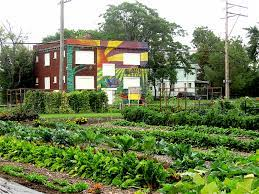
            Urban farming and gardening is a mechanism that can be used in cities to help achieve net-zero as well as enrich small communities within the city. Urban gardens are often created in vacant lots, abandoned buildings, and on rooftops, allowing for a variety of benefits. Rooftop gardens are popular in big cities with densely packed building a few vacancies. Not only do they provide fresh and healthy food for the community, they also assist with increased temperatures in buildings and cities often caused by dark colored rooftops which attract sunlight. Likewise, they can also capture rainwater which eventually saves money of roof repairs and can be redistributed through irrigation. The presence of food and flowers in an otherwise concrete jungle attracts pollinators and hence helps with plant growth, seed dispersal, and germination. In cities that used to be more densely population and are now filled with vacant lots and buildings as well as deteriorating neighborhoods, such as Detroit, urban gardens have provided both relief from food deserts and unification of the community. In these areas, residents now have access to fresh and healthy food as well as the knowledge required to grow it. These techniques can be passed to future generations as children begin to develop a relationship with the food they eat. The use of urban gardens specifically in abandoned buildings can be used to address problems of homelessness and food insecurity. Homeless people would be able to move into the buildings where the gardens are located and could tend to the plants, prepare, or serve in a community cafeteria. If the urban garden was implemented in a city trying to achieve net-zero, the building could already be renovated to utilize renewable energy and either the community or government could pay for the renovation until it pays for itself. Additionally, if the community had small farm animals, the could ensure clean protein and animal byproducts versus store-bought, corporation-owned animal byproducts. In areas where vacant lots are the location for urban gardens, the increase in pollinators in the area could bring back local flora and fauna would eventually follow.


(Pictured: Urban Gardens in Detroit (vid))

            Ultimately these three ideas for mitigating the climate crisis work together from a large to small scale. Carbon coin/tax would be the largest scale, this could be international if everyone was committed to affecting sustainable change. Net-zero cities would be about medium scale, much smaller than international, however still a massive feat to undertake as some cities are dense and rigid like New York versus more easily adaptable such as some small rural town in Tennessee. However, if the carbon coin/tax was in place, individual and corporate interest in sustainability would spike and achieving net-zero would be easier due to decreased backlash. Urban gardens and farming are small scale, directly affecting the community. Many communities have already taken initiative to utilize urban gardens, though if a carbon coin/tax was implemented, large cities that need to enact change fast would likely use this mechanism as it has multifaceted benefits. Urban gardens cut carbon emissions due to not having to transport food, they replace food deserts with areas producing fresh, healthy food for the community, they attract pollinators which ensures successful germination and seed dispersal, and it forces the community to interact and slowly build itself out of a previously individualistic crowd. Ultimately, if all three of these mechanisms were implemented at the same time, we would see quick, efficient, and long-lasting changes in community, health, and carbon emissions.


The end is near

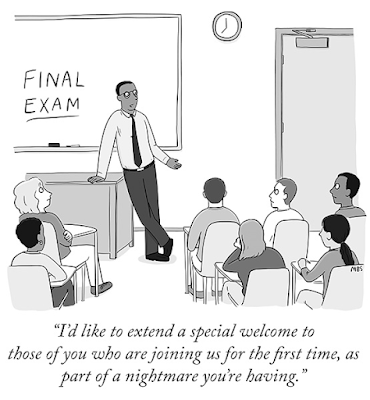
UPDATE: if you're not taking the exam you don't need to come to class.

It's the last day of class (unless some of us choose to meet on Zoom next week). Seems like only yesterday, though it's actually a year to the day, since I posted this:

LISTEN. Back from Thanksgiving, it's time to wrap things up and send the classes of Fall 2021 out to meet their uncertain futures. The usual last words apply, there really are no fortunes to be told. There definitely is advice to be given, however. Do stay curious, kids, do keep asking questions. And do keep in touch... (continues)


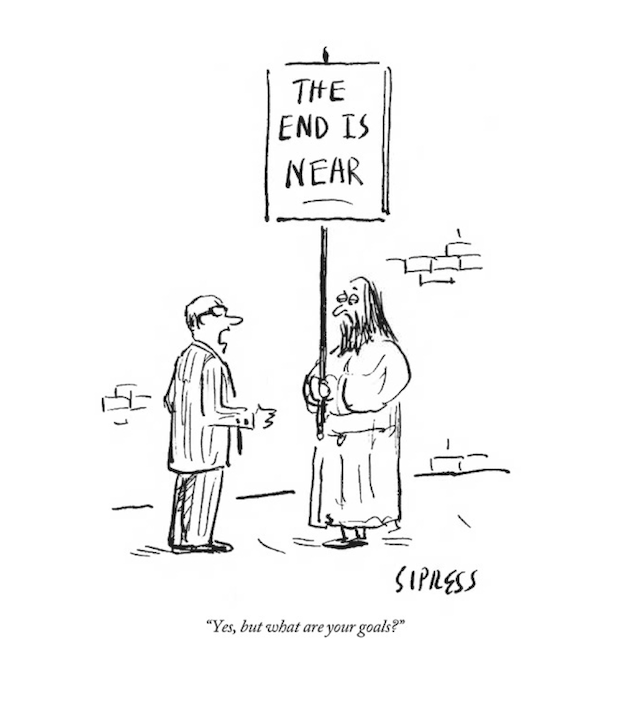
The End Is Near" by David Sipress, Nov. 2011

Wasted Space


 Lawns have become a staple of the American household, from suburbia to the country the idea of having a green weed-free yard is a prevalent part of a box it seems you must check to live up to the American dream. But is this notion without unfound concern? Some places due to the water-intensive nature of lawn grass have started to pay people to ditch it for other alternatives such as rock landscaping. "Southern California is paying $2 per square foot of grass pulled out" Which has happened a lot out west including watering bans for turf lawns during droughts, which have been particularly bad over the last few years.

 https://www.cnn.com/2022/08/19/us/california-drought-lawns

Not only is turf grass bad with water consumption it also is bad in terms of wasted space and fertilizer use. In the United States, turf grass occupies over 2% of the total land area a number higher than the land area corn covers. A number close to a million square miles. For many people especially in suburban areas, the competition to have the best-looking lawns are a feat that requires mass amounts of chemicals to keep the yard weed free and the desired type of grass growing. In this effort turf grass is also the number one user of fertilizer by land area. This type of fertilizing is even worse for the environment than even crops. As using fertilizer on grass is usually in areas close to roads, sidewalks, and other impervious materials that allow the fertilizer to escape often into storm drains and other water systems.

One of the biggest pollutants from lawn fertilizers is the pollutant phosphorus which is a number indicated in the middle of your normal fertilizer analysis numbers. Which followed by nitrogen, phosphorus, and potassium.

“Excess nitrogen and phosphorus cause an overgrowth of algae in a short period of time, also called algae blooms. The overgrowth of algae consumes oxygen and blocks sunlight from underwater plants. When the algae eventually die, the oxygen in the water is consumed”


https://www.epa.gov/nutrientpollution/effects-dead-zones-and-harmful-algal-blooms#:~:text=Excess%20nitrogen%20and%20phosphorus%20cause,in%20the%20water%20is%20consumed.


Not only is the fertilizer a problem but having a monoculture of one type of plant, especially one that doesn’t flower can wreak havoc on pollinators such as butterflies who require nectar to survive. It also kills natural plant and animal species which are ripped out due to them being nothing but “weeds” even though they are important for pollinators and other animals to live.


Wasted Space

As mentioned earlier turf lawns take up vast amounts of space in America along with the destructive use of fertilizers, wastes a lot of valuable farming space. One statistic that might shock you is on only .44 acres of land a person can grow all the fruit and vegetable caloric needs for an entire year. If you were to grow even just a month’s worth of food, could you think about the number of trips you could save going to the grocery store? Not only this would reduce your carbon footprint involved in driving to the grocery store this would also lower the carbon footprint from huge trucks and boats that carry fruits and vegetables from other countries to the United States. One thing though that is a barrier to a lot of people, particularly in suburban areas which today is where most Americans live is regulations on simply growing your own food on your property. City codes along with rules in communities prevent anything other than grass to be grown and a neat short yard from being present on your property. For some, this could come even in a form of a civil misdemeanor for simply growing food on your own properties which racks up fines and potentially foreclosure if you don’t follow city ordinances. Only two states have passed right-to-garden laws to supersede city actions which often follow the lines of no structure over a certain amount of square feet on your property such as small greenhouses and other farming structures. For many, the laws are even more strict in neighborhoods with Homeowners associations, with there being no ability to even grow ground crops without being fined in even your backyard. These actions vastly hamper many Americans' ability to be food-stable. 

"In the spring of 2011, Julie Bass installed several raised beds in the front yard of her suburban property in Oak Park, Michigan. Bass quickly learned that her gardening efforts, intended to teach her kids about growing their own food, had provoked the ire of her city. Bass was cited with a civil misdemeanor for not planting “grass, shrubs, or other suitable live plant material.”

https://civileats.com/2022/08/20/two-states-right-to-garden-laws-local-food-community-nutrition-security-illinois-florida/


Being able to grow your own garden does more than even being able to reduce your carbon output it can also provide more food security. Places in Detroit where houses once stood groups have taken up and turned into urban gardens creating places that can grow food for the community garden and bring residents together to help the community as a whole and help create a sense of a common goal between people. These gardens have turned places nothing more than urban sprawl into local, low carbon emission, free sources of food for communities.


"Detroit, labeled a “food desert,” was a major motivation for Blunt to enter the agricultural field. “People deserve fresh food,” Blunt says, “I believe good nutrition can help people reach their potential.”


https://www.yesmagazine.org/social-justice/2019/11/05/food-community-detroit-garden-agriculture


Even though Detroit is a metropolis with a population of a million people Detroit has found the land to do this on, and I think these actions would be even easier to make happen here locally in Murfreesboro. So, what can we do? For one I think we can start off with the idea of using raised gardens in our backyards along with using planter pots to be able to grow small things of fruits and vegetables. One thing about raised gardens is the cost and labor of making one. I have made one myself for a landscaping client. It required first building the structure out of 2 x 10 x 20s which are pretty expensive pieces of lumber. Then it included the large effort of wheelbarrowing dirt from the road where I had delivered dirt to the backyard and then shoveling it back in. This might not be the most ideal because of the cost and labor but it’s a starting point for what we can do now. The next step I think we need to make is to petition city leaders and even landowners like homeowner associations to use land that isn’t being used for anything except decorative turf. Huge swaths of land currently dot Murfreesboro between the sprawls. Places like common areas in neighborhoods are prime places for community gardens. These places have intentionally been left alone to allow places for water to drain and can sometimes be as big as communities themselves. These areas would be great places to plant acres of crops that could sustain the communities they surround. And lastly, I think we need to petition cities to allow us to grow food crops normally in the ground like people do around the world. Many homes in Murfreesboro are on around at least a quarter-acre lot which would provide enough fruit and vegetables for someone for half a year. In many Eastern European homes, the idea of having a lawn is a foreign thing as for many of those homes they are simply fenced around to establish their property lines with their neighbors then the entire yard is planted with fruits and vegetables.


Americans have the resources to become more food stable on their own and protect the environment by increasing plant diversity. We just must make gardening more accessible and teach about the value of growing your own food.

Monday, November 28, 2022

Exam 2 audio review

UPDATE: if you're not taking the exam you don't need to come to class. 

Tuesday November 29 exam: audio review - LISTEN


The Exceptionally American Problem of Rising Roadway Deaths

An environmental issue, especially in light of our auto-centric infranstructure. …
Safety advocates and government officials lament that so many deaths are often tolerated in America as an unavoidable cost of mass mobility. But periodically, the illogic of that toll becomes clearer: Americans die in rising numbers even when they drive less. They die in rising numbers even as roads around the world grow safer. American foreign service officers leave war zones, only to die on roads around the nation's capital... nyt

Act robustly

The rates at which the planet is warming is unprecedented. And so it also gives earth scientists a very strong sense that the need for action has to be robust and quick, because the rates at which these things are happening are faster even than the very conservative estimates made by the [Intergovernmental Panel on Climate Change] already. Barbara Sherwood Lollar

https://c.im/@science_quotes/109421323045354852

Sunday, November 27, 2022

Lethal dangers

The dangers of not thinking clearly are much greater now than ever before. It's not that there's something new in our way of thinking - it's that credulous and confused thinking can be much more lethal in ways it was never before. Carl Sagan

https://c.im/@science_quotes/109415183832855134

Saturday, November 26, 2022

Climate Change from A to Z

E...The rapidly falling price of renewables makes it possible to imagine a not too distant future in which the U.S., indeed the world, generates all its electricity emissions-free. Already there are brief periods—on the order of minutes—when California can produce enough electricity from renewables to meet its demand. In Denmark, this happens for entire windy days. (It occurred two days in a row this past May.)

And, once it's possible to imagine a carbon-free grid, all sorts of other opportunities open up. Substitute electric motors for internal-combustion engines and cars, too, can run emissions-free. The same goes for trucks and buses, ferries and forklifts. Plug them in! Tear out boilers and replace them with heat pumps! Swap gas ranges for induction stoves! Electrify as much as possible. Ideally, electrify everything...

Elizabeth Kolbert https://www.newyorker.com/magazine/2022/11/28/climate-change-from-a-to-z

Transcendence

"I have spent my life watching, not to see beyond the world, merely to see, great mystery, what is plainly before my eyes. I think the concept of transcendence is based on a misreading of creation. With all respect to heaven, the scene of the miracle is here, among us." 

https://c.im/@osopher/109410052978152108

Douglas Brinkley Would Like to Invite Thoreau to Dinner

The historian, whose new book is "Silent Spring Revolution," would also invite E.O. Wilson and Rachel Carson: "We could talk about the 11,000 bird species the Cornell Lab of Ornithology is helping to conserve in the face of climate change."

https://www.nytimes.com/2022/11/24/books/review/douglas-brinkley-by-the-book-interview.html?smid=nytcore-ios-share&referringSource=articleShare