Tuesday, September 3, 2024

In a Brutal Summer, Miracles Still Bloom

"Drought is a kind of madness. Drought combined with record heat makes you long to become subterranean, a mole digging into cool darkness. This longing feels the way desire feels when you are too young to recognize it as desire. Even safely inside a cool house, your body is telling you that something is off. What you long for cannot be had. Until you think about it for a moment, it can't even be named.

As a matter of technical fact, Davidson County, Tenn., where I live, is not in a state of drought, but the scattered showers that have blown in briefly here and there throughout the summer have not come to our yard. We got one hot rain so gentle it hardly broke the leaf canopy, and that was it for us all summer long. The forecasters at Nashville Severe Weather call these random pop-up showers "playing the wattery" — like a lottery but with water.

Day after day last week the temperature climbed — 99, 100, 101, 102 — and the air quality alerts arrived in flocks. Nashville Electric Service sent me an email: "Tips for Extreme Heat in Music City this Week." In the photos on the pet-rescue sites that I check obsessively now, hoping to find just the right canine family member for this newly dogless house, all the dogs are panting. I feel the need to pant myself...

Margaret Renkl 
https://www.nytimes.com/2024/09/02/opinion/summer-heat-climate-butterflies.html?smid=nytcore-ios-share&referringSource=articleShare

Monday, September 2, 2024

Questions SEP 3

Hope you had a happy & restful Labor Day.

(First catch up from last time)... EE 3-4 (Geologic time, Great Acceleration)... GT 1.5--1.9 (thru biggest story). WW 41-64 (Heat Death, Hunger). McK Introduction, Thoreau...

EE

1. Who will ultimately decide the fate of the Anthropocene as an interval of earth history? 35

2. Who was William Smith? 36

3. What "allowed evolutionary changes in fossil organisms to be observed"? 37

4. What are the different chronostratigraphic units? What do they organize?39

5.What are "golden spikes"? 43

6. What's the difference between isochronous and diachronous units? 43

7. What's Earth's most recent period? When did it begin? 44

8. What does "Holoene" mean? 47

9. Name an instance of the "hyper-abundant" data on recent earth changes capable of leaving stratigraphic records. 49

10. Data showed a dramatic jump in the rate of human and environmental changes when? 52

11. How much of the terrestrial biosphere remains free of direct human impacts? 56

12. Name an environmental consequence of human use of land. 57

13. Earth is now hotter than it's been in how many years? 68

GT

  1. What does Greta say we've known since at least 1992? 20
  2. Why is it in China's interest to press ahead with its climate commitments? 28
  3. What does Naomi Oreskes say about Adam Smith's "invisible hand"? 31
  4. What does Johan Rockstrom say about an ""ethical time dimension"? 36
  5. What does Greta say that might remind us of John Dewey and Carl Sagan? 41, 43 


WW

  1. How are we already experiencing "heat stress"? 44
  2. What did Nature say about carbon capture technology scenarios? 50
  3. What may be too early to judge? 58
  4. What did Irakle Loladze say we are witnessing, thus making everything more like what? 63

McK

  1. What was Thoreau's view of the new transatlantic telegraph, and what would he likely have thought of our Information Age? xxiv, 18 Was he right?
  2. What central insight of ecology" did Aldo Leopold express over half a century ago? xxvii
  3. Henry says "the swiftest traveller is..."? 18 (and see this wonderful children's book, and series) 
  4. What's Henry's view of "news"? 22
  5. How does Henry think we should approach the seasons? 36

  • Why does it matter whether we call this the "Age of Man" or not, if "overwhelming scientific evidence already demonstrated that humans [have] alterend earth"? 34
  • Why is geologic time critical to understanding our predicament? Do you think you understand it? How would you explain it to someone who does not?
  • Why should mass extinction events bother us?
  • Why is it "entirely pragmatic" that there are no geologic boundaries marking the origins of life"? 42 Why are pragmatic solutions to stratigraphic issues normally required? Are pragmatic approaches to difficult public concerns always necessary?
  • Should we date the Anthropocene from the start of the Industrial Revolution in the late 18th century, from the mid-20th century, or from thousands of years ago with the start of widespread agriculture? Why? 51, 53
  • Why should we care about plant and animal species extinctions due to human pressures? 58
  • Do you agree that when people say they don't care about the long-term future of humanity they're effectively declaring that their death obliterates the moral universe? (29)
  • Is Derek Parfit right, do we have future-related duties extending to whoever lives then? (32)
  • Do you personally have a harder time caring about your great-grandchildren (etc.) than your children and grandchildren? If so, do you see that as a deficiency, a failure of imagination, or just human nature?
  • What should we be doing to promote "widespread environmental education" (40) that we're not doing?
  • Is concern for theaters, museums, and libraries an environmental issue? (41)
  • Who should appoint an environmental ombudsman? (42) Should that individual be subject to executive dismissal, removal by plebiscite, or what other form of accountability?
  • Would anyone but a professional philosopher ever deny that "it must sometimes be possible for moral claims to be true or correct"? (44)
  • Do you imagine you'd support strong environmental protections if you were to participate in a Rawls-style deliberation behind a "veil of ignorance"? (46) Would most people?
  • Are Benhabib's criticisms of Rawls's approach as "disembedded and disembodied" fair and on target? (47)
  • How can a democracy increase the likelihood that virtuous people who were "well brought up" will succeed in attaining and effectively discharging positions of leadership? 
  • Is there any reason why a Kantian wouldn't also value the well-being of non-human animals? (52)
  • Are eco-pragmatists the best consequentialists? (55) Are they right to resist theorizing?


LISTEN [An old dawn post... but CORRECTION re: William Blake--Bull Durham, not Field of Dreams]...Moving forward 

Sunday, September 1, 2024

Something’s Poisoning America’s Land. Farmers Fear ‘Forever’ Chemicals.

For decades, farmers across America have been encouraged by the federal government to spread municipal sewage on millions of acres of farmland as fertilizer. It was rich in nutrients, and it helped keep the sludge out of landfills.

But a growing body of research shows that this black sludge, made from the sewage that flows from homes and factories, can contain heavy concentrations of chemicals thought to increase the risk of certain types of cancer and to cause birth defects and developmental delays in children.

Known as "forever chemicals" because of their longevity, these toxic contaminants are now being detected, sometimes at high levels, on farmland across the country, including in Texas, Maine, Michigan, New York and Tennessee. In some cases the chemicals are suspected of sickening or killing livestock and are turning up in produce. Farmers are beginning to fear for their own health.

The national scale of farmland contamination by these chemicals — which are used in everything from microwave popcorn bags and firefighting gear to nonstick pans and stain-resistant carpets — is only now starting to become apparent. There are now lawsuits against providers of the fertilizer, as well as against the Environmental Protection Agency, alleging that the agency failed to regulate the chemicals, known as PFAS…

https://www.nytimes.com/2024/08/31/climate/pfas-fertilizer-sludge-farm.html?smid=nytcore-ios-share&referringSource=articleShare

Solar is winning

What Will We Do With Our Free Power?

"I simply cannot believe where we are with solar," says Jenny Chase, the BloombergNEF analyst and quite possibly the person in the world who knows the most about the business of turning the light of the sun into electricity. "And if you'd told me nearly 20 years ago what would be the case now, 20 years later," she continues, "I would have just said you were crazy. I would have laughed in your face. There is genuinely a revolution happening." By just 2030, Chase estimates, solar power will be absolutely and reliably free during the sunny parts of the day for much of the year "pretty much everywhere."

In 2023, the world installed 444 gigawatts of new solar photovoltaic capacity, according to BloombergNEF. While that figure can be hard for normie brains to process, it represents a staggering step forward: nearly an 80 percent year-on-year jump and more than was cumulatively installed between the invention of the solar cell in 1954 and 2017. Although solar power still provides just under 6 percent of global electricity, its share has nearly quadrupled since 2018, an exponential curve that is expected to continue for some time.

"When it was a 10th of its current size 10 years ago, solar power was still seen as marginal even by experts who knew how fast it had grown," The Economist noted in a recent cover story. "The next tenfold increase will be equivalent to multiplying the world's entire fleet of nuclear reactors by eight in less than the time it typically takes to build just a single one of them." By the 2030s — not very long from now — solar power will most likely be the largest source of electricity on the planet.

Even more remarkable than the scale is the cost. By one measure, the cost of solar power is less than one-thousandth of what it was when hippies and environmentalists first made a point of installing panels on their roofs in the 1960s. A decade ago, it was considered a moonshot goal to reduce the price of a solar module to a dollar per watt; now they are being manufactured for one-tenth as much. The price fell by nearly half in 2023 alone...

David Wallace-Wells

https://www.nytimes.com/2024/08/28/opinion/solar-power-free-energy.html?smid=nytcore-ios-share&referringSource=articleShare

Wednesday, August 28, 2024

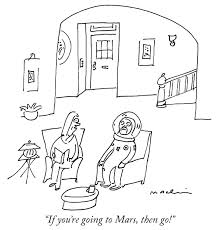
The PBD, the Lorax, Mars, ...

 As mentioned in class Tuesday...


Old Sagan posts... Sagan's (& Tyson's)  cosmic calendar... Lorax... FAM alternate timeline... Elon on Mars...


People also ask

Some people are dumb, aren't they?
==
Ozone basics (EPA)... Air Quality index, including Code Orange:
Members of sensitive groups may experience health effects. The general public is less likely to be affected.
But look out for purple and maroon!
==
I also mentioned the concept of Meliorism:


"...there are unhappy men who think the salvation of the world impossible. Theirs is the doctrine known as pessimism.

Optimism in turn would be the doctrine that thinks the world's salvation inevitable.

Midway between the two there stands what may be called the doctrine of meliorism, tho it has hitherto figured less as a doctrine than as an attitude in human affairs. Optimism has always been the regnant DOCTRINE in european philosophy. Pessimism was only recently introduced by Schopenhauer and counts few systematic defenders as yet. Meliorism treats salvation as neither inevitable nor impossible. It treats it as a possibility, which becomes more and more of a probability the more numerous the actual conditions of salvation become.

It is clear that pragmatism must incline towards meliorism..." Pragmatism by William James


I was wondering about the campus organization MTSU-SEA (Students for Environmental Action). Looks like there's activity on their recently-dormant IG account:


Questions Aug 29

AUG 29 EE preface, 1-2 (Origins, Earth System). GT 1.1--1.4 (thru Civilization and Extinction). WW I (Cascades)

Give yourself a base on the scorecard for every question you posted a response to before class. (You can also respond to your own questions(s) or your classmates' posted comments. Respond not merely with the author's textual statements but also with your own thoughts & reflections.) Exams are drawn from the texts mentioned in our daily questions.

My other Opening Day questions, if you'd care to comment further:
  • What do you consider to be YOUR environment? 
  • How does that relate to nature, the climate, and society? 
  • Do you think most college-age students are concerned about the present and future condition of the environment? Are you optimistic /pessimistic/melioristic about the future?...

EE
  1. (preface) What's the author's goal?
  2. When did the term "anthropocene" first appear in print? 2
  3. What is "the basis for marking new intervals of geologic time" (and thus the rationale for dubbing our time the anthropocene, the "age of humans")? 3
  4. What was Archbishop Ussher's errant calculation? 5
  5. How did Darwin birth a new origin story, and what did it imply about life? 
  6. When did homo sapiens appear, on the cosmic calendar? 11
  7. What's the IPCC? 13
  8. Who wrote The End of Nature? 14
  9. Who was the first scientist to propose that the Earth's functioning as a system was transformed by the emergence of the biosphere? 18
  10. What is the Gaia Hypothesis? 18
  11. What changed everything? 21
  12. What did Charles Keeling publish in 1960? 25
  13. Who was Rachel Carson, and what did she document? 29
  • Do you adhere to biospherical egalitarianism and Deep Ecology (see p.7)? Why or why not?
  • Does your "true self" extend to the whole of nature (8)? In practical terms, what does that mean?
  • What's wrong with anthropocentrism, ethically, ecologically, pragmatically, or otherwise?
  • In what senses are we apart from and a part of nature? Do any of those exempt us from ethical responsibility to future generations of humans and non-humans?
  • Is Stoicism the wrong philosophy for this moment, if indeed it counsels that we should "follow nature" and comply with the status quo? (17) [What about Stoic Pragmatism?]
  • If you don't feel "at home" anywhere, do you lack an environment? (18) [But shouldn't we feel at home everywhere, given our cosmic identity as creatures of the stars? -as Neil Tyson said.]
  • Are you an anthropocentrist, biocentrist, ecocentrist, or something else?
  • What do you think about "needlessly cutting down a healthy tree"? (26)
GT
  1. Greta says you cannot be a little bit ___. 2
  2. What is the evolutionary force that will decide the fate of every species? 10
  3. What is the present cumulative total of global CO2 emissions? What was it in 1900? In 2000? 14
  4. What percentage of human-caused CO2 emissions have occurred since the founding of the IPCC and the Rio Earth Summit of 1992? 20
WW
  1. Warming of 4 degrees Celsius in this century could entail what outcomes? 6  What was considered a catastrophic threshold less than three decades ago? 9
  2. What is a "hyperobject" and why is climate change one? 15
  3. Why is Wallace-Wells optimistic? 34
  4. What have we already left behind? 38


Sustainable Campus applications due Sep 27

From Danny R. Kelley, Ph.D., Assistant Vice President for Student Affairs:

In the fall of 2006, students voted to put in place a Clean Energy Fee to support campus sustainability projects. A university committee administers the funds generated by this fee. Applications are now being accepted for project proposals for 2024-2025.  Below is a set of guidelines used to determine a project’s funding eligibility:


Projects and proposals should focus primarily on:


  • Renewable Energy
  • Energy Conservation/Efficiency
  • Alternative Fuels
  • Sustainable Design


Eligible spending may include:


  • On-site generation projects that utilize and publicize renewable energy technologies; such as solar array displays on campus;
  • Opportunities that may arise to gain additional funding or offset costs through rebate programs, such as the Generation Partners Program provided by the Tennessee Valley Authority (TVA) and Murfreesboro Electric.
  • Up to 10% of the total annual appropriations may be used for research grants, as well as academic programs for educational, training, and research purposes, to help develop awareness of energy use, consumption, and conservation to be awarded within the MTSU community.


To submit a Clean Energy Fee funding proposal, go to www.mtsu.edu/sga/cleanenergy.php then click on “Click Here to Submit a Clean Energy Funding Proposal (toward bottom of page) then under the header “Clean Energy Initiative Project Funding Request” click on the application version of your choice. Email your completed proposal as an attachment to cee@mtsu.edu or send to Box # 57 or fax to 615-904-8093. The deadline to submit your completed application is FRIDAY, SEPTEMBER 27, 2024


Please let me know if you have any questions.


Danny R. Kelley, Ph.D.

Assistant Vice President for Student Affairs

P.O. Box 1

Student Union 330

Middle Tennessee State University

1301 East Main Street

Murfreesboro, TN 37132


615-898-5812 (office)

615-898-5001 (fax)

Monday, August 26, 2024

Introductions: who are you, why're you here"

My longer intro is in the sidebar here. 

My short answer to those two questions:

  • I'm the teacher, and have been doing this at MTSU for about a quarter century. 
  • I'm here because, like my favorite philosopher William James (1842-1910), I believe in philosophy devoutly and because I agree with him that "the really vital question for us all is, what is this world going to be? What is life going to make of itself?" We don't know the answer, but we do know that any answer we'd ever want to hear will depend on our successfully sustaining a habitable world on this planet
Tell us who you are, and why you're here, in the comments space below. (Try to say something more interesting and original than that you're here because you need the credit.)

See you on the 27th.

Dr. Oliver

Saturday, August 24, 2024

Is A.I. Making Mothers Obsolete?

…The novel [Hum] takes place in a dystopian world that is at once recognizable and subtly different from our own. Climate change has devastated the environment. ("If only the forests hadn't burned," May thinks. "If only it wasn't so hard, so expensive, getting out of the city, getting beyond the many rings of industry and blight.") Cameras and screens are as omnipresent as the pollution in the air; privacy, access to nature, and freedom from advertising have become luxury goods. Many jobs have been automated, including May's. Previously employed by a company that developed "the communicative abilities of artificial intelligence," May was laid off after unwittingly training an A.I. network that made her obsolete. Her husband, Jem, a former photographer, is keeping them afloat as a gig worker, emptying mousetraps and cleaning out closets. The couple's anxiety about the future has filtered down to their children, the eight-year-old Lu and six-year-old Sy, who are shown doting on a cockroach, obsessing over disaster-preparedness manuals, and rejoicing at flavorless strawberries. The kids fill their insomniac parents with love and fear. "What will this planet hold for them by the time they're our age?" May and Jem ask, clutching each other in bed...

https://www.newyorker.com/magazine/2024/08/26/hum-helen-phillips-book-review

Friday, August 23, 2024

How to Be Truly Free: Lessons From a Philosopher President

Pepe Mujica, Uruguay's spartan former president and plain-spoken philosopher, offers wisdom from a rich life as he battles cancer.
...
(Unprompted.)

I think that humanity, as it's going, is doomed.

Why do you say that?

We waste a lot of time uselessly. We can live more peacefully. Take Uruguay. Uruguay has 3.5 million people. It imports 27 million pairs of shoes. We make garbage and work in pain. For what?

You're free when you escape the law of necessity — when you spend the time of your life on what you desire. If your needs multiply, you spend your life covering those needs.

Humans can create infinite needs. The market dominates us, and it robs us of our lives.

Humanity needs to work less, have more free time and be more grounded. Why so much garbage? Why do you have to change your car? Change the refrigerator?

There is only one life and it ends. You have to give meaning to it. Fight for happiness, not just for wealth.

Do you believe that humanity can change?

It could change. But the market is very strong. It has generated a subliminal culture that dominates our instinct. It's subjective. It's unconscious. It has made us voracious buyers. We live to buy. We work to buy. And we live to pay. Credit is a religion. So we're kind of screwed up...

https://www.nytimes.com/2024/08/23/world/americas/pepe-mujica-uruguay-president.html?smid=em-share

Thursday, August 22, 2024

How Close Are the Planet’s Climate Tipping Points?

Earth's warming could trigger sweeping changes in the natural world that would be hard, if not impossible, to reverse.

Right now, every moment of every day, we humans are reconfiguring Earth's climate bit by bit. Hotter summers and wetter storms. Higher seas and fiercer wildfires. The steady, upward turn of the dial on a host of threats to our homes, our societies and the environment around us.

We might also be changing the climate in an even bigger way.

For the past two decades, scientists have been raising alarms about great systems in the natural world that warming, caused by carbon emissions, might be pushing toward collapse. These systems are so vast that they can stay somewhat in balance even as temperatures rise. But only to a point.

Once we warm the planet beyond certain levels, this balance might be lost, scientists say. The effects would be sweeping and hard to reverse. Not like the turning of a dial, but the flipping of a switch. One that wouldn't be easily flipped back...

https://www.nytimes.com/interactive/2024/08/11/climate/earth-warming-climate-tipping-points.html?smid=em-share

Peter Dykstra, Pioneering CNN Climate Journalist, Dies at 67

A former Greenpeace official, he drew on his command of environmental subjects to persuade his bosses at the cable channel to cover climate issues.

...A baseball fanatic with a deep store of statistics, he had an equally encyclopedic command of environmental topics. He drew on that knowledge, along with his mischievous wit, to sell his bosses at CNN on environmental stories, which they did not always see as fitting into the 24-hour news cycle...

https://www.nytimes.com/2024/08/22/climate/peter-dysktra-dead.html?smid=em-share

Saturday, August 17, 2024

Can words help us out of climate despair and toward repair?

…The Symbiocene. Inspired by the Greek symbiosis, or "living with," the Symbiocene was also dreamed up by Albrecht. 

"The idea of the Symbiocene stimulates all humans to create a future where positive Earth emotions will prevail over the negative," Albrecht wrote.

Albrecht believes that "positive Earth emotions" ought to define the next era of human and Earth history, making it a time of mutual benefit between humans and planetary systems. As an imagined epoch, the Symbiocene doesn't blame all humans for climate change, nor does it indulge our sense of fatalism and helplessness. The Symbiocene hints at an imagined future. But it also captures something that has always existed: Humanity, not at the center of existence, but as part of a system that's interconnected, dependent, responsible — to other species, to ecosystems, to life.

https://www.hcn.org/issues/can-words-help-us-out-of-climate-despair-and-toward-repair/

Old news

https://www.threads.net/@conservation_mag/post/C-wJOIwPohX/?xmt=AQGz5dSlk9SNhVFPnkEA5TDKQeVQI8k99jQ-2C5pnzdhcA

Friday, August 16, 2024

Climate anxiety

Are We Thinking About the Youth Mental Health Crisis All Wrong?

Global trends in economics, climate and technology are weighing on young adults, a report finds. It recommends overhauling how we approach mental health care.

...Climate worry is also becoming a more common complaint. Online searches for subjects related to climate anxiety have surged. Professionals have created peer support groups, an online directory of climate-aware therapists, and certification programs in climate psychology.

Michael, 38, who is using his middle name to protect his privacy, said that his anxiety over the state of the environment began when he was in his early 30s and he has since sought therapy to treat it.

"It seems like there's no care whatsoever for the world around us," said Michael, who lives in Baltimore. Small things, like seeing fleets of trucks delivering items to people's homes or trash in the waterways, make him feel angry or fearful about the future. The "reckless abandon" is "very hard to deal with," he added...

https://www.nytimes.com/2024/08/13/well/mind/mental-health-young-adults-trends.html?smid=em-share

Thursday, August 15, 2024

Tipping points

We're nearly halfway through the 2020s, dubbed the most decisive decade for action on climate change. Where exactly do things stand? Climate impact scholar Johan Rockström offers the most up-to-date scientific assessment of the state of the planet and explains what must be done to preserve Earth's resilience to human pressure. https://www.ted.com/topics/environment

Prichard collection

Hundreds of books, papers and postcards from the estate of legendary Tennessee ecologist Mack Prichard will now be housed in Special Collections in the James E. Walker Library at Middle Tennessee State University.

https://murfreesboro.com/mtsu-walker-library-receives-donations-from-personal-archives-of-legendary-state-conservationist/

Tuesday, August 13, 2024

Nature’s infinitely healing refrains

"Those who contemplate the beauty of the earth find reserves of strength that will endure as long as life lasts. There is something infinitely healing in the repeated refrains of nature — the assurance that dawn comes after night, and spring after winter."

— Rachel Carson, Silent Spring (1962)

https://www.threads.net/@philosophybreak/post/C-kj9wdMkeP/?xmt=AQGzEyHoqIQiqU4MmAD546MsaztNWFXcZImLRBeUJwqoCg